
Coverage line
Dumpster and equipment coverage: insuring the containers themselves
The steel boxes are the business, and they spend their working lives on ground you do not control. Here is how that property is generally insured — and where the question actually runs.
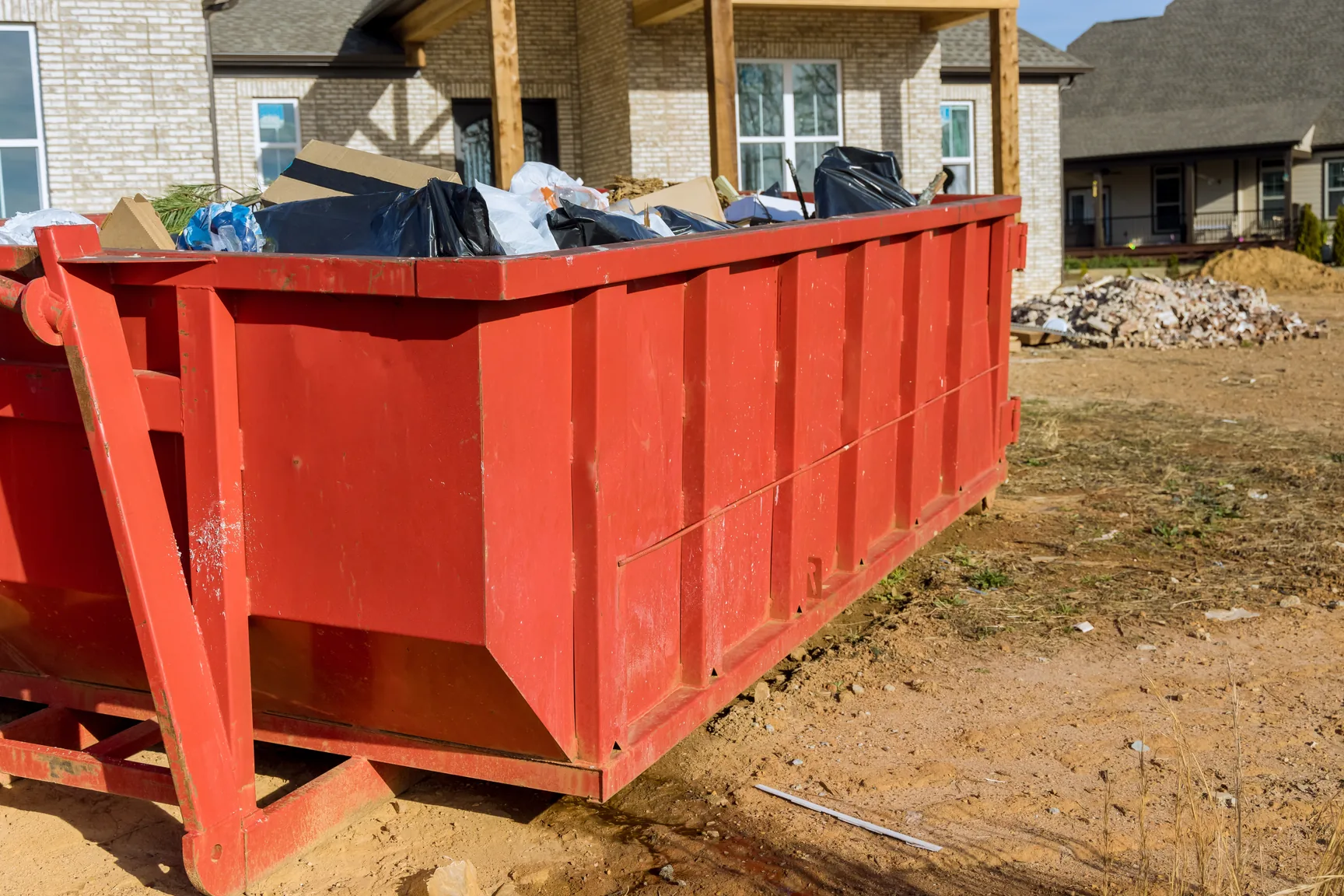
A roll-off operation is a fleet of trucks and a fleet of steel boxes, and only one of those two things spends most of its working life where you can see it. Your cans go out onto driveways, job sites and alley slabs, and then they sit — parked, motionless, on ground you do not control — until the swap-out or the final haul. That is the defining fact about this asset, and it is what makes insuring the containers a different exercise from insuring the yard.
This page is about the boxes. It sets out how movable business property is generally classified and insured, names the questions that decide how a container fleet gets written, and is candid about one thing the sources behind it do not agree on.
A cascade of policies a container fleet passes through. The liability policy comes first, and it generally excludes damage to property the operator owns, rents or occupies, so the operator’s own steel falls out of it. The truck policy is next, and a vehicle and the property it carries are handled by different parts of the program, with the seam as a can comes off the rails sitting on the auto side. What is left is the containers as property that moves between locations, which is generally insured on an inland marine basis rather than on a form built around a fixed address. No figures are shown.
Why your own containers fall outside the liability policy
Start with the policy most operators buy first. A standard liability form generally excludes property damage to property the insured owns, rents or occupies — your own property is carved out by the form’s own wording. That is the reason this page exists. Liability answers for damage you do to somebody else; it is not a policy on your own steel.
The truck is a separate matter again. A vehicle and the property it carries are handled by different parts of an insurance program, and the boundary between them — including what happens as a can comes off the rails — sits on the auto side. We work that seam through on the commercial auto page rather than argue it twice in slightly different words.
What is left is the containers as property — and property that moves between locations is generally insured on an inland marine basis rather than on a form built around a fixed address.
Property that earns its keep away from your yard
Business property insurance is generally organized around a described location. A national insurance information body describes that family of coverages as insuring “property housed at a specific location”, and a public university’s risk-management office, writing up its own program, puts the other half plainly: “very limited coverage for property taken off the specified location”.
Inland marine is the part of the property world built for things that do not stay put. A risk-and-insurance reference work describes it as covering property in transit over land together with “movable property that may not remain at a fixed location” — and it is that second limb, not the transit limb, where a container fleet would live. The plainer name for the same idea is the equipment floater: insurance for “equipment that is often moved from place to place”.
Many forms in this family respond “without regard to the location of the covered property”, which is where the word floater comes from: such a policy covers property “wherever it may be within the policy territory”. Both halves matter. Many is not all, and a policy territory is a real, stated boundary — worth reading if your route crosses a state line.
None of this is exotic. Equipment floaters are a recognized, regulated class, and what may be classified this way is settled by a definition regulators adopt, under which qualifying property must generally be “movable, be in transit, or bear some other relationship” to transportation.
Where the authorities disagree about a parked container
Here is the part a confident page would skip. Three sources that all qualify as authoritative describe this line differently, and the difference bites exactly where a roll-off operator lives. A risk-and-insurance reference work takes the broad reading: property in transit over land, plus movable property that may not remain at a fixed location. A state insurance regulator’s consumer guidance takes a narrower one, describing inland marine as a specialized property insurance that primarily covers business property while in transport. A national insurance information body lands in between, describing equipment covered when transported over land, or while temporarily warehoused by a third party.
Now set your container down in the middle of that. A box standing for weeks on a customer’s lot is not in transit, it is not at your premises, and nobody has warehoused it. The first reading reaches that state comfortably; the other two reach it less comfortably. None of the sources resolves the difference, and we are not going to resolve it on a web page.
What we will say is where the question lives. Ask it in plain words at quoting time: how does this form treat a container that sits still for weeks on ground I do not own? An underwriter can answer that, and an adjuster will answer it eventually either way — the second conversation being the expensive one.
Equipment you use, and equipment you rent out
There is a second question underneath the first, and it is sharper. A container is two things at once: mobile equipment you own and use in your operation, and property you hand to a paying customer and leave with them. The national classification instrument for this line treats those as separate classes. One covers identified property of a mobile nature that has come into the “custody or control of parties who intend to use” it for what it was made for. A different class deals with property sold on time or leased out, and provides that such coverage does not extend “beyond the termination of the seller’s or lessor’s interest”. At least one published institutional equipment program goes further and lists leased or rented property to others among the property it does not cover — one program is not a market rule, but it shows the question is live.
So the useful question is not whether you need a floater. It is whether the form you are being offered contemplates equipment that is rented out and standing on ground you do not control. That is specific, checkable, and answerable before you buy.
One more thing worth knowing while you ask. We searched the four sources that decide what this line is — the classification instrument, a trade body’s digest of it, a regulator’s class list and a regulator’s consumer guide — for the words container, dumpster and roll-off. All four came back empty. Those lists find room for wool growers floaters and outdoor theater equipment and say nothing about steel boxes. That proves less than it looks like it proves: the instrument states of itself that it “does not include all of the kinds of risks” that may be written. Absence from a list that admits it is incomplete is not exclusion — and it is not inclusion either.
A two-column comparison of the two ways an inland marine form can be built. The first column is an open-perils form, which responds to loss arising from any fortuitous cause that is not specifically excluded, so the exclusions are what to read. The second column is a named-perils form, which responds only for loss caused by the perils specifically listed, so a cause nobody thought to list, vandalism being the usual example, may not be in the conversation at all. Regulator guidance describes perils these forms may include, such as theft and collision, which describes what the family commonly addresses rather than what any one form promises. Ask which basis a quote is written on. No figures are shown.
Theft, damage and the open-perils question
Cans get stolen, get struck, get burned and get hauled off by people with a truck and nerve. What a policy does about that depends on how the form is built.
A state insurance regulator’s consumer guidance lists perils that inland marine forms may include — among them “theft, collision, derailment, overturn of the transporting vehicle”, alongside fire and several weather causes. Note the word may: it describes what this family of forms commonly addresses, not what any one of them promises. A national insurance information body separately describes collision and cargo theft as “the two most frequent causes of inland marine losses” — a rank order about the whole line, carrying no figure, and saying nothing about container fleets in particular.
The architecture underneath is what to ask about. An open-perils form responds to “loss arising from any fortuitous cause” that is not specifically excluded; a named-perils form responds “only for loss caused by the perils specifically listed”. Which of the two you are buying decides whether a cause of loss nobody thought to list — vandalism is the usual example — is even in the conversation. Ask which basis the quote is written on, then read the exclusions under it.
How a fleet of identical boxes gets written up
Two shapes come up whenever a fleet of near-identical assets is insured. A blanket limit is a single limit that “applies over more than one location”, or more than one category of property, or both. Scheduled limits — what some forms call specific limits — are “separate limits that apply to each type” of covered property at each covered location.
No source behind this page compares the two for a fleet of identical steel boxes, says which is customary in this trade, or puts a cost relationship between them, so we will not invent one. What can be shown is what a schedule asks of you. Two published institutional equipment programs describe the same regime: a record of every insured item carrying a description, a purchase date and a serial number; additions and removals reported as they happen; and totals reported on a cycle. If your fleet turns over, that bookkeeping is the trade-off, and it is yours to weigh.
What a damaged container is worth on paper
Valuation is where two operators with the same loss end up in different places. A risk-and-insurance reference work calls actual cash value “one of several possible methods of establishing the value” of insured property, worked out as the “cost to repair or replace the damaged property” less depreciation, as fair market value, or on a broader weighing of the evidence. Replacement cost is the other primary method, “usually defined in the policy” as replacement with materials of like kind and quality, “without any deduction for depreciation”. A state regulator’s consumer guidance describes a third possibility: an agreed value, where the amount is fixed in advance and the coinsurance penalty is waived.
Two mechanics are worth checking on a container fleet, both drawn from one published institutional program rather than from any statement about the market: a form can set one valuation basis for newer equipment and another for older, and a coinsurance clause can cut a recovery when declared values are lower than the property is worth. Steel with a long service life and a replacement price that keeps moving is where both of those bite.
Everything above describes how this kind of coverage is generally built and where the open questions sit — it is not a reading of your policy. Your own wording and your own facts control, forms differ between carriers, and the valuation clause on your declarations is the one that decides what a crushed can is worth.
Questions operators ask about the containers themselves
My cans sit on a customer driveway for weeks at a time. Is that still inland marine?
That is the exact question this page declines to answer for you, and deliberately. One authoritative description of inland marine reaches movable property that may not remain at a fixed location; another describes the line as primarily covering property while in transport. A container standing still on somebody else’s lot sits between those readings, and no source we read settles it. Ask the underwriter how the form on offer treats a container at rest.
Can I just add the containers to the policy on my yard?
Business property insurance is generally organized around a described location, and published descriptions of that family of forms note very limited coverage for property taken away from the specified location. Equipment that moves between locations is generally insured on an inland marine basis instead. Which route fits your operation depends on the wording you are offered and on where your cans actually spend their time.
Somebody hauled off two of my cans overnight. Which policy is that?
Not the liability policy — a standard liability form generally excludes damage to property the insured owns, rents or occupies, so your own steel is not a liability matter. It belongs on the property side. Whether a particular theft is reached depends on whether the form is written open-perils or named-perils and on what the exclusions say.
Does a floater follow my containers anywhere they go?
Within limits that are worth reading. A floater is described as covering personal property wherever it may be within the policy territory, and many inland marine forms respond without regard to the location of the covered property. The fence in that sentence is the territory clause. If your route crosses state lines or a can travels further than your drivers do, read that clause before you assume.
Do I really have to list every can by serial number?
Only if the coverage is written on a scheduled basis. Two published institutional equipment programs describe what that regime asks: a record of every insured item with a description, a purchase date and a serial number, additions and removals reported, and totals reported on a cycle. A blanket limit is a single limit spread over more than one location or category instead. Neither is presented here as the better choice.
If a can gets crushed, do I get a new one or a depreciated one?
The valuation clause on your own declarations decides it. Actual cash value is described as one of several possible methods and is usually worked out as repair-or-replacement cost less depreciation, as fair market value, or on a broader weighing of the evidence. Replacement cost is usually defined in the policy as replacement with materials of like kind and quality without deduction for depreciation. An agreed value is a third possibility.
Is my roll-off truck covered on the same policy as the containers?
Generally no, and the split is older than any policy you will be shown. The classification instrument behind this line expressly puts motor vehicles designed for highway use outside the mobile equipment class. The truck is treated as a vehicle and the box is treated as property, which is why they sit in different parts of a program. The commercial auto page covers the vehicle side.
Related coverage for dumpster rental operators
- General Liabilitygeneral liability
- Commercial Autocommercial auto
- Commercial Propertycommercial property
- Workers Compensationworkers compensation
- Pollution Liabilityenvironmental / pollution liability
States we serve · Dumpster Rental Insurance · Get a quote · Contact us
Primary sources
- Inland marine coverage — definition — a risk-and-insurance reference work
- Equipment floater — definition — a risk-and-insurance reference work
- Understanding inland marine insurance — a national insurance information body
Put the container question to a market before you buy
We place dumpster rental risks as an independent agency, so the question in the middle of this page — how does this form treat a box that sits still on ground the operator does not own — gets put to every market we go to. Tell us how many cans you run and where they spend their time, and we will come back with what the forms say.