
Coverage
Workers Compensation for Dumpster Rental Operators
Your liability policy is written to stay out of employee injury on purpose. This is the policy that answers when the person who gets hurt is on your payroll.
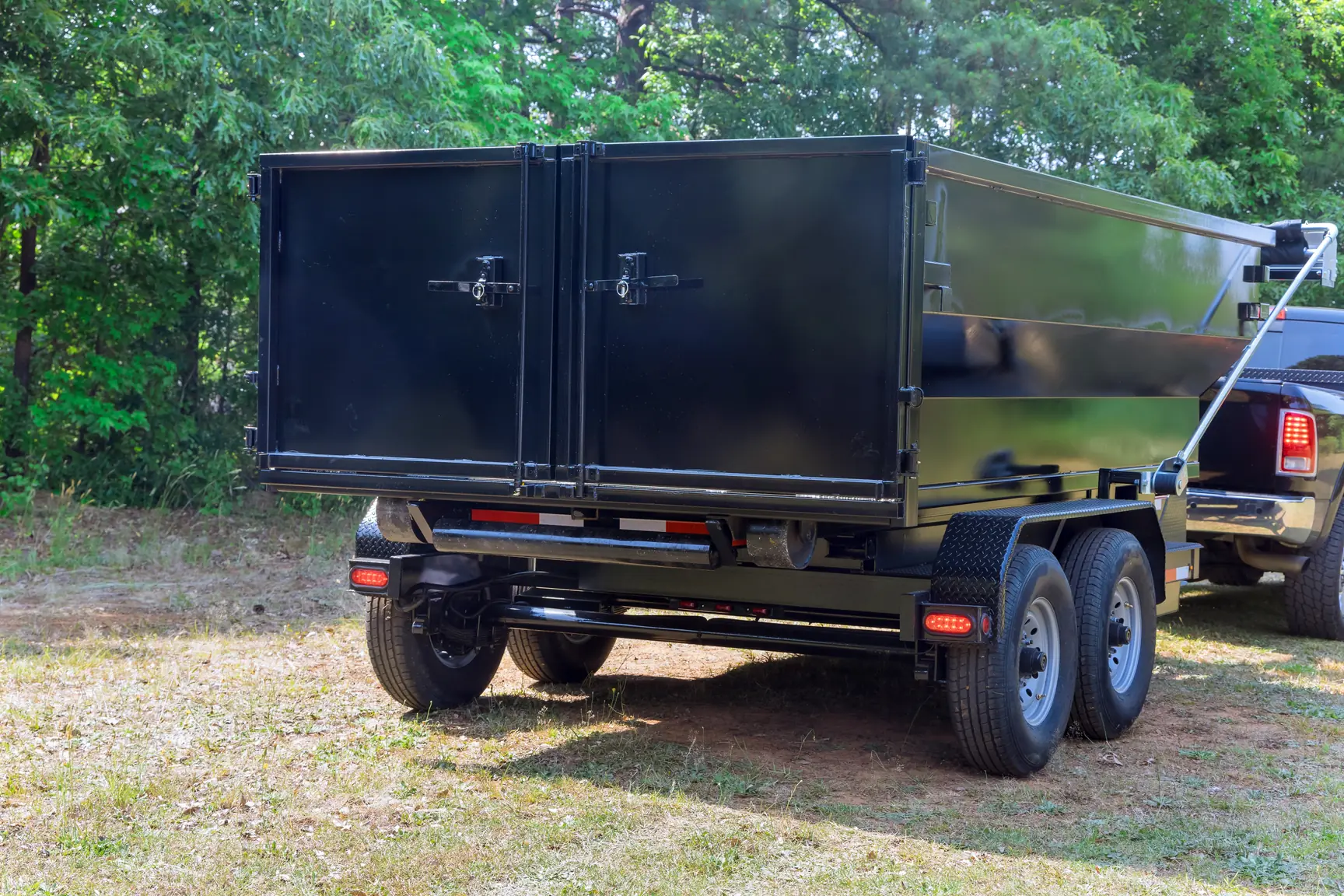
Every other coverage on this site answers for somebody outside your business — a customer, a neighbor, a passing car, somebody else’s driveway. This one answers for the person on your payroll. When the injured party is one of yours, the policy that responds is generally a workers compensation and employers liability policy, and the liability policy you already bought is written to stay out of it.
That is not a hole in your liability coverage. It is the design — and knowing why is the difference between finding out at the claim and setting it up right.
Why your liability policy stops at your own crew
The standard commercial general liability form carries two separate exclusions that, between them, close the door on employee injury. The first removes the duties that a compensation, disability-benefit, unemployment or similar statute places on you as an employer — the statutory benefit your state requires you to provide is not a liability policy’s job.
The second is the one owners typically miss. It excludes bodily injury suffered by your own employee, where the injury comes out of the work he does for you or of duties tied to running your business — and it carries out to that employee’s spouse, child, parent, brother or sister, so the family’s suit lands in the same place.
Then comes the sentence that makes it hold. That employee exclusion holds whether you are sued as the employer or in some other role, and it extends to any duty to contribute to, or reimburse, a third party that ends up paying for the injury. That closes the back door an operator assumes is open — the general contractor who pays your helper’s claim and comes looking for you.
There is one narrow give-back, for liability assumed under what the form calls an insured contract; whether a particular hold-harmless clause is one depends on the wording and the facts, and a web page does not settle that for your agreement. Expert commentary puts the purpose flatly: those exclusions keep the insured’s own employees out of that policy, and a separate policy answers for them.
What the workers compensation policy answers for
A standard insurance reference describes this line as the system that delivers “no-fault statutory benefits prescribed in state law” — the employer pays them to the injured worker, or to his family, after a job-related injury or occupational disease. No-fault is the bargain: nobody has to prove you did anything wrong, and in the ordinary case the covered worker cannot turn around and sue you over the same injury. Two state systems we read say so in their own words; the details are state law and vary.
The policy is conventionally written in two halves. One answers for the statutory obligations the compensation law puts on you as an employer. The other answers for “liability to employees for work-related bodily injury or disease” that falls outside that statute. The statutory half generally pays what the state’s law requires rather than working against a policy ceiling the way other lines do; the other half typically carries a stated limit.
It is also a separate purchase, not part of a businessowners package: an owner who bought a package for the yard, the office and the containers has generally bought nothing for the crew.
A stack of hazard layers for a roll-off crew, presented as a list rather than a ranking. At the top is the driver on foot beside a heavy truck, backed over or struck by traffic after getting out of the cab. Next is the hoist and its hydraulics, where the rails coming down are a recognized way to be badly hurt. Next is lifting, slips, trips and falls, and cuts. At the bottom is the ordinary rest of the day: in and out of the cab, working a tarp, pulling pins and moving empties around the yard in weather. The page draws some of this from a neighboring trade’s regulator material and says so. No figures are shown.
Where a roll-off crew actually gets hurt
The federal workplace-safety regulator calls collection work “one of the most dangerous activities in the recycling industry.” That material is about recycling collection rather than dumpster rental — a neighboring trade, and we say so plainly — but the mechanism is the same. The driver gets out. He is on foot, behind and beside a heavy truck, in a driveway or in live traffic. The regulator’s account of how workers in that family have died is blunt: backed over by trucks, or struck by oncoming vehicles as they exited the trucks they were driving.
Beyond the truck itself, the same source lists “lifting injuries; slips, trips and falls; and cuts and abrasions.” That is a list of hazards, not a ranking, and we are not going to turn it into one.
The hoist is its own story, and one federally funded state fatality investigation is about exactly this truck and exactly this job. A driver arrived at a house to drop an empty container and collect a full one, set the empty down, got out, and noticed a leak in a hose to a hydraulic cylinder that raises and lowers the rails. He reached in to close the valve. The rails came down and he was pinned. That is a single incident, not a rate and not a pattern — enough to establish that the rails and the hydraulics are a recognized way to be badly hurt.
The rest of the day is ordinary: in and out of the cab, working a tarp, pulling pins, walking the load, moving empties around the yard in weather.
A two-column comparison of the word employee on either side of the seam. The first column is workers compensation: paying drivers as contractors does not settle the question, and most states, in an industry source’s own hedged words, treat an uninsured subcontractor or that subcontractor’s employees as the operator’s own; the practical answer is proof of the sub’s coverage, kept on file. The second column is the standard liability form, whose definition of employee includes a leased worker and does not include a temporary worker, and does not draw the contractor line at all. Which side a given driver lands on turns on the wording and the facts, and the question is cheapest before the loss. No figures are shown.
The seam runs straight through the word employee
If you pay your drivers as contractors rather than putting them on payroll, that status under one body of law does not settle the workers compensation question. An insurance industry information source puts it this way: for workers comp purposes, “most states will treat an uninsured contractor or subcontractor” — or the employees of an uninsured subcontractor — as your own employee, so you may be liable if that person is hurt while working for you. The hedge is the source’s own, and it matters: this is state law and the answer varies.
The practical response is documentary rather than clever: get proof that the sub carries his own coverage, and keep it. Where a state runs its own coverage authority, that authority may itself require an application from independent contractors and subcontractors that have employees.
Then there is the seam itself. Expert commentary on the standard liability form observes that its definition of “employee” does not draw the contractor line at all: it includes a leased worker and it does not include a temporary worker. So the word that decides which of your two policies is in play is defined differently from the word you use about your crew. We will not tell you which side a given driver lands on — that turns on the wording and the facts. We will make sure the question gets asked before the loss, which is the only time the answer is cheap.
When the state decides how the coverage gets bought
Most of this line is placed in a private market. In a few states it is not, and that changes what you can buy rather than what you need.
Four states run it their own way: Ohio, Washington, Wyoming and North Dakota. In those four the required coverage is generally obtained through a state fund rather than from a private insurer, and what a policy bought in the private market does and does not reach there is a question to settle before a truck works in the state.
The four are not equivalent, and a flat sentence about them would be wrong. One state’s own agency describes itself as the “sole provider and administrator of the workers’ compensation system” there, and names the complete set in the same breath. Another state’s statute voids contracts that undertake to indemnify or insure an employer against compensation liability. A third says outright that it “does not allow for private workers’ compensation coverage.” Wyoming is the qualified corner, and the qualification is its own insurance department’s: that page says “Wyoming is a monopolistic state” with the state fund as the primary provider, and in the next breath that exempt employers “may purchase workers’ compensation insurance from private insurers” on the open market. Which employers are exempt is a per-state question our state pages carry, not this one.
Texas sits at the far end of the same axis. Its insurance regulator says “private employers can choose to carry workers’ compensation insurance” and that it is not required in most cases; an insurance industry information source calls it the “only state in which workers comp insurance is truly optional.” What rarely gets written down is what opting out actually is. An employer that declines is a non-subscriber, an employer that ends a policy becomes one the day it ends, and a non-subscriber owes the state affirmative reports — that it carries no coverage, and of work-related injuries costing more than a day of lost time, work-related illnesses and deaths. Opting out is itself a filing regime.
Owners, officers, and who gets counted
Whether you are covered yourself is usually a separate decision from whether your crew is — and usually an affirmative one.
In most states a sole proprietorship or partnership is not required to carry this line until it has employees who are not owners, and most of them also let a proprietor or partner elect onto the policy himself. Many states also exempt employers below a small headcount, and where that line falls differs from state to state. We do not publish those thresholds here: a threshold true of the class and wrong for your state is worse than none, so our state pages carry them, verified one state at a time.
The pattern is this: an owner’s coverage is typically something you elect into, not something that is simply there because a policy exists. If you drive, if you get up on a load, if you go back for the container on a Friday night, that election is not a formality.
How we place this line for a roll-off operation
This line is underwritten on the work your people actually do, and a submission that describes a roll-off operation as generic hauling tends to get handled as something it is not. We write it the way the operation runs: who drives, what they touch, what happens in your yard, and whether your subs carry their own coverage.
We are an independent agency, so the submission goes to the markets that want this class rather than to a single appetite. And because this line has state-fund states, a non-subscription regime in Texas and owner-election questions almost everywhere, the account is looked at state by state.
None of this is a coverage opinion. Your own policy wording and your state’s rules control what happens on any given claim, and where the answer turns on the facts, the time to ask is before the loss.
Related coverage for dumpster rental operators
- General Liabilitygeneral liability
- Commercial Autocommercial auto
- Dumpster and Equipment Coverageinland marine
- Commercial Propertycommercial property
- Pollution Liabilityenvironmental / pollution liability
States we serve · Dumpster Rental Insurance · Get a quote · Contact us
Primary sources
- OSHA — Green Job Hazards: Recycling Collection — the federal workplace-safety regulator, on collection work — a neighboring trade, not this one
- Texas Department of Insurance — Employer resources — the state insurance regulator, on the choice and on a non-subscriber’s reporting duties
- North Dakota Workforce Safety & Insurance — Agency Overview — a state agency naming the complete set of exclusive state funds
Workers compensation questions roll-off owners ask us
My general liability policy is in force. Doesn’t that cover a driver who gets hurt?
Generally not, and the standard liability form is explicit about it in two places — one exclusion for obligations under a workers’ compensation or similar law, and a separate one for bodily injury to an employee of the insured arising out of employment. The second one also reaches the employee’s family and applies whether you are liable as an employer or in any other capacity. Your own wording controls, so read yours, but the design of the form is to send this somewhere else.
Both my drivers are subcontractors, not employees. Does that put me outside this?
Not reliably. Contractor status under one body of law does not settle the workers compensation question — an insurance industry information source notes that “most states will treat an uninsured contractor or subcontractor”, or the employees of an uninsured subcontractor, as your own employee for this purpose. The practical answer is documentary: get proof the sub carries his own coverage and keep it. Whether a given driver lands inside or outside depends on your state’s law and on the facts of the arrangement.
Am I covered myself if I am the one climbing up to work a tarp?
Usually only if you elected to be. In most states a sole proprietor or partner is not required to carry this line until there are employees who are not owners, and most states allow those owners to cover themselves if they choose to. Coverage for an owner is typically something you elect into rather than something that is simply there. Which election is available to you, and how it is made, is a per-state question our state pages handle.
We work in a state that runs its own fund. Does a policy bought here follow the truck in?
That is exactly the question to settle before the truck works there, and it is not one we will answer generically. In a small number of states the required coverage is generally obtained through a state fund rather than from a private insurer, and what a privately placed policy does and does not reach in those states turns on the state’s own rules and on your wording. Tell us where you are working and we will run it down state by state.
Texas does not require it. Is there any reason to buy it anyway?
The Texas insurance regulator does say that “private employers can choose to carry workers’ compensation insurance” and that it is not required in most cases. What gets written about far less is that declining it is itself a filing regime: an employer without coverage is a non-subscriber, must report to the state that it has none, and must report work-related injuries costing more than a day of lost time, work-related illnesses and deaths. That is a decision worth making deliberately rather than by default.
Why does one half of the policy carry a stated limit and the other one not work that way?
Because they answer for different things. One half answers for the statutory obligations your state’s compensation law puts on you as an employer, and it generally pays what that law requires rather than working against a policy ceiling the way other lines do. The other half answers for liability to employees for work-related injury or disease that falls outside the statute, and that side typically carries a stated limit. What limit suits your operation is a conversation, not a figure on a web page.
Tell us who is on the truck
Send us the roster, the states you run in, and how your subs are set up. We will come back with the markets that fit and the state questions to answer first.