
Operations we insure
Dumpster Rental Insurance
The six policies a roll-off operation is usually built from, the working day that drives them, and where each one stops.
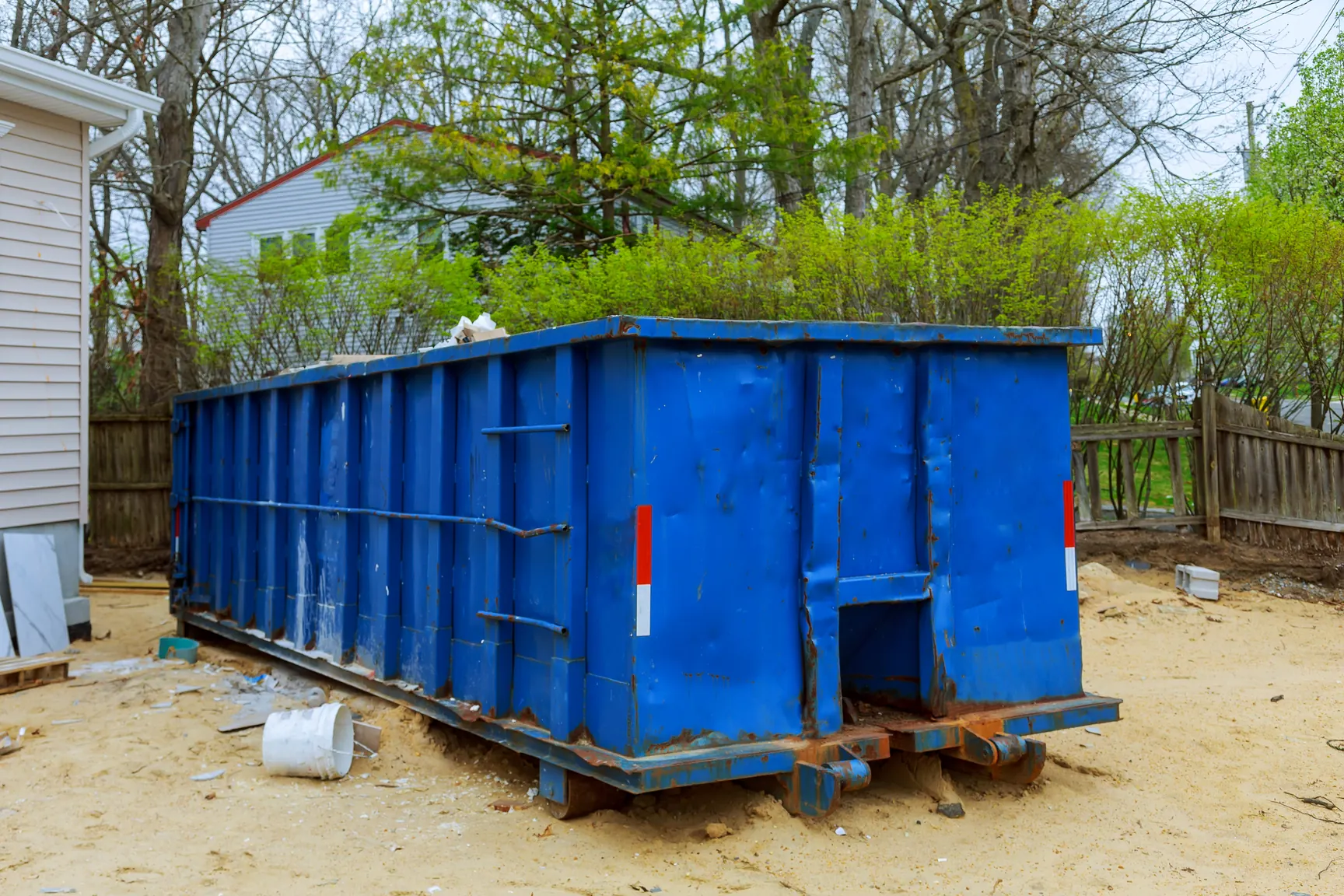
Dumpster rental insurance is not one policy. It is the set of lines a roll-off operation is normally built from — general liability, commercial auto, coverage for the containers themselves, property at the yard, workers compensation, and pollution liability — and the useful question is which of them answers for a given loss and where each one stops.
That is a less satisfying answer than a single product name, and it is the accurate one. What an operator buys is a program, and the places a program leaks are the seams between the policies in it rather than the middle of any one of them.
This page is the overview. It starts with the working day, because the insurance questions in this trade follow from how the work is actually done and not the other way round. It then names the six lines and hands each one to the page that carries it, walks the practicalities of getting quoted, and closes with the two trades nearest this one.
Two things you will notice throughout. We publish no premium figures, because a range wide enough to be honest for this class is too wide to be useful. And where something is commonly said about this trade but nothing we could retrieve supports it, we say so plainly rather than dress it up.
Send us the shape of the operation
The trucks, the container count, the yard and who is driving — enough to start reading the lines against the work rather than against a generic application.
One place, one container, and back again
A federal solid-waste manual sets the two kinds of truck side by side, and the contrast is the most useful sentence available about this trade. A packer truck works an extended route and then heads for the transfer station. Of the other kind the manual says “rolloff trucks typically travel to one place” — one address, one container, hauled to the facility, unloaded, and the empty brought back to where it started.
Everything else about insuring this class follows from that shape. A route hauler is spread thin across a neighborhood; a roll-off operator is concentrated, repeatedly, on one customer at one address with one large steel box left behind. The box does not go home at night. It sits on a driveway, a parking surface, a verge or a job site for days, on ground that belongs to somebody else, while the business that owns it is somewhere else entirely.
That is the defining physical fact of the class, and it is why the containers sit awkwardly against a policy written around a described premises. It is also why placement damage is the loss operators ask about first: a drop lowers a heavy object onto a surface somebody else paid for, and a pickup is the same moment in reverse with a full load on board.
The word operators use for the visit where an empty goes down and a full one comes up is the swap-out. We use it because it is the trade’s own word, not because any source we read defines it — the manual describes the drop, the pick up, the haul and the return, and stops there.
The weigh-in, the queue, and why the day is not elastic
The haul ends at a gate. The same federal manual describes the scale house plainly: “Incoming and outgoing loads are weighed and fees are collected”. That step is the one place in the working day where a number is unavoidable in conversation, and it is the one place this page will not give you one. What it costs at the gate is a conversation with the facility, not a figure on a web page.
The manual also records why the disposal outlet matters so much: because the trucks handle many loads in a day, convenient access to one is “very important to their operations”. That is an operating fact before it is anything else. A business whose revenue depends on repeating a loop is a business whose economics are set by how long the loop takes.
And the loop is not always elastic. The manual names queuing as a feature of the disposal step — at the inbound scale, at the tipping area, and at the outbound scale. An operator who has waited in one of those knows the day can be lost there, and a generic insurance page will not have that detail because it is in a solid-waste manual rather than an underwriting guide.
That manual is some years old, so we take the loop from it and nothing else: the shape is structural, and the figures in it are the kind of thing that ages.
What the customer loads, and what has to stay in the box on the road
A container is a vessel somebody else fills. On the construction side, a federal environmental agency defines the material as “the debris generated during the construction, renovation and demolition” of buildings, roads and bridges — which is a useful, sourced way of saying what a container is for without going near the list of things that must never go in one. That list is long, partly local, and the pollution liability page owns it.
Where the load matters most to this page is on the road. The federal cargo rules that apply to commercial motor vehicles require a load to be carried so as to “prevent the cargo from leaking, spilling, blowing or falling” from the vehicle. That is the regulatory face of a heaped container. An overfilled box is commonly discussed as a billing question; on a public road it is also a containment obligation, and that reframing is the most useful thing this page can say about overage without pricing anything.
Those same rules carry a set of requirements written for “roll-on/roll-off and hook lift containers” by name, turning on the lifting device, the front stops, and the tiedowns that have to be installed by hand when one of those is missing, damaged or does not match. It is worth one sentence here for one reason: the federal rulebook knows this equipment by name. Whether a particular truck meets the definition that makes those rules apply is a different question, and the commercial auto page is where it belongs.
We write both of those as rules that apply to commercial motor vehicles, never as rules that apply to your truck. The scope of that part of the federal scheme is a real question with a real line in it, and nothing retrieved in this research settles where a given roll-off operation sits relative to that line.
The parts of the day nobody has a source for
Several things every operator does are not written down anywhere we could retrieve, and the honest move is to say so rather than attach a consequence to them. Boards and planks under the rails, thought about the wheel path, care turning on a residential apron: these are real precautions and they are ordinary practice. No government source, standards body or insurance reference we read addresses them at all. So they appear here as a description of what operators do and nothing more — not as a way to avoid a claim, not as a condition of coverage, and not as something that changes what a policy pays. Whether a particular placement loss lands inside or outside the exclusions that get examined is fact-specific, and the general liability page says so in more detail than a hub can.
The same applies to the customer’s own property in and around the box — the belongings loaded into it, the fence, the gate, the landscaping the container was set beside. We can name the situation. We are not going to tell you how it resolves, because the provisions that decide it are examined on that same page and the answer there is that it depends on the wording and the facts.
And what a rental agreement tells a customer about prohibited items is not something we found any source for either. What is verified is what disposal facilities refuse and that some unacceptable material will arrive anyway, and the pollution liability page carries it.
A hub-and-spoke diagram with a roll-off operation at the center and the program built around it. The truck, driving, hoisting and the loading and unloading the auto form speaks to, goes to commercial auto. Injury and damage around a container placed on a customer’s ground goes to general liability. The containers themselves, at rest on somebody else’s property, go to dumpster and equipment coverage. The yard, the office and what is stacked there overnight go to commercial property. A driver or helper hurt on the job goes to workers compensation. What the load turns out to contain goes to pollution liability. The seam between the truck and liability lines is the easiest thing to get wrong, and the operator’s own policy wording controls. No figures are shown.
The six policies this class is usually built from
Below is the whole program in one place, with each line handed to the page that argues it properly. Read it as a map rather than a summary: the depth is one click away in every case.
General liability: injury and damage around the box
The broad third-party answer: somebody hurt, or something damaged, around a placement, around a container sitting on a site for days, and around the work going on beside it. It is also the policy that hands the truck away on purpose, and knowing where it does that is worth more than knowing what it covers.
Commercial auto: the truck and the movement
The truck itself — driving it, working the hoist, and the movement of a container onto and off the frame. The standard auto wording reaches that movement without ever using the phrase operators expect to find in it, which is why the two liability policies meet where they do.
The containers as insured property
The containers are not insured by either liability policy, and they spend most of their working life parked on ground the operator does not own. That single physical fact is what takes them out of a policy written around a described premises. We hedge here deliberately: nothing retrieved in this research treats roll-off containers as a named class of insured property.
Property: the yard, the shop and the office
The yard, the shop, the office, and what is stacked or parked there overnight. A property form is a form about a place, and the grant is tied to the premises it describes.
Workers compensation: the crew
Driver and helper injury — out of the cab, on foot, at the hoist, on a tarp. The liability policy is drafted to keep that exposure out, in more than one place, so this line is not an optional extra sitting beside it.
Pollution liability: what the load contains
What the load turns out to contain. The standard liability form’s own definition of pollutants reaches waste, including material on its way to be recycled — so for this trade the exposure sits in the middle of the inventory rather than at the edge of it.
The seam between the first two is this brand’s signature, and it is the single easiest thing to get wrong on a page like this one — so it gets a pointer, not a second argument. Two liability policies both have something to say about a container coming off a truck, they are drafted to meet each other, and the meeting point is not always where an operator expects. The general liability and commercial auto pages carry that argument between them, in full, with the hedging it requires. Your own policy wording controls.
A top-to-bottom flow of how an underwriter reads this class. It starts with underwriting guidelines, which belong to each insurer and differ between them, so no page can say what a market will do. Acceptance and terms are one decision rather than two. Driver records are the input an authority names outright, and the federal rules already require a carrier to pull and review them, so an operator doing that is better placed. Radius of operations is then read as a question against where the load can be taken. The rest of the submission, fleet, weight rating, the yard and the operating area, gets described, and nothing read establishes what each does to the decision. What an operator controls is loss control, such as driver training. No figures are shown.
What an underwriter is deciding when this class comes across the desk
Start with the honest frame, because it is sourced rather than modest. Underwriting guidelines are the insurer’s own: an established insurance reference describes them as the rules an insurer provides to its agents and its underwriters, used to decide “the acceptance, modification, or rejection of a prospective insured”. They belong to each company and they differ between companies, which is why no page can tell you what a market will do with your account.
The same reference describes underwriting itself as “the process of determining whether to accept a risk” and then setting the terms on which it is written — acceptance and terms are one decision, not two.
Driver records are the one input in this whole section that an authority names outright as an underwriting input. A motor vehicle record is “a summary of a driver’s convictions and accidents” as the home state holds them, and it is described as “one of the primary tools used in underwriting auto insurance”. Independently of that, the federal rules that apply to motor carriers operating commercial motor vehicles require the carrier to obtain each driver’s record on hire and to review it periodically, giving great weight to violations showing disregard for public safety. Two independent reasons, one document — and an operator already pulling those records for the second reason is in better shape for the first.
Radius of operations is a defined term — “the area or areas where a company conducts its business” — and the trade’s own economics tie an operator to a disposal outlet. Put those two verified things beside each other and you get a question rather than a factor: where does the work sit relative to the places that will take the load?
The same restraint applies to the rest of it. Fleet size, weight rating, the yard and the operating area all get described on a submission, and nothing we read establishes what any of them does to acceptance or to terms. The weight line in the federal rules exists for safety regulation; turning it into a rating factor would be a guess wearing a fact’s clothes, and the regulatory side of it belongs to the commercial auto page.
What an operator can do is a different question. Loss control is the term for reducing either the chance a loss happens or how bad it is when it does, and the same reference names driver training programs as an example — which lands squarely on a business whose largest moving exposure is a truck.
None of the above needs to be resolved before you talk to somebody. It is what the conversation is made of.
What ends up in front of that underwriter
An application is “a form providing the insurer with certain information necessary” to underwrite the risk, completed by the person applying. That is the whole of what can usefully be said: no standard checklist for this class was retrievable, and we are not going to publish one as though there were.
Prior claim history arrives as a loss run, and the definition of that document contains the most practically valuable sentence in this section. A loss run is a periodic report of claim information provided by an insurance company to the people it insures. It comes from the carrier to the insured — which means it is a document you are entitled to request from your own insurer rather than something an agency produces for you.
Driver information is the other half, and there is a genuine convergence in it. A motor carrier subject to the federal driver rules already keeps a qualification file on each driver, and the rules enumerate what goes in it: the employment application, the driving record pulled at hire, the road test certificate or an accepted equivalent, the periodic record check with a note of its review, and the medical examiner’s certificate. An operator subject to those rules has already assembled most of what a submission asks about drivers — the only document list on this page that is verified rather than assumed.
Everything else commonly asked for — a schedule of vehicles, a count of the containers, payroll by duty, where the work happens, contracts carrying insurance requirements — is trade-common and unverified as a requirement. It is what gets asked, which is not the same thing as what is required.
Certificates, endorsements, and what a contract is really asking for
A certificate of insurance is “evidence that certain general types of insurance coverages and limits” have been bought by the party required to furnish it. Read those words carefully: evidence, and general types.
The mechanism is an endorsement. Contract-insurance guidance published by a public entity puts it directly: a counterparty who is not already an insured under the standard general liability wording must be added by an endorsement that amends the policy’s who-is-an-insured section. An additional insured is described elsewhere as a person or organization “not automatically included as an insured under an insurance policy”, added at the named insured’s request, commonly because a contract requires it — project owners, customers and owners of leased property, which are the three relationships a roll-off operator actually meets.
Two mechanics are worth carrying away. Adding somebody does not buy more insurance, because “all additional insureds share the policy limits”. And an endorsement is written for a specific relationship and has to match the relationship between the parties, which is the substance behind a certificate that gets rejected — the general liability page carries why the three relationships are structurally different endorsements.
Two other phrases turn up constantly in contract requirements. Primary and noncontributory fixes the order in which policies respond: the required policy “must pay before other applicable policies” and without seeking contribution from others claiming to be primary. A waiver of subrogation is an insurer’s acknowledgment that it has “no right to subrogate against a liable third party” after paying a loss, typically agreed because the insured waived its own right of recovery first — and the timing matters, because a waiver given before a loss and one given afterwards are generally treated differently.
Two classes that sit beside this one
Dump trailer rental is the closest neighbor and the structural difference is checkable. The standard general liability form defines an auto to include “A land motor vehicle, trailer or semitrailer” designed for travel on public roads, and its auto exclusion reaches a vehicle “owned or operated by or rented or loaned” to an insured — which is broader than a vehicle somebody from the business is driving. Read together, those two verified pieces put a trailer the operator owns and rents out inside that exclusion’s field of view even on a day nobody from the business touches it. A roll-off container is not an auto at all, and that is the genuine difference between the two products. We stop there deliberately: nothing retrieved establishes that this produces a gap, that any auto policy does or does not respond, or what status a customer towing it has. Those are commercial auto questions.
Junk removal moves similar material with a different division of labor: in container rental the customer fills the box and the operator moves it, while in junk removal the crew goes onto the premises, handles the customer’s property and loads it. That is plain description of how the two trades work rather than a retrieved finding, and what follows from it is a question rather than a conclusion: handling somebody else’s property brings the care, custody or control provision and the question of who answers for what the waste turns out to be much closer to the center of the conversation than a drop-and-return does. We are not saying junk removal needs different coverage, more coverage, or another policy — nothing we read supports a word of that.
How this class gets read before it goes to market
We are an independent agency, so the work is reading the operation against the wordings available rather than fitting it to one — which for this class means asking about the loop before asking about limits. The state layer of this, what varies by where the work happens, is being built page by page and will live under our locations section. Until those exist we would rather say nothing about a particular place than generalize. What we can tell you today is what the standard forms generally do and where the questions live. Your own policy wording controls.
Questions dumpster rental owners ask before they buy
What insurance do you need for a dumpster rental business?
In practice a roll-off operation is built from six lines rather than one policy: general liability for third-party injury and damage around a placement, commercial auto for the truck and the container movement, a policy for the containers themselves, property for the yard, workers compensation for the crew, and pollution liability for what the load turns out to contain. Which of them you actually need, and how they are structured, depends on the operation and on the wording each market issues.
Do the federal cargo rules say anything about roll-off containers?
Yes. The federal cargo rules that apply to commercial motor vehicles require a load to be carried so that it cannot leak, spill, blow or fall from the vehicle, and they carry a set of requirements written for roll-on and roll-off and hook lift containers by name — turning on the lifting device, the front stops, and the tiedowns that take over when one of those is missing or damaged. Whether a particular truck meets the definition that makes those rules bite is a question the commercial auto page carries.
Why would an insurer want a driving record on somebody I already trust?
Because it is one of the few things in this conversation that an authority actually describes as an underwriting input. A motor vehicle record summarizes a driver’s convictions and accidents as the home state holds them, and it is described as one of the primary tools used in underwriting auto insurance. There is a second reason to have it: a carrier subject to the federal driver rules is required to pull that record on hire and review it periodically anyway. One document, two reasons.
Where does a loss run come from, and who do I ask for it?
Your own insurer. A loss run is a periodic report of claim information provided by an insurance company to the people it insures — so it is a document you are entitled to request from the carrier that issued the policy, not something an agency conjures up for you. That direction is the practical part, and it is the reason a submission can usually be assembled faster than operators expect.
Is a certificate of insurance the same thing as being added to my policy?
No, and the difference is what most rejected paperwork turns on. A certificate is evidence that certain general types of coverage and limits have been bought by the party required to furnish it. Additional insured status is a different mechanism: a party who does not qualify as an insured under the standard wording is added by an endorsement that amends the policy’s who-is-an-insured section. An endorsement is also written for a specific relationship, so the one that fits a project owner is not automatically the one that fits a customer.
I rent out a dump trailer as well as cans. Is that the same conversation?
Structurally it is a different object. The standard general liability form defines an auto to include a land motor vehicle, trailer or semitrailer designed for road travel, and its auto exclusion reaches a vehicle owned by an insured rather than only one somebody from the business is driving. Read together, those two pieces put a trailer you own and rent out inside that exclusion’s field of view even on a day nobody from the business touches it. A roll-off container is not an auto at all. We stop there: nothing retrieved establishes whether that produces a gap or how any auto policy responds, and those are commercial auto questions.
We also do junk removal hauls. Does that change anything?
It changes where the questions concentrate rather than what the answers are. In container rental the customer loads the box and you move it; in junk removal your crew goes onto the premises, handles the customer’s property and loads it. That is plain description of how the two trades work, not a research finding. What follows is a question, not a conclusion: handling somebody else’s property brings the care, custody or control provision and the question of who answers for what the waste turns out to be closer to the center of the conversation. We are not telling you it needs different coverage — nothing we read supports that, and the responsibility question is genuinely open.
Get the operation in front of a market
Tell us what you run and we will read the lines against the work. No premium figures and no guesses about what a market will do — the questions that need answering, then a quote.
Related coverage for dumpster rental operators
- General Liabilitygeneral liability
- Commercial Autocommercial auto
- Dumpster and Equipment Coverageinland marine
- Commercial Propertycommercial property
- Workers Compensationworkers compensation
- Pollution Liabilityenvironmental / pollution liability
States we serve · Dumpster Rental Insurance · Get a quote · Contact us
Primary sources
- Sustainable Management of Construction and Demolition Materials — the federal environmental agency’s definition of what construction and demolition debris is