
Coverage line
General Liability Insurance for Dumpster Rental Businesses
Third-party injury and damage around your cans — what the standard form generally reaches, where it hands off to the auto policy, and what your own wording decides.
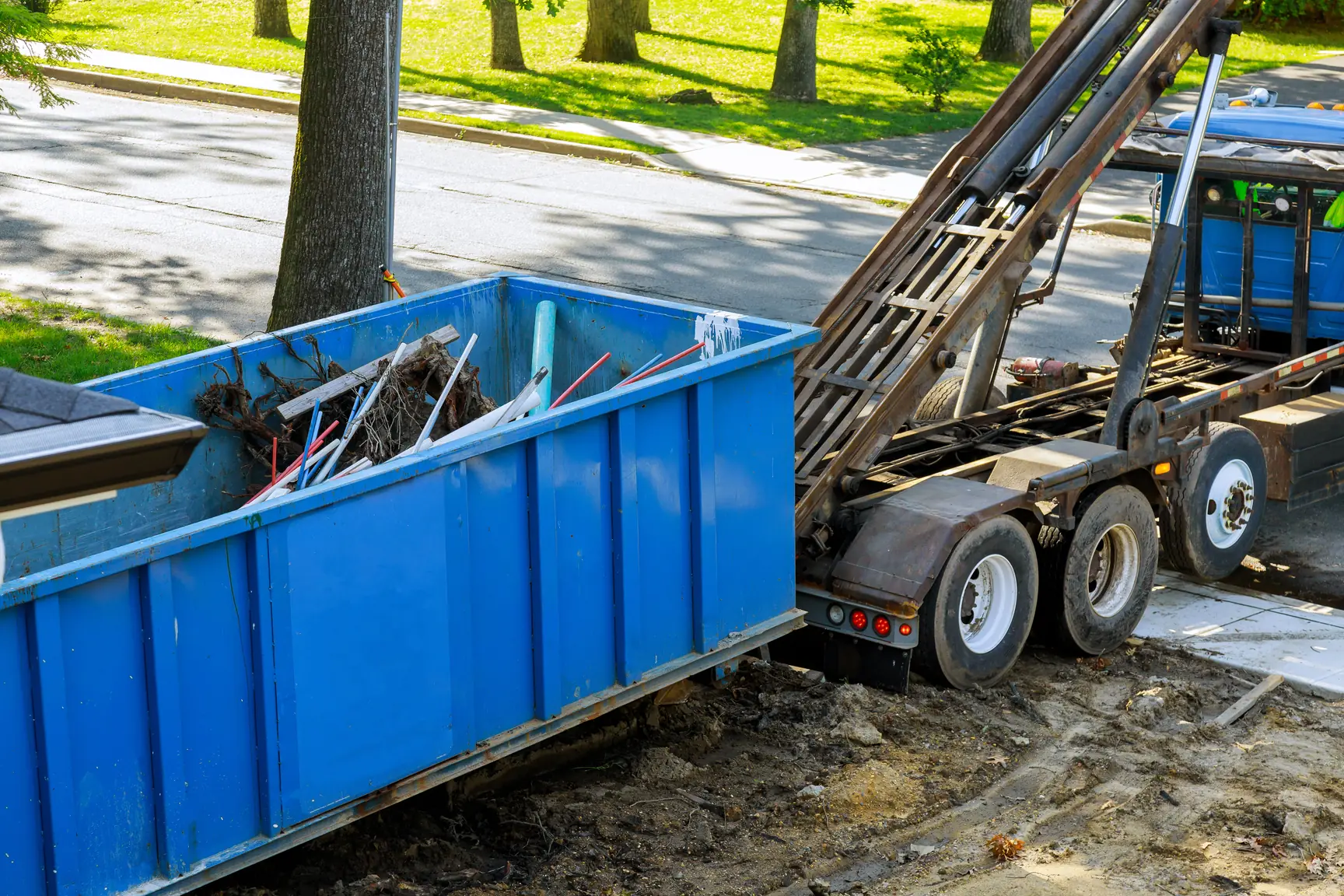
General liability is the policy that answers to people who are not on your payroll and to property that is not yours. On a roll-off account that means the homeowner who walks past an open can on a Saturday, the worker who trips on the block you set to keep a box level, and the owner who says the surface under the box is not what it was on Monday.
On this trade the edges matter more than the grant. “Loading or unloading” is your liability form’s own defined term — your auto form does not use the words — and the two are drafted to hand off to each other at one specific point. Knowing where that point sits is the difference between a claim one carrier pays and a claim two carriers argue over while your customer waits.
Nothing below is a coverage opinion about your policy. We describe the shape of standard wording, hedged on purpose, because forms differ between carriers and policies get endorsed. Where the honest answer is that it depends on the facts, we say so.
A hub-and-spoke diagram with the general liability grant on a roll-off job at the center. Injury and damage to other people around the containers is the ground the form keeps. The exposures it hands away by design are these: harm arising from the use of an auto, including loading or unloading, goes to the auto policy; pollution, where waste itself counts as a pollutant, goes to a separate policy; damage to the operator’s own containers goes to inland marine; and injury to the operator’s own people goes to workers compensation. Which policy answers a given loss depends on the wording actually in force. No figures are shown.
What general liability answers for, and what it hands to another policy
The Insurance Information Institute describes a commercial general liability policy as protecting a business from financial loss where it is held responsible for property damage, or personal and advertising injury, arising from its services, its operations or its employees. On this trade that is a wide grant: your cans sit on ground you do not control, your customers load them unsupervised, and the public walks past them at every hour you are not there. It is not a single answer to everything, though. Four exposures are handed away by design.
Autos go to the auto policy. The standard general liability form excludes injury and damage that arises from the “ownership, maintenance, use or entrustment to others” of an auto that an insured owns, operates, rents or borrows — then adds one short sentence that does enormous work here: “use includes operation and ‘loading or unloading’.” It applies even where the claim against you alleges negligence in supervision, hiring or training, if the occurrence itself involved the use of an auto.
Pollution goes to a separate policy. The standard form carries a pollution exclusion, and its definition of pollutants covers waste — then says plainly that “waste includes materials to be recycled, reconditioned or reclaimed.” A business whose inventory is waste headed for a transfer station should read that twice. Triple-I notes the cover can be bought back by endorsement, that the endorsement is very limited, and that higher-risk businesses should consider a separate policy — the argument the pollution liability page makes.
Your own cans go to inland marine. The standard form excludes damage to property you own, rent or occupy, which takes your containers out of liability altogether and into cover written on the containers themselves. And your people go to workers compensation.
How the cover behaves across a drop, a sit and a pickup
A roll-off job is not one event and the policy does not treat it as one. There is the drive out, the drop, a stretch of days when the can sits on somebody else’s property doing nothing, sometimes a swap-out, then the pickup. Worth saying early: “premises and operations” is rating vocabulary, not a heading in the policy — the phrase does not appear in the standard form. What the form divides is the general grant from a defined products-completed operations hazard, which picks up injury and damage away from premises you own or rent, arising out of your product or your work, and excludes work not yet completed or abandoned.
Two findings sit underneath that and neither is obvious. A container you rent out is expressly not “your product” — the definition leaves out property rented out, or left with others to use, rather than sold. And “your work” is defined broadly enough to include “the providing of or failure to provide warnings or instructions,” which is the limb that typically reaches furthest for a business that places a heavy box and tells a customer how to use it.
We will not tell you which side a placed container lands on. Nothing we relied on applies either branch to a rented can left on a customer site. What an adjuster asks is whether the drop was still an operation in progress. One piece of structure helps: the standard business auto form carries its own completed operations exclusion, so the auto policy takes the movement and hands the after-the-fact exposure back.
The hoist is attached to the truck, and both forms were written knowing it
Two standard forms describe the same moment — a container coming off a truck or going back on it — and they were drafted to meet rather than overlap. Start with the auto side. The standard business auto form excludes injury and damage that results from moving property with a mechanical device — and then lifts the exclusion again where that device is, in the form’s words, “attached to the covered ‘auto’.” A hand truck is carved out separately. Read that qualifier slowly. A roll-off hoist, a cable winch, a hook-lift arm: attached to the truck. The exclusion is written not to reach them, which makes the auto form the one built to answer while a can is being rolled off or winched on.
The liability side mirrors it. The standard general liability form defines “loading or unloading” as the handling of property from the point it is accepted for movement onto an auto, while it is on the auto, and while it is being moved from the auto to the place where it is finally delivered. Then it carves the same shape back out: handling by a mechanical device is outside that definition where the device is, again in the form’s words, “not attached to the … ‘auto’,” with a hand truck excepted as before. An attached device therefore sits inside the liability form’s definition of loading or unloading, which sits inside its auto exclusion. An unattached device sits outside both. The two definitions point the same way from opposite sides.
FC&S, in published commentary on the auto form, illustrates the boundary with an attached hoist on a flatbed truck used to load or unload bricks: not subject to the mechanical-device exclusion, because the hoist is attached. A conveyor belt not attached to the truck, doing the same job, is excluded. That is a published illustration about a flatbed rather than a ruling about roll-off equipment — but it is the mechanism your hoist typically operates under.
So what does that mean on a live drop. While the box is under power on the hoist, the standard wording generally points at the auto policy: the winch-on that swings, the box that comes down off-center, the chain that lets go. It does not follow that everything happening at that address goes the same way, and here is where the two forms stop agreeing.
The auto form also excludes the handling of property at each end of the trip — before the insured starts moving it toward the covered auto, and after it has been moved off the auto to its final delivery point. The liability form’s definition runs all the way to the place of final delivery; the auto form’s exclusion cuts off after the movement from the auto toward it. The two forms do not describe an identical boundary. We will not claim the seam closes perfectly, and we will not claim it leaves a particular gap either — neither statement is supportable, and the liability side varies by carrier besides, because some insurers substitute a broader auto exclusion for the standard one.
Two more things worth knowing. Under the auto form, a person who is not your employee, partner, member, lessee or borrower is not an insured while moving property to or from a covered auto — and customers help and interfere during a drop constantly. And the interlock is not merely inferable from two definitions: the liability form’s excess insurance condition names the auto exclusion directly, so a loss that arises out of auto use without being caught by that exclusion sits on the liability policy as excess rather than primary.
Which policy answers a given claim depends on the specific policies in force, their endorsements, and the facts of the drop. Your own wording controls.
Placement damage: the driveway, the curb and the lot
A loaded can is heavy and driveways are not engineered for it. This is the loss every operator has had a conversation about, and it is the one where a page that promised you an outcome would be doing you harm.
The provision examined first is the exclusion for damage to “that particular part of real property” on which you, or contractors working on your behalf, are performing operations, where the damage arises out of those operations. Read the narrowing words. It is not an exclusion for the property; it is an exclusion for that particular part of it, and it is conditioned on the damage arising out of the operations. Whether a scored apron or a cracked slab under a container falls inside those words is fact-specific, and nothing we relied on applies the provision to a container placement.
A second provision sits beside it and points the other way: the form also excludes that particular part of any property needing restoration, repair or replacement because your work on it was performed incorrectly — but that one expressly does not apply to damage included in the products-completed operations hazard. Which is why the lifecycle question above and the driveway question here are the same question asked twice.
Then there are the customer’s belongings inside the box. The standard form excludes damage to personal property that is in the insured’s care, custody or control. Whether the contents of a container on a customer driveway are in your care, custody or control is heavily fact-dependent, and no source we relied on applies that phrase to container contents in this trade. It is a question your rental agreement should have an opinion about long before a claim tests it.
We name the provisions that get examined and stop there, deliberately. Your own policy language and the facts of the placement decide it.
A two-column comparison of recurring claim shapes on a roll-off job, offered as illustrations rather than rankings. The first column is the shape of the claim: someone hurt around a container you placed; the surface under the box giving way; something nearby taking the hit; and two carriers pointing at each other. The second column is what generally gets read: when the injury happened relative to your operations; the exclusions for that particular part of real property and their narrowing words; whether the box was under power on the hoist, which generally points at the auto policy; and which device was doing the moving, which resolves the seam. Your own policy language and the facts decide it. No figures are shown.
The shapes these claims arrive in
Four recurring shapes, offered as illustrations of how a provision gets examined rather than as rankings or frequencies. We hold no data on how often any happens, so we claim none.
Someone is hurt around a can you placed
A person climbs on it, reaches into it, or walks into it in the dark. The analysis turns on when it happened relative to your operations.
The surface under the box gives way
A driveway, an apron, a curb, a parking surface. The exclusions above are the ones that get read, and their narrowing words — “that particular part” — are where the argument happens.
Something nearby takes the hit
A parked vehicle, a fence, a gate, a low line. If the box was under power on the hoist, the standard wording generally points at the auto policy rather than this one.
Two carriers point at each other
The seam claim. Your liability carrier reads its auto exclusion, your auto carrier reads its handling-of-property exclusion, and which device was doing the moving is what resolves it.
Limits and structure, described without a number
We publish no limits, ranges or premiums anywhere on this site — a figure on a page is a figure nobody underwrote for your operation. The mechanics we can describe. A liability policy generally carries a per-occurrence limit and an aggregate that occurrences erode over the term, with a separate aggregate attaching to the products-completed operations hazard — a different pocket, which a claim reaches only if its facts send it there.
Additional insured status is where structure usually reaches an owner, because a contractor is holding up a drop until a certificate arrives. Status is conferred by an endorsement that amends the who is an insured section — not by the certificate. It does not buy more insurance: additional insureds share your limits, the common endorsement says in its own text that it does not increase them, and it caps what is payable on the additional insured’s behalf at the lesser of what the contract required and what your limits make available.
It also has to match the relationship. A contractor you perform work for, a property manager whose premises you operate on, and a municipality issuing a placement permit are structurally different counterparties, and there is a different endorsement for each. Send the wrong one and it protects nobody, which is typically why certificates come back rejected. Ongoing operations and completed operations are also separate grants needing separate endorsements, and on the completed operations side the date that matters is when the damage occurs.
Why an independent agency on this line
Everything above describes standard wording. Your policy is standard wording plus whatever endorsements your carrier attached, and on this exposure the endorsements are where the answer lives. A broader auto exclusion or an amended definition moves the seam this page just described.
Independent means we put your account in front of the markets whose appetite currently fits it rather than the one market we are tied to. It also means we read your liability and auto policies side by side and tell you where they meet — something no quoting engine does and no certificate ever shows. Your trucks, your containers, your yard and your route, read by the person who answers the phone when a drop goes wrong.
Your declarations page names the exact forms attached to your policy, and editions change. Whatever a page like this one describes in general, your own wording is what controls your claim.
What operators ask us after something has already happened
My liability carrier says the driveway claim belongs on my auto policy. Can that be right?
It can be, and it is the argument this class produces more than any other. The standard general liability form excludes injury and damage arising out of the use of an auto, and it says in terms that use includes loading or unloading. If the box was coming off the hoist when the surface let go, the loss is standing squarely in that language. That is not the end of it — the standard form reaches only autos owned or operated by, or rented or loaned to, an insured, and some insurers substitute a broader auto exclusion — but it is why the file lands where it lands. Send us both policies and we will read them together.
Does general liability cover the customer goods that were already in the can?
The standard general liability form excludes property damage to personal property that is in the insured’s care, custody or control. Whether a loaded container sitting on a customer driveway puts those contents in your care, custody or control is a fact question, and it is one no source we relied on resolves for this trade. It depends on who loaded it, who held the job, how long it sat, and what your own wording says. Better settled in your rental agreement than tested by a claim.
A contractor wants to be added to my policy before I can drop on his site. What is he actually asking for?
Additional insured status, which is not something a certificate creates. A party that does not already qualify as an insured is added by an endorsement that amends the who is an insured section of the policy. The common one for a contractor extends to liability caused in whole or in part by your acts or omissions in your ongoing operations for that contractor at the scheduled location, and it carries two limiters in its own text: it applies only to the extent permitted by law, and it is no broader than what your contract required.
The city wants to be named for a street placement permit. Can I send the same endorsement I send my contractors?
Generally not, and this is the most useful thing on this page for an operator whose certificates keep getting bounced. The endorsement written for work performed for the additional insured protects a party you are working for. A permit issuer is not a party you are doing work for — it is a party that authorized you to occupy its right of way. There is a separate endorsement built for governmental permits and authorizations, and a general-purpose designated-organization endorsement for relationships that are neither. The endorsement has to match the relationship or it protects nobody.
If a can sits on a job for three weeks and somebody gets hurt on it, is that still my operations?
That is the question an adjuster opens with, and the honest answer is that it depends on the facts and on the wording. The standard form divides the work you are still doing from what it calls the products-completed operations hazard, and it sets out when work is deemed complete. A container you rent out is expressly not your product under the definitions, which points away from one branch of that hazard. Whether the placement itself is still an operation in progress, or work already completed, is the hinge — and it is not something a web page settles for your file.
Does general liability pay to fix my own container if a customer wrecks it?
No, and the reason is structural rather than a matter of degree. The standard general liability form excludes property damage to property you own, rent or occupy. Your cans are your property, so damage to them is not a liability question at all — it belongs on the inland marine cover that follows the containers around, which is a different policy with a different trigger. Worth understanding before a claim, because it decides which carrier you call.
What should I have in front of me if I want this quoted properly?
Your current declarations page for both the liability and the auto policy, the endorsement schedule attached to each, your rental agreement, and an honest description of what you haul and who your customers are. The declarations page names the exact forms sitting on your policy, which means it answers questions that no general description of standard wording can. Bring it and the conversation gets specific fast.
Related coverage for dumpster rental operators
- Commercial Autocommercial auto
- Dumpster and Equipment Coverageinland marine
- Commercial Propertycommercial property
- Workers Compensationworkers compensation
- Pollution Liabilityenvironmental / pollution liability
States we serve · Dumpster Rental Insurance · Get a quote · Contact us
Primary sources
- Insurance Information Institute — Commercial general liability insurance — the consumer-level description of the grant, and of how pollution cover is treated
- IRMI expert commentary — The Auto Exclusion in the CGL Policy — why the auto exclusion coordinates two concurrent policies rather than disclaiming vehicle risk
- County of Sonoma, California — Additional Insured Endorsements — a public entity setting out, in its own words, what it demands and why it rejects what does not match
Send the declarations page and we will read the seam for you
A licensed agent reads every submission, tells you where your two liability policies meet, and comes back with what the markets will do.