
Coverage
Pollution liability for dumpster rental operators
The standard liability form defines pollutants for itself, and the definition reaches waste. For most trades that is an accident at the edge of the work. Here it is the inventory.
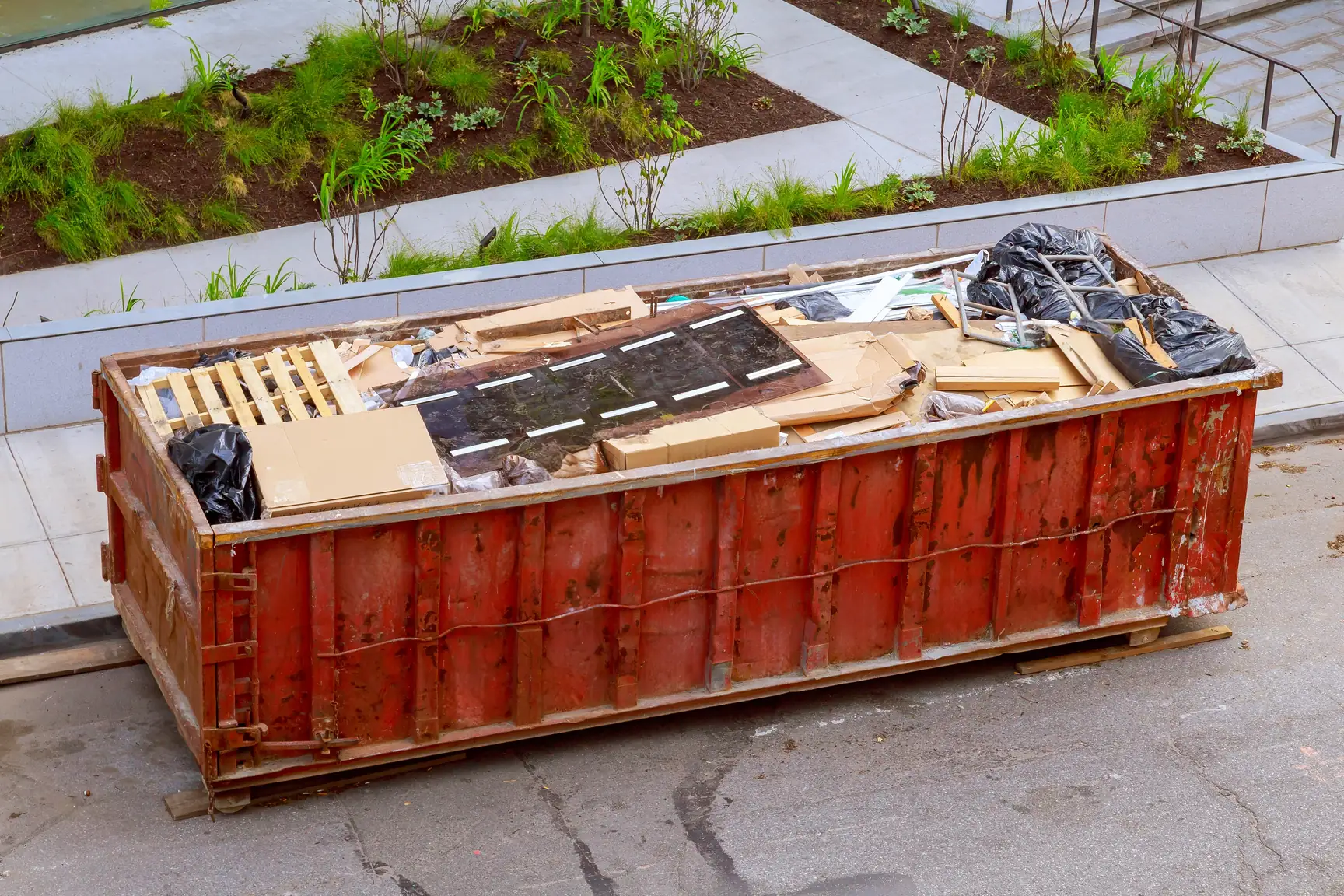
The standard general liability form does not leave the word pollutants to ordinary usage. It defines the word for itself, the definition reaches waste, and it then says in the same breath that waste includes materials to be recycled, reconditioned or reclaimed. For most trades that describes something going wrong at the edge of the work. For a dumpster rental business it describes the inventory.
You are paid to take possession of waste, put it on a public road and hand it to a facility somebody else owns. The honest way to describe a roll-off load is that much of it will be sorted and recovered, and much of it genuinely is. That is a good business story, not a coverage argument — the definition closes that route in terms.
So this page is about what goes in the can, what the facility will not take, and what happens when the wrong thing turns up after your truck has gone. It does not tell you what your policy pays; on this line it cannot.
A top-to-bottom flow for the load in a roll-off box. The standard general liability form generally carries a pollution exclusion built around a defined word. That defined word reaches waste, the very thing the operator is hired to carry. It is not limited to hazardous material in the technical sense: a garage cleanout is plainly not hazardous waste and the definition reaches it anyway. Some cover can be added back by endorsement, but what is added back is very limited. So higher-risk operations are generally pointed at a separate pollution policy. One strand has been carved out of one policy, and whether anything fills the carve-out is a question for each operator’s own wording. No figures are shown.
An exclusion that sits in the middle of the work, not at its edge
The standard general liability form generally carries a pollution exclusion, reaching injury and damage arising out of the discharge, dispersal, seepage, migration, release or escape of pollutants. It runs long, and establishing that it exists is enough here. The exclusion is built around a defined word, and that word reaches the thing you are hired to carry. Nor is the auto policy an obvious backstop: a standard industry reference puts pollution exclusions in the auto and umbrella policies as well, and hedges how far they reach rather than describing it.
The error industry commentary singles out is the belief that pollution exclusions only reach material that is hazardous in the technical sense, which it calls a dangerous assumption. A garage cleanout is plainly not hazardous waste, and the definition reaches it anyway. An industry body describes the result: pollution liability is excluded from the standard general liability policy, some can be added back by endorsement, what is added back is very limited, and higher-risk operations are advised to consider a separate pollution policy. That does not mean an operator has no liability coverage. One strand has been carved out of one policy, and whether anything fills the carve-out is a separate question for every reader.
What the receiving facility will not take
EPA published a manual to help communities and operators make decisions about transfer stations. It describes operations rather than stating current regulation, it is old, and only its slow-moving picture is leaned on here. It carries the best national list available of what these facilities typically refuse. Part of it is predictable: explosives, radioactive material, medical and hazardous waste, asbestos. The rest is ordinary junk — stumps, mattresses, furniture, appliances, dead animals, liquids, dust and emptied fuel tanks.
EPA scopes that list in its own next sentence, and the scoping matters as much as the list: it is a general list, some transfer stations are set up to process those wastes, and others keep a longer one. So the list that binds your load is typically the one kept by the facility receiving it — and notice which entries nobody thinks of as pollution. Furniture. Tree stumps. Appliances. Emptied fuel tanks.
One reason the manual gives for refusing material is worth sitting with: the disposal facility the transfer station itself delivers to may refuse it. Your load can be turned away because of what the landfill behind the gate would refuse — a chain of rulebooks, in which clearing the first gate does not guarantee the second.
Asbestos gets one passage and then a hand-off. Per EPA, the hazard turns on disturbance: asbestos-containing material broken up during demolition, repair or remodeling can put fibers into the air. Asbestos is also on EPA’s national list of what transfer stations typically will not take. Everything past that point is set by rules that vary by jurisdiction. Ask the facility you deliver to, and read the state page.
The load nobody checked until after you had driven away
EPA advises transfer station operators to screen a load on arrival, during tipping and after the customer has gone, and one method it names is asking what is in the load and where it came from. Read that from the driver’s seat: your driver can only answer that question if you know what your customer put in the can.
Then comes the sentence this section rests on. EPA tells facility operators that regardless of screening effort they should expect some unacceptable waste to be discovered after the responsible party is gone — an authoritative source volunteering the weakness in its own recommended control. The rest surfaces late, once the material is mixed into a facility’s stream.
EPA describes what happens then: in some cases the party that deposited the waste is contacted to retrieve it, and in others the facility manages it. For a roll-off operator, the party that deposited the waste is the operator. The customer who filled the container was never at the facility, is not on the scale ticket, and is not who gets the call. That is a description of what facilities do, not an allocation of legal responsibility, and EPA does not turn it into one. It does tell you where the phone call lands.
No source we could find describes what any policy does when a load is turned away or when a bad item surfaces after delivery. That hole is real, and we will not fill it with a confident sentence.
A container is a mixing vessel
EPA’s household hazardous waste category turns on what a leftover does, not what it is: burns, reacts or explodes in the right conditions, corrodes, or poisons. Paints, cleaners, oils, batteries and pesticides are its examples. Putting any of it out with the regular trash is, in EPA’s words, in some cases a form of improper disposal — which it says can pollute the environment, threaten human health, and physically injure sanitation workers. In a roll-off operation the sanitation worker is your driver.
The warning that transfers most directly to this equipment is the one about mixing: incompatible products might react, ignite or explode, and contaminated material might become unrecyclable. That was written about a household cupboard, and a container is mechanically a mixing vessel — the one place where several half-finished products from several rooms end up pressed together. The second half runs back to the top of this page: contamination is what destroys the recovery story an operator sells.
EPA adds that even empty containers of HHW can pose hazards because of residual chemicals, and the transfer station manual, written a generation earlier, independently lists fuel tanks as typically unacceptable even when emptied. Two EPA documents, decades apart, on one point: empty is not safe.
Where the trigger sits, and what you should not assume is inside
Environmental policies exist to fill the gaps that pollution exclusions leave in liability and property policies. What they actually contain is the harder question, because industry commentary reports that this line has no standard set of coverages at all, and that coverage varies widely from one policy to the next even within the same line. That is why this page names no form and no endorsement. On the general liability side there is a standard form to describe; here there is not one to name, so declining to name one is accuracy rather than caution.
What can be described is the trigger. One basic environmental form answers only for locations named in the policy; another answers for pollution that comes out of the operations the insured described when applying. Where you are, against what you do. A roll-off operation is not a fixed site: your containers spend most of their lives on other people’s property, your loads spend part of theirs on a public road, and they end at a facility you do not own. Two independent sources, thirteen years apart, describe coverage for disposal sites the insured does not own, and coverage for pollutants carried as cargo, as optional additions rather than part of the basic insuring agreement. Two of your three legs are, on both accounts, commonly added rather than assumed.
Which leaves the one instruction true for every reader. Your own policy wording controls, your declarations page lists what is actually on it, and the optional legs are the ones to ask about by name.
A stack of the layers that bear on who answers for a container’s contents. At the top is the rental agreement, where the allocation generally lives first: the terms on what may not go in the can, on overloading, and on who absorbs a refused load. Beneath it is the regulatory layer, which is not national: household hazardous waste is regulated at the state and local level, and medical waste sits mainly with state agencies whose programs differ. Beneath that is the principle that responsibility for waste generally follows the material to its ultimate fate. At the base is the open question: whether the operator or the customer occupies that role could not be established, and the page declines to settle it by assumption. No figures are shown.
Who answers for what goes in the container
This is the question every operator asks, and the one this page will not answer with a rule. Nothing we could verify establishes whether the operator, the customer, or both carry responsibility for the contents of a rented container. Pages in this market answer it confidently in both directions. That sentence is not available from any source we could check.
The allocation is generally contractual before it is anything else. It lives in your rental agreement — the terms about what may not go in the can, about overloading, about what happens when a load is refused and who absorbs the consequence. If you do not know what yours says, it is the first document to read, and the one you control.
The regulatory layer over that contract is not national, and EPA says so twice: household hazardous waste is regulated at the state and local level, and medical waste sits mainly with state environmental and health agencies, whose programs differ significantly from one another. The shape of the problem is national; the rules that bind you are not, which is why the specifics live on our state pages.
One adjacent principle is worth knowing, and it does not answer the question either. EPA frames responsibility for waste generally as following the material to its ultimate fate rather than ending at the curb. Whether a container operator or the customer who filled it occupies that role is exactly what we could not establish, and it is not a question a web page should settle by assumption.
Why bring an independent agency to this line
With no standard wording to compare against, the market itself is the work. We write dumpster rental and roll-off operators, so the questions start from your operation: how many containers, where they sit, what your customers put in them, and which facilities receive your loads. Then we read your declarations page with you and say where the open questions are.
Related coverage for dumpster rental operators
- General Liabilitygeneral liability
- Commercial Autocommercial auto
- Dumpster and Equipment Coverageinland marine
- Commercial Propertycommercial property
- Workers Compensationworkers compensation
States we serve · Dumpster Rental Insurance · Get a quote · Contact us
Primary sources
- EPA — Household Hazardous Waste — what EPA treats as household hazardous waste, and what it calls improper disposal
- EPA — Learn About Asbestos — how EPA describes asbestos fibers being released
- EPA — Learn the Basics of Hazardous Waste — how EPA frames responsibility for where waste ends up
Questions operators ask about container contents
Somebody put paint and solvent in my container and the transfer station turned the load away. What happens now?
Operationally, EPA describes facilities telling customers where refused material can go instead, and keeping a set-aside area and a written step-by-step plan for material they cannot take. What this page will not tell you is what your policy does about it. Nothing we could verify describes the coverage outcome of a refused load, and a confident sentence there would be invented rather than sourced. Get the scale ticket and the facility’s written reason, call your agent the same day, and read your rental agreement while you are at it.
Does my general liability policy cover pollution at all?
The standard general liability form generally carries a pollution exclusion, and the definition of pollutants it is built on reaches waste — including material that is on its way to be recycled. Some coverage can be added back, and an industry body describes what gets added back as very limited, advising higher-risk operations to consider a separate pollution policy. Whether anything in your particular policy answers a pollution claim depends on the wording you actually bought, and your declarations page is where that is listed.
The customer filled the can, so is it their problem rather than mine?
We could not verify a general rule in either direction, and we are not going to invent one. What is verifiable is narrower: EPA describes receiving facilities contacting the party that deposited the waste, and in a roll-off operation that party is you, because your customer was never at the scale. Where responsibility actually sits between the two of you is settled first by your rental agreement, and the regulatory layer over it varies by state.
Will my commercial auto policy pick it up once the load is on the truck?
Do not assume so. A standard industry reference puts pollution exclusions in the auto and umbrella policies as well as the general liability policy, and says each of them excludes it, in that reference’s own words, “to some degree.” We have not read your auto form and will not describe its wording from memory — that phrase is a hedge in the source, not a description. It is a question worth putting to your carrier in writing before you need the answer rather than after.
What actually gets a load refused?
EPA’s national guidance on transfer stations lists bulky items such as tree stumps, mattresses and furniture, along with appliances, fuel tanks even when they have been emptied, liquids and sludges, dust-prone material, and the categories everyone expects. It then says plainly that this is a general list, that some facilities are set up to handle those wastes, and that others keep a longer list of their own. The list that binds your load is the one published by the facility that receives it.
Is pollution coverage something I add to what I already have, or a separate policy?
Both shapes exist, and there is no standard wording to compare them against. Industry commentary reports that this line has no standard set of coverages at all, and that what one policy covers can differ a great deal from the next even within one line. Two things a dumpster operation leans on — coverage tied to disposal sites you do not own, and coverage for pollutants in transit — are commonly described as optional additions rather than as part of the basic agreement. Ask which of them are on the quote in front of you.
There might be asbestos in a demolition load. What do I need to know?
EPA identifies disturbance of asbestos-containing material during demolition, maintenance, repair and remodeling as how fibers get released into the air, and asbestos appears on EPA’s national list of waste typically not accepted at transfer stations. Past that point the rules that govern who looks for it, who must be told and what happens when it turns up vary by jurisdiction, and this page will not summarize them. Ask the facility you deliver to, and read the state page for where you work.
Tell us what your cans come back with
Bring your declarations page, your rental agreement and the name of the facility you tip at. We will tell you what we can read from them.