
Commercial Property
Commercial property insurance for dumpster rental operators
The yard, the office, the shop and what sits in them. A property form is a form about a place, and that one fact decides most of what it reaches.
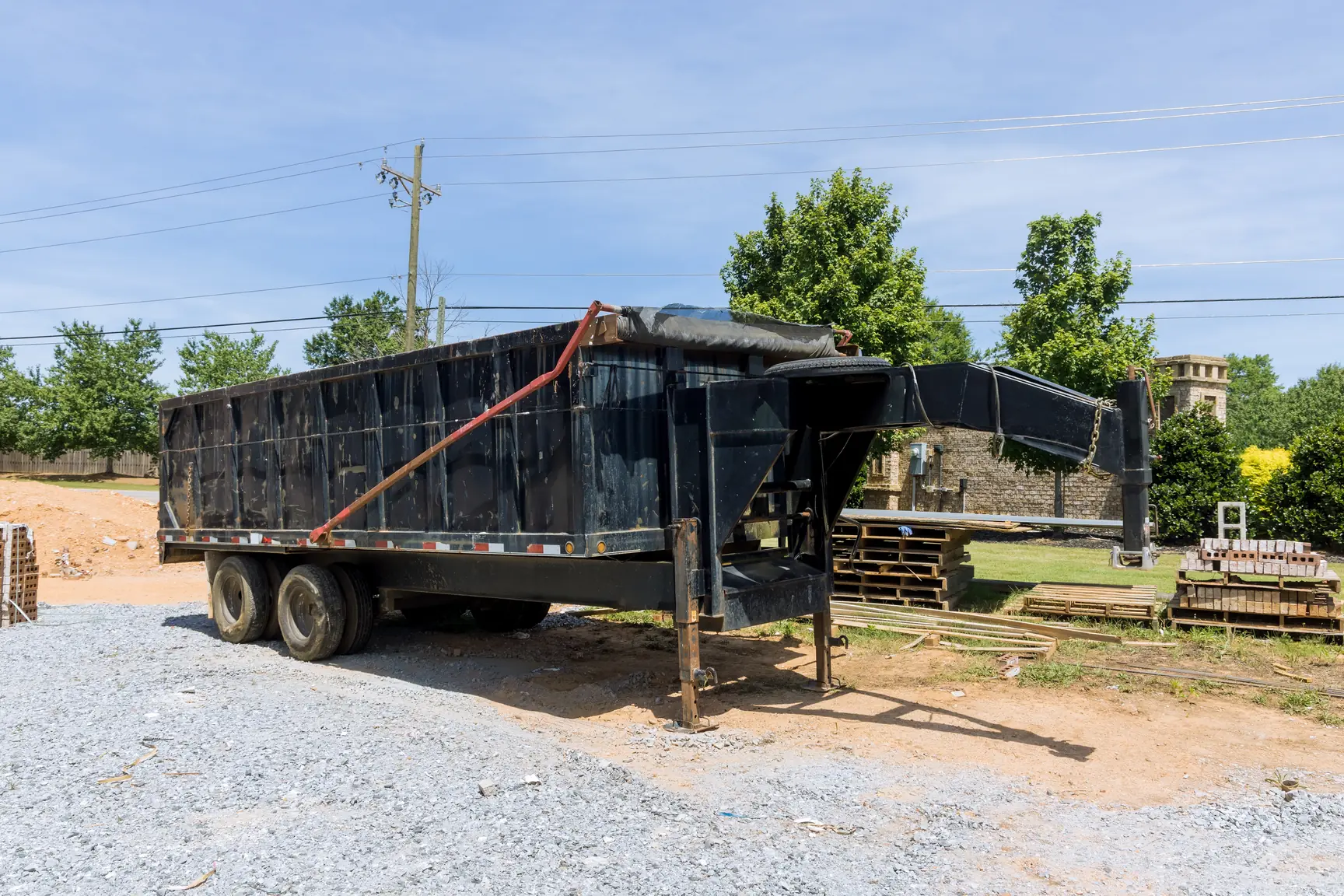
Commercial property is the policy that answers for the yard itself — the building, the office, the shop, the racking, the parts on the shelf. It is also the one most easily misread, because a property form is a form about a place. A standard commercial property form pays when covered property is physically lost or damaged by a covered cause of loss “at the premises described in the Declarations,” and nearly every category it goes on to define is qualified by location relative to that place.
That is why your assets do not all sit on one policy. This page stays on the property side of the line: what the standard wording reaches at the yard, where it stops, and the provisions most likely to surprise an operator whose premises are mostly fence, gravel and sky.
Everything below describes the shape of widely used standard wording, hedged deliberately. The open-perils wording behind the tools and breakdown sections is a later edition than the property and business income wordings behind the rest, so nothing here should be read as saying those documents match. Endorsements move the lines too, and your own wording decides.
What a property form attaches to
A standard commercial property form defines the building as the described structure plus completed additions, “Fixtures, including outdoor fixtures,” permanently installed machinery and equipment, and property you own that maintains or services the building or its premises. Your business personal property is a separate category: furniture and fixtures, machinery and equipment, stock, and all other personal property you own and use in the business.
Note the word categories. The standard wording names no welder, no fuel installation and no yard light; it works by category rather than by list, and where it does name outdoor items it typically names them as carve-outs.
If you lease your yard, the form treats “Your use interest as tenant in improvements and betterments” as your business personal property: alterations and installations made part of a building you occupy but do not own, at your expense, and cannot legally remove. A risk-management reference adds a warning worth acting on — policies vary as to whether these land in the building category or the contents category. Property of others in your care at the described premises is its own category too, and that is the property-side treatment, not the care, custody or control question on the general liability side.
A hub-and-spoke diagram with the commercial property form on a roll-off yard at the center. Property at the described building, or in the open near it, is the form’s own ground. Vehicles licensed for use on public roads are carved out, which is why the trucks sit on commercial auto. Machines operated principally away from the described premises are carved out on a second prong, which is the dumpster and equipment page’s argument. And where another coverage form describes a piece of property more particularly, the property form steps back and answers only above what that other insurance owes. Neither prong is absolute, and which policy answers depends on the policies in force and the facts. No figures are shown.
Three policies written to hand off to each other
Every covered-property category is location-qualified — in or on the described building, or in the open within a stated distance of it. Then, among the property the form does not cover, come vehicles and self-propelled machines that are “licensed for use on public roads” or are “operated principally away from the described premises.”
Two prongs, not one test. The road-going prong is why the trucks sit on commercial auto. The away-from-the-yard prong turns on where a thing spends its working life, which is the dumpster and equipment page’s argument. Neither is absolute — the provision carries express exceptions. Nor is it one publisher’s habit: a state government property fund’s own form, drafted independently and years later, carries the same two-pronged carve-out.
The step almost nobody mentions comes next. A standard form also stands down for “Property that is covered under another coverage form” — where another policy describes that property more particularly, this form steps back, answering only above what that other insurance owes. It does not merely forget what belongs elsewhere; it gives way to the more specific form. These policies are drafted to hand off — though which one answers still depends on the policies in force and on the facts.
A top-to-bottom flow for outdoor property at a roll-off yard. First, a standard property form lists property while outside of buildings, fences among the named items, as property it does not cover. Then the same list is qualified by an outdoor property coverage extension, which hands some of it back. The hand-back is narrow: a closed list of causes of loss that does not include vehicle impact, theft, vandalism or wind, so a fence flattened by a reversing truck is a different question from fire. And the extension is conditional, switched on by what the declarations show and carrying its own separate limit. An adjuster works through where the property was, what caused the loss and whether the extension was switched on. No figures are shown.
Outdoor property is excluded first, then handed back
This is the provision worth the most to a business whose premises are mostly outdoors, and it is a two-step rather than a simple exclusion. A standard form lists “The following property while outside of buildings” — fences among the named items — then qualifies the list with “all except as provided in the Coverage Extensions.” Taken out first, given back second.
What gives it back is an outdoor property coverage extension, and the giving back is narrow: outdoor fences and similar items, against a closed list of causes of loss — fire, lightning, explosion, riot or civil commotion, aircraft. Read what is not on it. Vehicle impact, theft, vandalism, wind. On this wording a fence flattened by a reversing truck and a desk damaged inside the office are different questions, though both sit at the same address on the same policy.
And the extension is not automatic. The coverage extensions are conditional — available only where the declarations show a coinsurance percentage at or above a stated level, or a value reporting period symbol — and the extension carries its own separate limit, stated in the policy. Both of those live on your declarations rather than in the form.
We will not tell you whether your fence is covered. What we can tell you is what an adjuster works through: where the property was, what caused the loss, which causes-of-loss form is attached, and whether the extensions were switched on.
Paving, grading and the ground itself
That same list names “Bridges, roadways, walks, patios or other paved surfaces.” It also names the cost of excavations, grading, backfilling or filling; land; retaining walls that are not part of a building; and underground pipes, flues or drains. For a roll-off yard that is no footnote — the apron the trucks turn on and the pad the cans sit on are commonly the largest capital item after the building itself.
Signage has its own provision: a standard form states a separate limitation on outdoor signs that applies “whether or not the sign is attached” to a building.
None of that makes the ground under your yard uninsurable — these are exactly the items commonly addressed by endorsement, by a scheduled outdoor-property limit, or under a different form. It means the standard wording puts them in a named carve-out rather than the general grant, so cover is something to confirm, not assume.
Tools that spend the day somewhere else
Here is the described-premises principle applied to the category you handle daily. Under a standard open-perils causes-of-loss form, “Builders’ machinery, tools and equipment” owned by you or entrusted to you are limited to the specified causes of loss — a limitation that generally does not apply while the property is on or within a stated distance of the described premises.
The specified causes of loss are a closed, named list: fire and lightning; explosion; wind, hail and smoke; aircraft and vehicles; civil unrest and vandalism; and a handful of others. Theft is not among them. On the yard, the open-perils grant; off the yard, a named list that leaves out the way a contractor’s tools usually go missing. We will leave the inference there, because any outcome depends on the wording and the facts.
The principle has stated edges rather than being a slogan. An off-premises extension typically reaches covered property “Temporarily at a location you do not own” — and expressly does not apply to property in or on a vehicle.
What has to be damaged before business income responds
Business income coverage is commercial property coverage, written on its own standard form alongside the property form; business interruption is the same thing under another name. It pays the actual loss of business income sustained during “the necessary ‘suspension’ of your ‘operations’” — net income that would have been earned, plus “Continuing normal operating expenses incurred, including payroll.”
The trigger is what makes this section belong here. The suspension has to trace back to physical damage done to property at a described premises that carries a business income limit — not to a quiet month and not to a lost account. A hauler’s revenue is out on routes and on other people’s sites, not at the yard — which makes “what has to be damaged, and where” the live question.
Extra expense is often the half that matters more: necessary expenses you would not have incurred but for the loss, expressly reaching continued operations at replacement or temporary locations. After a shop fire a hauler rarely stops trading — it trades from somewhere worse at a higher cost, which is the shape extra expense is drafted around.
Two structural points, no figures attached. Business income generally begins a stated waiting period after the loss while extra expense begins immediately, and both run through a period of restoration that ends when the property should be “repaired, rebuilt or replaced with reasonable speed” — not when it actually is. Cover typically extends a stated additional period after operations resume, but not to loss from “unfavorable business conditions caused by the impact” of the event nearby.
Mechanical breakdown sits deliberately apart
A standard open-perils causes-of-loss form grants a great deal — covered causes of loss means “direct physical loss unless the loss is excluded” or limited in the policy — and the same form then removes “Mechanical breakdown, including rupture or bursting,” alongside wear and tear. The wording that gives open perils takes breakdown back out, which is why the shop lift and the compressor raise a different question from a fire.
A risk-management reference describes equipment breakdown insurance as coverage for “mechanical or electrical breakdown of nearly any type” of equipment, reaching repair or replacement, other property the breakdown damages, and often the resulting business income. It is a distinct coverage and commonly available; how it arrives varies, so ask.
What your declarations page will tell you
A standard commercial property form does not state which perils it covers. It defers to a separate causes-of-loss form named on the declarations, which makes “read your declarations” a structural fact rather than a disclaimer. They name the forms attached, and show whether the coverage extensions are switched on, whether outdoor property was scheduled, and whether business income was written at all.
That is the work on this line. On a roll-off yard the differences that decide a claim are rarely on the quote summary: which outdoor items were scheduled, how the shop’s equipment was classified, whether tenant improvements were valued as building or as contents. We would rather read the wording with you before it binds than promise an answer the form does not give. Your own wording controls.
Related coverage for dumpster rental operators
- General Liabilitygeneral liability
- Commercial Autocommercial auto
- Dumpster and Equipment Coverageinland marine
- Workers Compensationworkers compensation
- Pollution Liabilityenvironmental / pollution liability
States we serve · Dumpster Rental Insurance · Get a quote · Contact us
Primary sources
- Insurance Information Institute — Small Business Insurance Basics — what a property policy means by personal property
- Insurance Information Institute — Do I need business interruption insurance? — business income, in plain language
- IRMI glossary — equipment breakdown insurance — the coverage the open-perils wording leaves out
Frequently asked questions
Is my roll-off truck covered by the property policy on my yard?
A standard commercial property form generally does not reach vehicles licensed for use on public roads, and it says so in a list of property it does not cover. That item carries several express exceptions, so it is not an absolute — but the trucks are the commercial auto page’s subject, and that is where the question belongs.
I lease my yard. Who insures the office build-out and the racking I paid for?
A standard commercial property form treats your use interest as tenant in improvements and betterments as a category of your own business personal property: fixtures, alterations, installations or additions made part of a building you occupy but do not own, paid for by you, that you cannot legally remove. A risk-management reference warns that policies vary as to whether these are classified as building or as contents, so the classification on your declarations is worth reading rather than assuming.
Does the fence around my yard get treated the same way as the building?
No — the structure is different. A standard commercial property form names outdoor fences in the property it does not cover while they are outside of buildings, then hands them to a Coverage Extension that restores them against a short, closed list of causes of loss. Vehicle impact, theft, vandalism and wind are not on that list, and the extension itself is switched on by a condition shown on the declarations rather than applying automatically.
My shop tools ride out on the truck. Does the property policy follow them?
Under a standard open-perils causes-of-loss form, builders’ machinery, tools and equipment are limited to the specified causes of loss — a limitation that generally does not apply while the property is on or within a stated distance of the described premises. The specified causes of loss are a closed, named list, and theft is not among them. Where the tools were, what caused the loss and which causes-of-loss form is attached are the three things an adjuster starts with.
What actually has to happen before business income pays anything?
On a standard business income form the suspension of operations must follow from physical damage to property at a described premises that carries a business income limit. A slow month does not reach it. That is a narrower trigger than most operators expect, because the assets that earn the money are usually not the ones sitting at the yard.
The shop compressor burned out on its own. Is that a property claim?
That is the question the open-perils wording deliberately leaves to a different coverage. A standard open-perils causes-of-loss form grants direct physical loss unless the loss is excluded or limited — and the same form excludes mechanical breakdown. Coverage for mechanical and electrical breakdown is a distinct product and is commonly available; whether you carry it is a declarations question.
How do I find out which of these provisions are actually in my policy?
Your declarations page names the exact forms attached to your policy, and a standard commercial property form does not even state its own perils — it defers to a separate causes-of-loss form named there. The declarations also show whether the coverage extensions are switched on, whether outdoor property was scheduled and whether business income was written at all. Send us the declarations and we will read it with you.
Commercial property
Send us the declarations and we will read the yard with you
Tell us what sits at your yard — the building, the shop, the paving, the fence, the tools that leave every morning — and we will tell you which of these provisions your own policy carries.