
Dumpster Rental Insurance by State
Dumpster Rental Insurance in Illinois
Illinois writes permits for three waste streams and none of them is yours — and then writes an exemption statute that names roll-off equipment by name without exempting you. Here is what actually reaches a container business in this state.
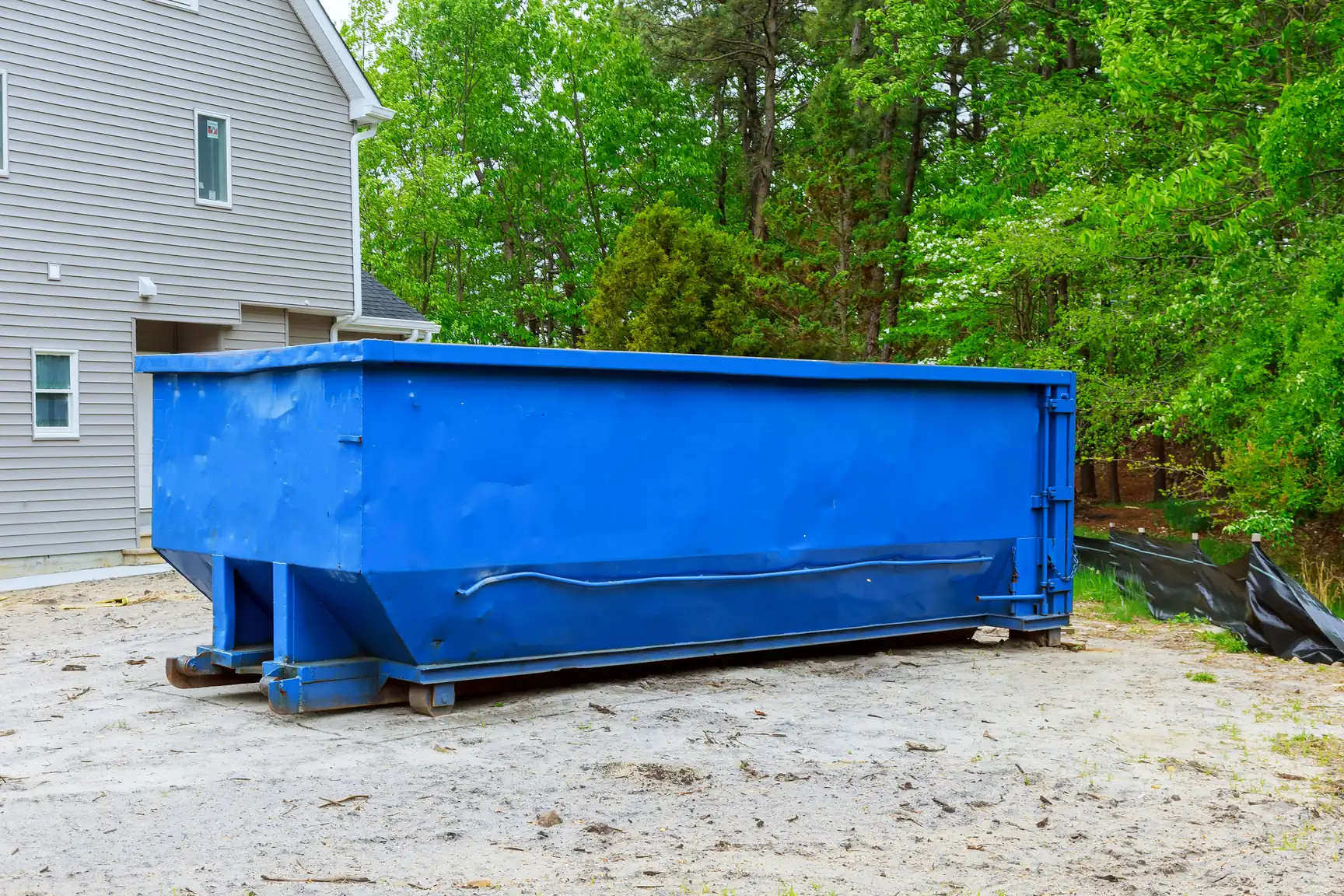
Short answer: there is no Illinois waste hauling permit for an ordinary roll-off load, but there are real duties without a permit attached, an operating-authority layer whose exemption list is genuinely unresolved for this trade, and a municipal container permit that in the largest city falls on the rental operator rather than on the customer.
Two policies, one container, and the gap in the middle
Every dumpster rental operation carries two liability policies that each have something to say about a container coming off a truck, and the uninsured losses in this class live in the gap between them. Loading or unloading is the general liability form’s own defined term. The form generally excludes injury and damage arising out of the use of an auto, and then tells you that use includes loading or unloading. The standard auto form never uses those words; it arrives at the same moment along a different path, and for a roll-off truck the path that matters turns on whether the device moving the property is attached to the vehicle. The two forms were drafted to meet. Where they actually meet is not always where an operator assumes.
Then there is the half of the problem that has nothing to do with bodily injury: damage to the customer’s own property. The cracked driveway. The scored curb. The crushed lawn. The gouged parking surface. General liability forms typically carry exclusions for property in the insured’s care, custody or control and for that particular part of real property being worked on, and whether a placement loss falls inside or outside those exclusions depends on the exact wording and the exact facts. We are not going to resolve that on a web page. What we can do is make sure an Illinois operator knows where the seam runs, so that it gets asked about while the quote is being built rather than after a homeowner has photographed a split apron. Your own policy wording controls, and the forms in use differ.
The Illinois layers that reach a container operation
Illinois permits waste hauling — for three waste streams that are not yours
Illinois does not run a general waste hauler registration. It runs three transport credentials, all of them scoped to particular waste, and the boundary was counted rather than assumed. The general solid waste part of the Pollution Control Board rules contains no hauling permit at all, and its own definition tells you why:
“‘Waste management’ means the process of storage, treatment or disposal of waste, not including hauling or transport.”
The permits in that part are site permits. The one hauling-permit part in the subchapter is Part 809, and it scopes itself in its own opening section: hauling or otherwise moving special waste that was generated inside Illinois takes a current, valid special waste hauling permit from the Agency, and nobody may do it without one (35 Ill. Adm. Code § 809.201).
Everything then turns on the definition of special waste, and the statute keeps it narrow:
“‘Special waste’ means any of the following: (a) potentially infectious medical waste; (b) hazardous waste … (c) industrial process waste or pollution control waste”
Ordinary construction and demolition debris, and ordinary municipal solid waste out of a residential or commercial job, is none of those three. Sweeping the prohibited-acts section of the Environmental Protection Act finds the phrase hauling permit attached to exactly two regimes — hazardous waste and special waste — with a third transport permit for potentially infectious medical waste living in its own section. Three credentials, and this operator holds none of them because none of them covers its load. Roll-off hauling of construction and demolition debris and municipal solid waste is not among the classes Illinois licenses.
That is not the same as saying Illinois asks nothing. It imposes a real and specific duty on a construction and demolition hauler with no permit attached to it. The prohibited-acts section reaches anyone generating, transporting or recycling two named materials — construction or demolition debris, whether clean or general, and uncontaminated soil produced when utilities, structures and roads are built, remodeled, repaired or demolished — where that material is not commingled with any waste. On those loads the paperwork is compulsory: it has to identify the hauler, the generator, where the debris or soil came from, its weight or volume, and the location, owner and operator of the facility that took it in, and it has to record whether the material was transferred, disposed, recycled or treated. The generator, transporter or recycler holds that documentation for 3 years (415 ILCS 5/21(w)).
The limiter in all of that is five words long and it decides everything: that is not commingled with any waste. The duty attaches to segregated debris and uncontaminated soil. A mixed roll-off — the ordinary product of this trade — is commingled, and on the face of the text falls outside it. The same subsection carves out several classes of person entirely. An operator who is told that Illinois papers every load is being misinformed, and so is an operator who is told Illinois asks for nothing.
One duty does apply to every load regardless of permit: the same section makes it unlawful to dispose of, treat, store or abandon any waste — or to bring waste into Illinois for any of those four purposes — anywhere but a site or facility meeting the Act’s requirements (415 ILCS 5/21(e)).
Operating authority runs through the Commerce Commission
Illinois splits the trucking question between two agencies and neither of them is a department of transportation. Operating authority is the Illinois Commerce Commission: except as provided in Section 18c-4102 of that chapter, the Commission’s jurisdiction reaches every motor carrier of property that operates within the State of Illinois (625 ILCS 5/18c-4101). Safety and the weight figure belong to a different body, and the safety chapter says so in its own definitions, where Department is defined as the Illinois State Police (625 ILCS 5/18b-101). The weight threshold, as the statute states it, belongs to that safety side:
“‘Commercial motor vehicle’ means any self propelled or towed vehicle used on public highways in interstate and intrastate commerce to transport passengers or property when the vehicle has a gross vehicle weight, a gross vehicle weight rating, a gross combination weight, or a gross combination weight rating of 10,001 or more pounds”
Illinois does not set a separate intrastate figure — the same definition governs interstate and intrastate commerce in one breath. The safety chapter then adopts a list of federal parts by reference, and those federal rules reach Illinois intrastate operation only because the Illinois statute pulls them in. They are federal requirements in force here; the Illinois number is the one quoted above.
The operating-authority layer has no weight threshold at all, and an operator looking for one will be tempted to invent it. Commission jurisdiction turns on being a person engaged in the transportation of property for hire over the public roads of the state, and on nothing about the vehicle’s size. What the chapter forbids is operating as an intrastate motor carrier of property without a Commission license, or as an interstate one without a Commission registration (625 ILCS 5/18c-4104(1)(a)). The credential for property other than household goods is the public carrier certificate — the certificate a motor carrier is issued in order to carry property, other than household goods, in intrastate commerce (625 ILCS 5/18c-1104(27.2)).
The obligations that ride with it are per-vehicle and per-trip: a copy of the current license in the vehicle, an executed intrastate cab card carrying the current Illinois intrastate identifier, both executed and carried, and vehicle identification in compliance with the chapter’s marking section.
And now the trap, which is the reason this section stops short of telling you what to do. The exemption statute names this trade’s equipment by name:
“transportation, by motor vehicle … of waste from the facilities of the generator of the waste to a recognized recycling or waste processing facility when the generator receives no direct or indirect compensation from anyone for the waste and when the transportation is by garbage trucks with self contained compacting devices, roll off trucks with containers, or vehicles or containers specially designed and used to receive separated recyclables, and when the transportation is an interim step toward recycling, reclamation, reuse, or disposal”
The words roll off trucks with containers are genuinely in the Illinois statute book, and a reader who stops there concludes that roll-off work is exempt. That is not what the subsection says. It is a chain of four conditions that must all be true together, and the equipment clause is only the third: the waste has to move from the generator’s own facilities, it has to go to a recognized recycling or waste processing facility, the generator must receive no direct or indirect compensation for the waste, and the movement has to be an interim step toward recycling, reclamation, reuse or disposal. A container dropped at a customer’s job site and pulled straight to a landfill for final disposal does not obviously satisfy the second condition or the fourth. A second exemption, for
“of waste having no commercial value to a disposal site for disposal”
does end at a disposal site, but it turns on the waste having no commercial value — a fact about the load rather than about the operator, and it says nothing about mixed loads carrying salvageable metal. Nothing we retrieved resolves which side of either exemption a given roll-off operation falls on. Illinois has an intrastate operating-authority regime, the statute carries exemptions that expressly contemplate waste and roll-off equipment, and whether a particular operation is inside or outside them is a question for the Commission. We will not tell you that you need a Public Carrier Certificate, and we will not tell you that you are exempt from one.
The container permit is written by the city
Illinois sets no statewide roll-off placement permit and no statewide right-of-way permit. Placement, street occupancy and hauler licensing are municipal, and the Illinois Municipal Code takes that for granted — it speaks repeatedly of haulers licensed to provide waste hauling service in that municipality without ever creating the license, because the license belongs to the municipality. That is about as clean a statewide proof as exists that the credential lives one level down.
One city, as an illustration of the shape and never as a picture of Illinois. Chicago runs its own container regime:
“It shall be unlawful for any provider to place or maintain a dumpster on the public way unless such provider shall first obtain a dumpster permit.”
Two things in that sentence do the work. First, the duty is the provider’s, and the ordinance defines the provider as
“the person who leases or otherwise provides a dumpster for temporary use at the location requested”
which is the rental operator and not the customer. Second, the trigger is the public way. A container set entirely on the customer’s own property is not within that section on the face of the text, and we did not retrieve any Chicago provision that reaches one. The permit is split by capacity: a Class A dumpster is one with a capacity of 30 cubic yards or less (Chicago Municipal Code § 10-28-799(A)(1)(b)), with a Class B for anything larger. The ordinance then sets siting rules keeping containers clear of bus stops, crosswalks, intersections, accessible parking spaces and fire hydrants, restricts arterial placement during a declared snow emergency, and puts a run of continuing duties on the provider — placing the container immediately adjacent to the permitted address, delivering it free of graffiti and removing graffiti on notice, keeping it free of gaps so material cannot spill onto the public way, carrying retro-reflective sheeting at the corners, displaying the provider’s name and telephone number in large legible letters on both long sides with a unique container identification number, and, while a dumpster is being transported or otherwise moved, making sure that none of the load can fall, sift, blow, drop or escape from it in any way (Chicago Municipal Code § 10-28-799(J)).
The insurance mechanic matters as much as the placement rules. The permit is conditioned on proof of commercial general liability insurance issued by an insurer authorized to insure in Illinois, naming the city and its officers, employees and agents as additional insured on a primary and non-contributory basis, with advance written notice before any lapse, cancellation or change, maintained in full force at all times the container is on the public way — and a letter of credit before the permit issues, with the commissioner able to accept an alternative form of security in place of both. The limit figures are the city’s and we do not publish them; the mechanic is what shapes your certificate workflow.
Chicago must not stand in for Illinois. It is a strong home-rule state, and nothing in the paragraphs above describes Aurora, Rockford, Joliet, Springfield or any unincorporated county area. Read the ordinance where the container is going.
Securing workers compensation in Illinois
Illinois is a competitive state with no state carrier, and its statute frames the obligation as a duty to secure rather than a duty to buy. An employer has four routes: approval as a self-insurer with a current financial statement filed annually, or membership in a group pool; furnishing security, indemnity or a bond guaranteeing payment; an authorized insurer; or another provision the Commission finds satisfactory. The third is how almost every container operation does it: insure the employer’s entire liability for that compensation with an insurance carrier authorized, licensed or permitted to do that business in the state (820 ILCS 305/4(a)(3)). The fourth is the catch-all that keeps the list from being closed — making some other provision for securing payment of the compensation, in a form satisfactory to the Commission (820 ILCS 305/4(a)(4)).
All four discharge the duty. None of them exempts anybody from it. Nothing in the text we retrieved carries an employee-count floor, an exempt class or a waiting period — and the honest limit on that statement is that the retrieval covered the securing section and not the sections defining which employers and which employments the Act reaches. If an exempt class lives elsewhere in the Act, we are not carrying it, and we are not going to supply a number that was not in front of us.
For a roll-off operation the practical questions are the ordinary ones: how drivers and helpers are classified, whether owner-operators are being treated as employees for premium, and what the experience modification is doing after a lifting or tarping claim. Those are placement questions, not statutory ones, and they are where the money moves.
A panel for Illinois in rows. Each row sets one thing the state requires beside the exposure that requirement leaves open and the coverage line that answers it. Hauler registration: State transporter credentials exist, but none reaches roll-off hauling. It leaves open a container placed on a customer’s property, and the driveway or curb it damages, which General Liability and Dumpster and Equipment Coverage answer. Intrastate motor-carrier authority: Not verified at the state level. No connector is drawn for this row. Roll-off placement permits: Municipal — varies by city and town. It leaves open placement on the public right-of-way, and a struck pedestrian or vehicle, which General Liability answers. Workers compensation: Compulsory; bought from private insurers. It leaves open a driver or yard hand hurt on the job, which Workers Compensation answers. Notes: A registration, permit or bond is a condition of operating, not insurance: it answers none of the exposures on the right, so no line is drawn from it. Intrastate motor-carrier authority is not verified at the state level for this operator, so no line is drawn from it. The conclusion reads: The registration is not the coverage — the program is. No figures are shown.
Six coverages, read against Illinois work
A container business runs on six lines. Each of these pages is longer and more specific than this one; here is why each matters on an Illinois job.
For the program as a whole rather than one line at a time, start at the Dumpster Rental Insurance page.
What goes wrong on an Illinois job
Patterns rather than figures. We have no sourced Illinois loss data and we are not going to manufacture any.
The driveway or the apron. A loaded box on a residential drive, a set-down on a sealed lot, a clipped curb on the pull.
The box off the hoist. A container swings or drops onto something the driver had not planned for. Which form answers depends on the wording, and the answer is not uniform across the market.
The public way. A container in a city street without the permit that city requires. In Chicago the duty sits on the provider, which means the citation and the argument arrive at your office rather than the customer’s.
The wrong material in the load. Paint, solvent, tires, a drum. It surfaces at the facility gate, because that is where Illinois puts the check, and at that moment the material is still yours.
The routine crew injury. Not the dramatic one — the tarp, the walk-around, the lift.
The certificate demanded today. A general contractor or a city permit desk wants evidence before the container moves, and an operator who cannot produce it loses the placement rather than the argument.
Illinois markets and their counties
We write dumpster rental and roll-off operations throughout Illinois. These are the metros container work concentrates in, each with the county it sits in, because the county is how a reader locates the market list against their own route.
No population, building-permit, landfill-tonnage or market-size figure appears above, and none is recorded for these markets. The population thresholds in the Illinois Municipal Code are a different thing entirely and are not market figures.
Nearby states we also write
Illinois borders five states and every one of them is inside our license. If your route leaves the state, read that state’s own page: nothing established above travels, and each state’s own record governs its own facts.
Illinois operator questions — FAQs
Does Illinois make me get a waste hauling permit for roll-off work?
Not for an ordinary roll-off load. Illinois issues three waste-transport credentials — a special waste hauling permit, a hazardous waste hauling permit, and a transport permit for potentially infectious medical waste. Special waste is defined as potentially infectious medical waste, hazardous waste, and industrial process or pollution control waste. Construction and demolition debris and municipal solid waste from an ordinary job are none of those, so none of the three reaches you.
Someone told me I have to document every load. Is that right?
It is half right, and the half that is wrong matters. The documentation duty attaches to construction or demolition debris and uncontaminated soil that is not commingled with any waste — segregated material, in other words. A mixed roll-off, which is the ordinary product, is commingled and on the face of the text falls outside that duty. Anyone telling you every load must be papered, and anyone telling you no load must be, is reading half the sentence.
Where does the load have to end up?
At a site or facility that meets the requirements of the Environmental Protection Act. That duty is separate from any permit question and it does not depend on what you are hauling.
The exemption statute literally mentions roll off trucks with containers. Am I exempt?
We are not going to answer that for you. The equipment clause is the third of four conditions that all have to be true at once — the waste has to move from the generator’s own facilities, it has to go to a recognized recycling or waste processing facility, the generator must receive no compensation for the waste, and the movement has to be an interim step toward recycling, reclamation, reuse or disposal. A container dropped at a customer’s job site and pulled straight to a landfill for final disposal does not obviously satisfy the second or the fourth. Whether you are inside or outside is a question for the Commerce Commission.
What weight makes a truck a commercial motor vehicle in Illinois?
On the safety side, the Illinois definition is 10,001 or more pounds, and it is stated once for interstate and intrastate commerce together rather than as two separate numbers. The operating-authority side is the surprise: it carries no weight threshold at all. Commission jurisdiction turns on being a motor carrier of property for hire on the public roads of the state, so a light truck for hire is inside it and a heavy private truck is outside it.
Who enforces truck safety in Illinois?
The Illinois State Police. The safety chapter defines the word Department as the State Police for its own purposes, which catches people out because the operating-authority side is the Commerce Commission and neither of them is a department of transportation. Two agencies, two chapters, and they are not interchangeable in a conversation with an adjuster.
Do I need a permit to set a container on a Chicago street?
Chicago requires the provider — the business that leases or otherwise provides the container — to obtain a dumpster permit before placing or maintaining one on the public way, and the permit is split into classes by container capacity. Note the trigger is the public way. A container set entirely on the customer’s own property is not within that section on the face of the text. And note that Chicago is one city: nothing about it describes Aurora, Rockford, Joliet or Springfield.
Why does a city care what my insurance looks like?
Because the permit is conditioned on it. Chicago requires proof of commercial general liability insurance from an insurer authorized to insure in Illinois, naming the city and its officers, employees and agents as additional insured on a primary and non-contributory basis, with advance written notice before any lapse, cancellation or change, maintained the whole time the container is on the public way. That is an ordinary municipal mechanic, and it is the reason a certificate request from a city is not something to leave for next week.
This page reports Illinois law as our own state research file records it. It is general information rather than legal advice, and it is not an opinion on what any policy covers — the wording you hold controls that, and carriers do not all write it the same way.
Start an Illinois quote
Send the truck list, the container count, the municipalities you place in and your current declarations. We will read the seam between your auto and liability forms first, and we will tell you where a city certificate requirement is going to collide with your renewal date.
Related coverage for dumpster rental operators
- General Liabilitygeneral liability
- Commercial Autocommercial auto
- Dumpster and Equipment Coverageinland marine
- Commercial Propertycommercial property
- Workers Compensationworkers compensation
- Pollution Liabilityenvironmental / pollution liability
What it costs in Illinois · States we serve · Dumpster Rental Insurance · Get a quote · Contact us
Primary sources
- 35 Ill. Adm. Code § 809.201 — special waste hauling permit — the only hauling-permit part in the subchapter, scoped by its own text to special waste
- 415 ILCS 5/21 — prohibited acts — the documentation duty at subsection (w) and the duty to end a load at a facility meeting the Act, at subsection (e)
- Illinois Commerce Commission — Public Carrier Certificate — the agency holding intrastate operating authority for carriers of property in Illinois
- 820 ILCS 305/4 — securing the payment of compensation — the four routes an Illinois employer may use to secure its workers compensation liability
- Illinois Department of Insurance — the state insurance regulator