
Dumpster Rental Insurance by State
Dumpster Rental Insurance in Indiana
Indiana does not register waste haulers — it asks instead for the origin of every load, and leaves placement to the cities. Here is the whole state layer, and what each part of it touches.
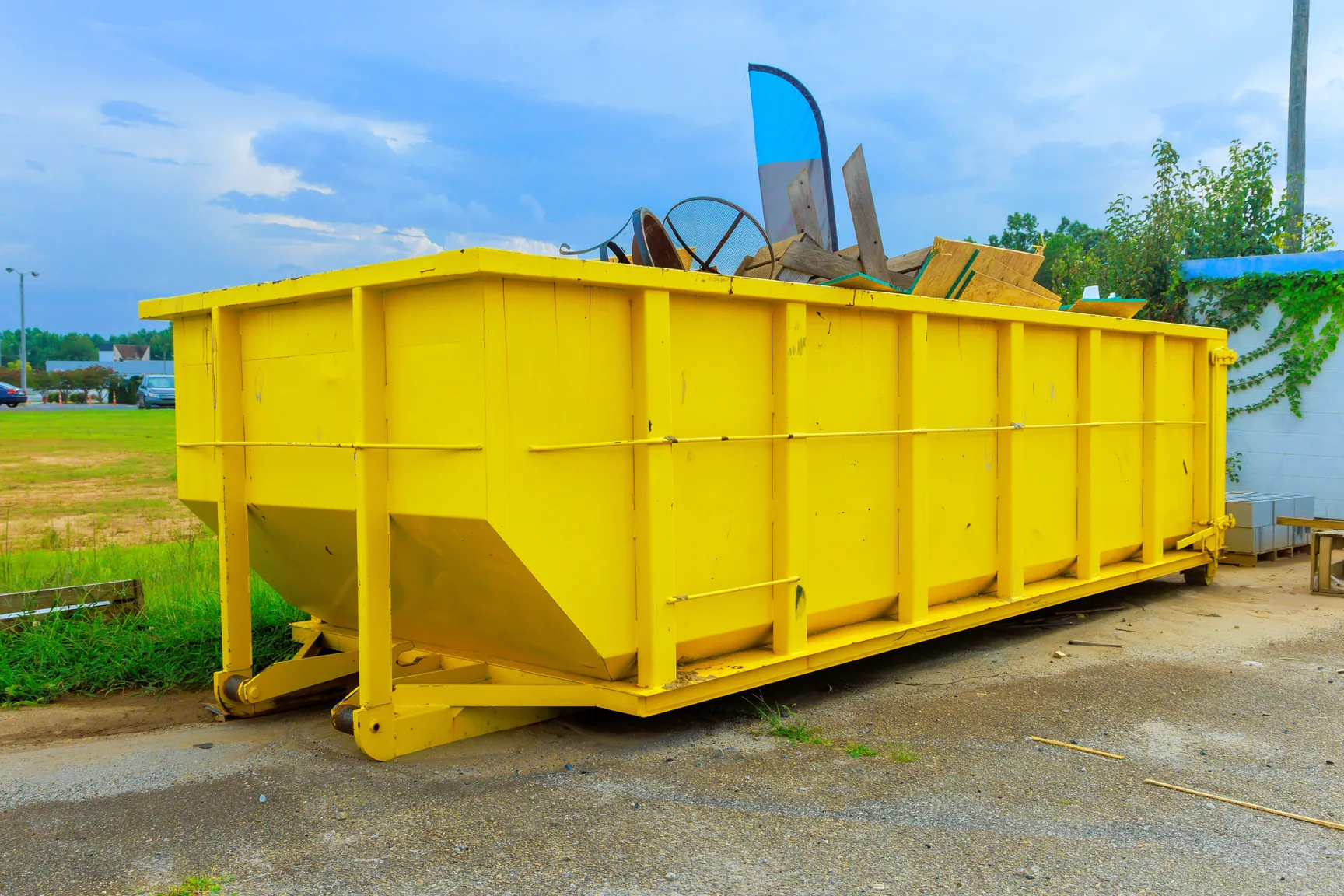
Insuring a dumpster rental operation in Indiana is the same six-line program it is anywhere — general liability, commercial auto, coverage for the containers, property at the yard, workers compensation, pollution liability — and what the state changes is who you answer to rather than what you buy. Indiana is unusual in how little of that first part it does: there is no state waste-hauler registration to hold, one real registration on the truck side, a duty discharged at the disposal gate on every load, and a municipal layer the state never standardizes.
That negative is a verified result rather than a gap in the research. Nonhazardous waste moves in Indiana without an environmental-agency registration and without a permit, whether it leaves a household or comes off a commercial or industrial site; that is the agency’s own published position, and it is quoted in full further down this page. A sweep of the whole environmental title finds exactly one statewide transporter registration in this waste stream — for waste tires, which is a different class of work.
Roll-off work in Indiana, and the gate at the end of the load
The physical shape of the work is what makes the Indiana rules land where they do. A container goes out to one address, sits there on ground the business does not own for as long as the job takes, comes back full, and is emptied at a transfer station or a final disposal facility. Two of those four moments are where Indiana law touches the operation at all: the part where the box sits on somebody’s property, which is a municipal question, and the part where the truck arrives at the facility, which is where the one statewide duty on a hauler is discharged.
Everything in between — the driving, the hoist, the crew on foot — is governed on the truck side by a registration that has nothing to do with waste and everything to do with being a for-hire motor carrier. So the insurance conversation for an Indiana operation is not a compliance-paperwork conversation at all: it is a steel box left on other people’s surfaces, a truck registered to haul for hire, and a crew working a hoist — which is what the dumpster rental insurance overview lays out before any state enters the picture.
Indiana regulations and licensing for a roll-off operation
Three layers: the environmental one requires no registration or permit of a roll-off operator hauling nonhazardous waste, the revenue one issues a real annual registration and says nothing about waste, and the municipal one does whatever the municipality has decided. A sentence that blends two of them will be wrong. Each is cited below.
The Indiana hauler registration that does not exist
Indiana operates no statewide solid-waste transporter registration, license or permit reaching a roll-off container operator hauling construction and demolition debris or municipal solid waste. The Indiana Department of Environmental Management, which is the agency that would administer one, publishes the position directly:
“An IDEM registration or a permit is not required to transport nonhazardous waste from a household, or a commercial or industrial source.”
The statute agrees with the agency. IDEM does register waste tire transporters under IC 13-11-2-252, and hazardous and infectious waste transporters answer to separate regimes; none of those three reaches a roll-off operator moving nonhazardous construction debris or municipal solid waste. A sweep of the whole of Title 13 for the registration phrasing returns that single waste-tire hit, so the denominator of statewide transporter registrations in Indiana is one and it is not this class.
One term invites a wrong conclusion here and it is worth disarming. Indiana law does define “solid waste hauler”, at IC 13-11-2-207 — but the definition is scoped in its own sentence, “for purposes of IC 13-21”, which is the article about county and joint solid waste management districts. It is a defined term used by one article, not a regulated category you can belong to. A reader who takes that definition as general will conclude Indiana has a licensed class of haulers, and Indiana does not.
The same care applies to the local layer, in the opposite direction. IC 13-21-3-14(b)(6) denies a district “the power to: (A) register; (B) issue a permit for; or (C) license; a vehicle as a condition of allowing a solid waste hauler to render services within the district”, and subsection (e) preserved a narrow exception for districts already running such a program before shutting it on a date now past. That bar runs against solid waste management districts, and only against them. It does not reach a city’s or a town’s own ordinance — and a live city ordinance sits a few paragraphs below this one. Indiana does not bar local hauler licensing; it bars one specific layer of local government from one specific kind of vehicle credential.
What Indiana asks instead: the origin of every load
The state takes something from a hauler at every disposal, and takes it without ever issuing a credential. Under IC 13-20-3-1(a) a solid waste hauler taking solid waste to a transfer station or final disposal facility located in Indiana must “certify to the owner or operator of the transfer station or final disposal facility the county and state of origin of the largest part of the solid waste by weight”. IC 13-20-5-2 places the matching duty on the person at the wheel: on transporting solid waste to a final disposal facility in Indiana, the vehicle operator identifies the origin of the waste by county and state.
This is the practical spine of Indiana for a container operation: per-load, discharged at the gate, and turning on knowing where the material came from — which for a roll-off operator is unusually easy, because a run is one address in and one facility out. It is also why an Indiana operation keeps paperwork tying a box to a job although no state agency ever asks to see a license.
The trap that sits beside it is set out plainly here. IC 13-20-4-7 is headed as a manifest rule for municipal waste carrying vehicles, and read at the head it looks like a duty on every municipal-waste vehicle in the state. Subsection (a) says what it actually covers: “This section applies to the transportation of municipal waste from solid waste processing facilities.” A container pulled off a customer’s job site and taken straight to a landfill is outside it, and the preparation duty the section does create runs to the owner or operator of the processing facility rather than to the hauler.
Two further things this record does not let us tell you, said out loud rather than skipped. The environmental agency directs haulers to their local authorities and solid waste management districts for local requirements, while the statute above denies districts the vehicle-credential power — the two are compatible, but nothing retrieved resolves what else a district may ask of a hauler, so this page asserts nothing about it. And the statutory definition of construction and demolition waste, at IC 13-11-2-41, is itself scoped to the solid waste fees chapter: it confirms Indiana recognizes the stream and creates no duty on the person hauling it.
The Indiana intrastate motor carrier registration
The credential a roll-off operation does hold in Indiana is a motor carrier one, and it sits with the Indiana Department of State Revenue rather than with any environmental body. IC 8-2.1-24-18(a)(1) turns on whether the United States Department of Transportation has issued the carrier any authority: an intrastate motor carrier operating under no such authority complies with the federal marking requirement “by registering with the department of state revenue as an intrastate motor carrier and displaying the certification number issued by the department of state revenue”. IC 8-2.1-17-6 fixes who that department is.
There is a gate before operating, not merely a form afterwards. Under IC 8-2.1-24-15 a motor carrier may not operate a vehicle “in the transportation of property, upon a public highway in intrastate commerce” until it has submitted the department’s forms and been issued an acknowledgment, and that acknowledgment remains in effect only to the end of the calendar year in which it is issued — an annual renewal, with the renewal window set at IC 8-2.1-24-16. IC 8-2.1-24-17(a) provides that a motor carrier may not be certified unless it complies with the department’s rules on the filing and approval of surety bonds, policies of insurance, qualifications of a self-insurer, or other security. The insurance is not adjacent to the registration; it is a condition of it, which is why the truck side of an Indiana submission moves first.
One name collision is worth closing before somebody buys the wrong thing. Indiana Operating Authority — the intrastate operating authority certificate — attaches intrastate only to carriers transporting passengers for hire or household goods for hire. A property carrier of solid waste does not hold it, and a broker or vendor telling an Indiana container operator it needs one has read the wrong row of the table.
And the federal layer is federal. Indiana adopts the federal motor carrier parts by reference at IC 8-2.1-24-18(a), which is how federal marking and driver rules reach a truck that never leaves the state. The marking threshold operators quote at each other is a federal number arriving in Indiana that way, not a number Indiana set — a distinction the commercial auto page works through in detail.
Indiana’s own weight line, and the half of the subdivision that removes it
Indiana does set a weight line of its own, at IC 8-2.1-24-3(6). Stopped halfway, that sentence misstates the rule. Here is the subdivision with both halves attached:
“Motor vehicles operating exclusively in intrastate commerce that have a gross vehicle weight, gross vehicle weight rating, gross combination weight, or gross combination weight rating equal to or less than twenty-six thousand (26,000) pounds. However, the motor vehicle may not be: (A) used to provide for-hire transport …”
A roll-off operator hauling a customer’s waste for compensation is providing for-hire transport. The exemption is therefore unavailable to that operation at any weight, and the weight is not the operative fact — the character of the transport is. The state’s own motor carrier guidance reads the subdivision the same way, describing the exemption as reaching intrastate, not-for-hire vehicles. IC 8-2.1-24-18(j) closes the same door from the other side by saving only private carriers operating the vehicles that subdivision describes.
The sentence to carry away is not “Indiana exempts trucks under a weight” — it is that Indiana exempts certain small intrastate vehicles that are not hauling for hire.
Placement and hauler licensing are municipal in Indiana
Indiana sets no statewide roll-off placement standard, no statewide right-of-way or street-obstruction permit for a container, and no statewide collection license. Nothing in the retrieved code creates one, and the state’s environmental agency answers the question by pointing outward: a hauler that wants to know what applies locally to moving solid waste inside its own district is told to take the question to its local authorities, or to its solid waste management district.
So the answer to “where may I set this box down, and for how long” is genuinely local in Indiana. What follows is exactly what it is: one example, cited to the municipality that enacted it.
Greenwood, read as one worked example
The City of Greenwood, in Johnson County, regulates dumpsters directly in its municipal code, and its provisions are a fair picture of the kind of thing an Indiana municipality does. On residential property, on property classified as a residential use under the city’s zoning code, and on commercial property adjacent to residential property, Sec. 6-291(g)(2)a requires that “All dumpsters shall be placed in a dedicated location behind the front building line unless being emptied or actively used in conjunction with a construction or other Improvement project on the subject property”, with a corner property barred from placement in front of the building line on any side facing a public street. Sec. 6-291(g)(2)b requires a hard surface of uniform nature covering the whole length and width of the container rather than grass or other plant material; (g)(2)c requires a fence, screen or barrier around the whole of it, kept closed except for emptying; and (g)(3) confines emptying on those properties to the hours the ordinance names.
Greenwood also licenses the service itself. Sec. 4-110 provides that “No person shall operate a trash collection service on a regularly scheduled commercial basis within the City without a license approved by the Board of Public Works and Safety”, with the license number displayed on all vehicles subject to it. Sec. 4-113 requires the applicant to furnish evidence of a liability insurance policy in an amount the Board determines, the Board considering the potential liabilities to which the operation will be exposed — an insurance requirement written by a city rather than by a state, which is the kind of thing that decides what a general liability program has to be able to evidence.
The scope phrase in Sec. 4-110 is load-bearing and this page does not resolve it. The license reaches a trash collection service operated “on a regularly scheduled commercial basis”. On-call, per-job roll-off container work is not obviously a regularly scheduled service, and nothing we retrieved settles how the City reads its own ordinance. So: the license exists, its reach turns on that phrase, and the only authority on the question is Greenwood. We will not tell you that a roll-off operator needs it, and anyone who tells you otherwise without asking the City has dropped the qualifier.
One more feature of that ordinance: Sec. 6-291(g)(4) puts a duty on the property owner as well, to ensure a commercial trash collection service it hires is properly licensed. Customers in a city like this one have a reason of their own to ask for your paperwork.
How workers compensation is bought in Indiana
Indiana is a competitive workers compensation state and operates no state fund. Under IC 22-3-5-1(a) an employer covered by the act has two routes and no third: insure and keep insured the liability with a corporation, association or organization authorized to transact workers compensation insurance in Indiana, or furnish the Worker’s Compensation Board of Indiana satisfactory proof of financial ability to pay compensation directly as a qualified self-insurer. IC 22-3-5-5(a) puts policy forms in front of the Indiana Department of Insurance for approval, which is the regulatory shape of a competitive market rather than a monopolistic one.
For a container operation that means the crew coverage is bought in the open market alongside everything else, from an insurer that chooses to write the class — the same conversation the workers compensation page carries, with no Indiana-specific procurement step in front of it.
A panel for Indiana in rows. Each row sets one thing the state requires beside the exposure that requirement leaves open and the coverage line that answers it. Hauler registration: State transporter credentials exist, but none reaches roll-off hauling. It leaves open a container placed on a customer’s property, and the driveway or curb it damages, which General Liability and Dumpster and Equipment Coverage answer. Intrastate motor-carrier authority: A state operating credential reaches for-hire hauling. It leaves open the roll-off truck at fault, and the container in transit, which Commercial Auto and Pollution Liability answer. Roll-off placement permits: Municipal — varies by city and town. It leaves open placement on the public right-of-way, and a struck pedestrian or vehicle, which General Liability answers. Workers compensation: Compulsory; bought from private insurers. It leaves open a driver or yard hand hurt on the job, which Workers Compensation answers. Notes: A registration, permit or bond is a condition of operating, not insurance: it answers none of the exposures on the right, so no line is drawn from it. The conclusion reads: The registration is not the coverage — the program is. No figures are shown.
The six lines, read against the Indiana layer
Each has its own page, and the overview of how they fit together is the better starting point. What follows is only where the Indiana layer touches each line.
Common Indiana roll-off claims we see
Patterns rather than counts, and no figures are attached to any of them deliberately.
Damage to the surface a container stood on. A drop lowers a heavy steel box onto a driveway, an apron, a parking surface or a verge somebody else paid for, and a pickup is the same moment in reverse with a loaded box. In a city with placement rules of the Greenwood kind — hard surface, dedicated location, screened — the question of whether the box was where it was supposed to be arrives attached to the damage question, and the answer sits partly in an ordinance rather than entirely in a policy.
Injury around a container on a site. A box that sits for days on somebody else’s ground is a third-party exposure for every one of those days, and the operator is elsewhere for almost all of them. Indiana does not change the shape of that; it simply does not put a credential between you and it.
A load the facility will not take. The gate is the one place Indiana law puts an operator face to face with a facility, and it is also where a refused load surfaces. What the statute asks there is origin; what the facility asks is contents, and a load turned away is a disposal problem, a haulage problem and sometimes a pollution question at once.
A crew member hurt at the hoist or on the box. Out of the cab, on foot, working the hoist, on a tarp. Indiana handles this in the private market, so the practical question is which insurer writes the class, not which fund the state runs.
Major Indiana dumpster rental markets
Five markets, each with the county it anchors. No population, permit-volume or market-size figure is attached to any of them: the record for this page sources none, and an invented one would be worth less than none.
Indianapolis
Marion County. The state’s largest metro and the densest concentration of construction, demolition and property-management demand for roll-off containers. Volume here is volume of placements, and because Indiana sets no statewide placement rule the standard governing a drop in one municipality is not the standard in the next one over.
Fort Wayne
Allen County. Northeast Indiana’s anchor metro. Whatever governs container placement, screening or a collection license here is county and city law rather than state law, and this record verifies no ordinance for it — so we do not state one. That is the shape of the municipal layer statewide.
Evansville
Vanderburgh County. Southwest Indiana’s anchor metro, on the Ohio River. The certification an Indiana facility takes at the gate names a state as well as a county, so a load starting on the far bank is not an Indiana-origin load when it arrives.
South Bend
St. Joseph County. North-central Indiana, hard against the Michigan line. The same origin certification applies to a load starting north of it, and nothing verified here speaks for Michigan’s own requirements.
Greenwood
Johnson County. South of Indianapolis in Johnson County, and the city whose code this page quotes as its worked municipal example — placement standards, emptying hours and a trash-collection license, all set by ordinance. The Wexford Insurance office is in Greenwood.
Nearby states we also write
Illinois, Ohio and Kentucky sit on three of Indiana’s four state lines, and all three are inside the licensed footprint. Each state’s own page carries its own verified findings — nothing established here about Indiana transfers across a line, including everything above about registration, certification and how workers compensation is bought.
Indiana dumpster rental insurance FAQs
Do I need a state license to run roll-off containers in Indiana?
No. Indiana operates no statewide solid-waste transporter registration, license or permit that reaches a roll-off operator hauling construction and demolition debris or municipal solid waste, and the environmental agency says so in its own words. What reaches you instead is a per-load duty at the disposal gate, a motor carrier registration on the truck side, and whatever your own city or town requires.
If Indiana does not register haulers, what am I signing at the landfill?
An origin certification. Under IC 13-20-3-1(a) a hauler taking solid waste to an Indiana transfer station or final disposal facility certifies the county and state of origin of the largest part of that load by weight, and IC 13-20-5-2 puts the same identification on the vehicle operator at a final disposal facility. It is a duty discharged load by load, not a credential you apply for.
My truck never leaves Indiana. Do I still register it as a motor carrier?
Yes. IC 8-2.1-24-18(a)(1) has an intrastate carrier not operating under United States Department of Transportation authority register with the Indiana Department of State Revenue as an intrastate motor carrier and display the certification number that department issues. IC 8-2.1-24-15 puts that acknowledgment before operating, and it runs to the end of the calendar year it is issued in.
I heard Indiana exempts smaller trucks. Does that exemption reach me?
It does not, and the reason is the second half of the subdivision rather than the weight. IC 8-2.1-24-3(6) exempts intrastate vehicles at or under its stated weight, then says the vehicle may not be used to provide for-hire transport. Hauling a customer’s waste for compensation is for-hire transport, so the exemption is unavailable to a roll-off operation at any weight.
Does a waste hauler need Indiana Operating Authority?
Not for hauling property. Indiana Operating Authority attaches intrastate to carriers transporting passengers for hire or household goods for hire; a property carrier of solid waste does not hold it. The credential a roll-off operation does carry is the intrastate motor carrier registration with the state revenue department, which is a different thing with a confusingly similar name.
Does Indiana make me carry a manifest on every load?
Not on a container run from a job site. IC 13-20-4-7 reads at its section head like a rule for every municipal-waste vehicle, but subsection (a) applies it to the transportation of municipal waste from solid waste processing facilities, and the preparation duty sits on the facility rather than on the hauler. A box pulled off a customer site and taken straight to a landfill is outside it.
Can an Indiana city require me to hold a collection license?
Some do. Within Greenwood, a trash collection service run on a regularly scheduled commercial basis needs a license approved by its Board of Public Works and Safety, with the license number displayed on the vehicles. Whether that phrase reaches on-call, per-job roll-off work is unresolved, so the answer for any Indiana city is the city itself.
Is Indiana workers compensation bought from a state fund?
No. Indiana operates no state fund. IC 22-3-5-1(a) gives an employer two routes and no third: insure the liability with an organization authorized to write workers compensation in Indiana, or satisfy the Worker’s Compensation Board of Indiana of the financial ability to pay compensation directly. Policy forms go to the Indiana Department of Insurance for approval.
This page reports Indiana law as our own state research file records it. It is general information rather than legal advice, and it is not an opinion on what any policy covers — the wording you hold controls that, and carriers do not all write it the same way.
Get an Indiana dumpster rental insurance quote
Tell us where the boxes go, what the trucks are, and who is on them. We will read the lines against the work, and where a question is a city’s to answer we will say so. Your own policy wording controls.
Related coverage for dumpster rental operators
- General Liabilitygeneral liability
- Commercial Autocommercial auto
- Dumpster and Equipment Coverageinland marine
- Commercial Propertycommercial property
- Workers Compensationworkers compensation
- Pollution Liabilityenvironmental / pollution liability
What it costs in Indiana · States we serve · Dumpster Rental Insurance · Get a quote · Contact us
Primary sources
- IDEM — Managing Waste: Waste Transportation — the Indiana environmental agency’s own statement that moving nonhazardous waste — out of a household, or off a commercial or industrial site — needs neither a state registration nor a permit
- IDEM — Permits, Registrations, Approvals and Closures — the same agency describing its solid-waste permitting universe as facility-oriented
- Indiana Department of Revenue — Motor Carrier Services checklist — the registering agency’s own checklist; corroboration only, and the operative wording is the statute cited above
- Worker’s Compensation Board of Indiana — the board an Indiana self-insurer qualifies with; no state fund is named anywhere on it
- Indiana Department of Insurance — the department that approves workers compensation policy forms under IC 22-3-5-5(a)
- Greenwood Municipal Code, Sec. 6-291 — Garbage, Refuse, and Trash — the dumpster placement, surface, screening and emptying-hours standards quoted on this page
- Greenwood Municipal Code, Secs. 4-110 to 4-114 — trash collection — the municipal trash-collection license and the insurance evidence the Board requires before it issues