
Dumpster Rental Insurance by State
Dumpster Rental Insurance in Idaho
What Idaho actually requires of a roll-off business, what it leaves to the counties, and where the two liability policies you already buy stop talking to each other.
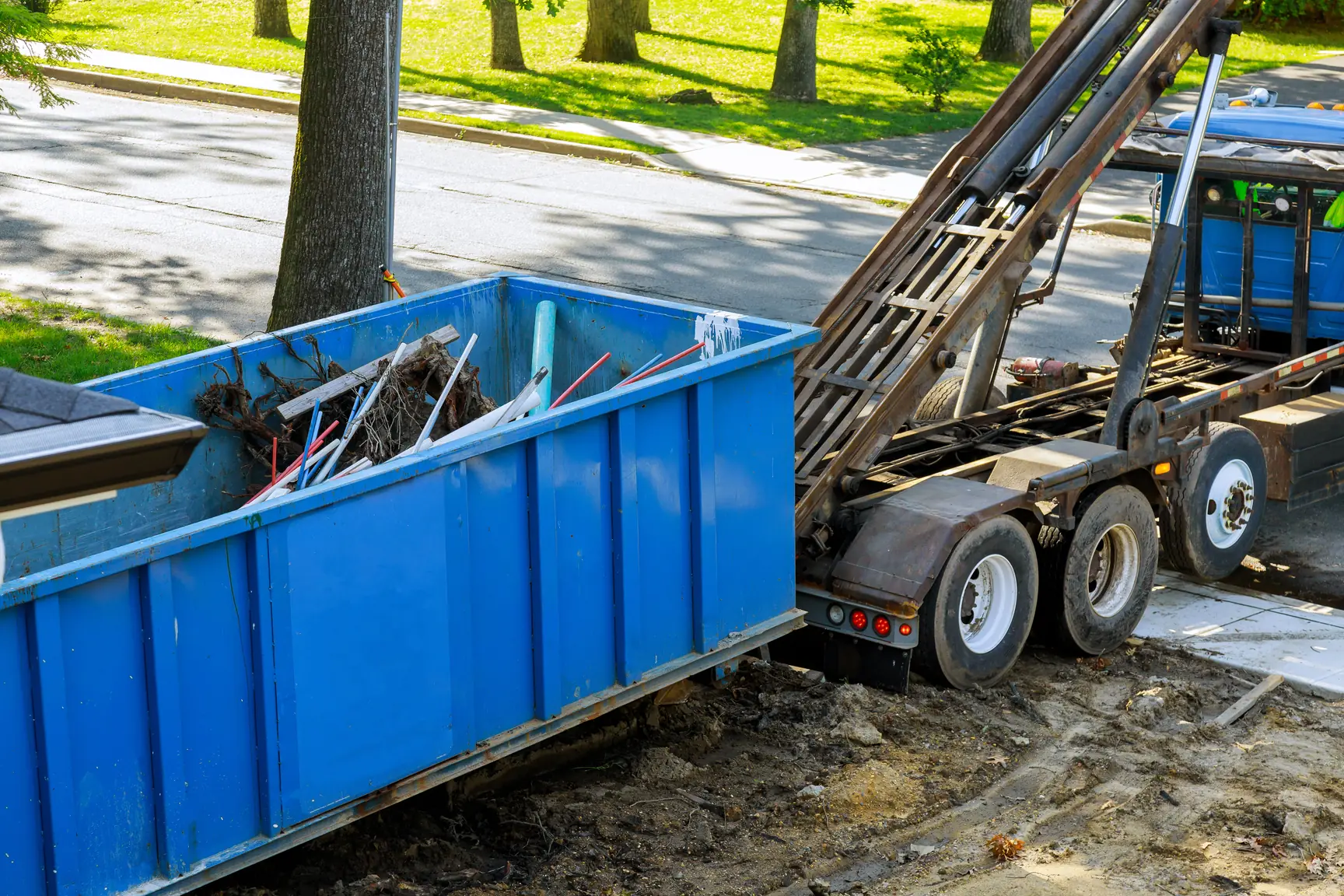
The Idaho hoist moment, and which policy owns it
An Idaho roll-off business carries two liability policies, and both of them have an opinion about the instant a box leaves the rails. That instant is where the uninsured losses in this trade collect. It is not exotic law and it is not an argument about whether you bought enough cover. It is a question about which of two contracts was written to answer, and the answer turns on wording you probably have not read.
On the liability side, loading or unloading is a defined term in the standard general liability form. That form generally declines injury and damage arising from the use of an auto, and it then tells you that use takes in loading or unloading. The standard auto form never uses the phrase. It arrives at the same moment along a different road, and the part of that road worth knowing is whether the machinery moving the property was attached to the truck when the loss happened. A hoist is attached. A pallet jack somebody borrowed is not. The forms were drafted to meet, and where they meet is rarely the spot an operator would guess.
The second half of the seam is the surface under the box. Idaho work puts containers on gravel approaches, on poured drives, on frontage that a county or a highway district treats as its own, and on lots a general contractor has already paid to have finished. When that surface splits, the claim is against you and the form language that decides it is not the language people quote at you. Standard liability wordings carry exclusions for property in the care, custody or control of the insured and for the particular part of real property being worked on, and whether a placement loss lands inside or outside those exclusions is a question of exact words and exact facts. We do not settle that on a web page and neither should anybody else.
What this page can do is show you where the seam runs in an Idaho operation, so the question gets asked while you are buying the policy rather than after a driveway has already failed. Your own policy wording controls the outcome, and the forms in use are not identical from one carrier to the next.
Idaho regulations and licensing for roll-off operators
Three separate layers of Idaho law reach a container business, and they are held by three different institutions. Reading them as one rulebook is how operators end up holding the wrong paperwork.
What Idaho credentials on the hauling side, and what it leaves alone
Idaho runs no statewide solid waste hauler, collector or transporter credential that reaches a roll-off operator moving a customer’s construction debris or ordinary municipal solid waste. That is a verified negative. The state does credential transporters. It reaches one waste stream and it is not yours.
“All transporters of federally regulated types and quantities of hazardous waste obtain an identification number from the department, the environmental protection agency, or another approved state program, before accepting hazardous waste for transport”
Manifesting and a three-year retention duty ride with that number, and Idaho Code § 39-4410(5) adds a transport department special permit, under Idaho Code §§ 49-2202 and 49-2203, for regulated quantities arriving at a commercial hazardous waste disposal facility. A roll-off box of mixed demolition debris is none of that. Saying otherwise would misstate your own regulatory position.
The chapter that looks like the hauler answer is not one. Idaho Code title 39, chapter 74 is a facilities act and says so in its title; its scope section, Idaho Code § 39-7402(1), reaches owners and operators of municipal solid waste landfill units and their lateral expansions. Every section heading in that chapter concerns siting, design, monitoring, operation, closure, financial assurance, fees or enforcement at a landfill. The environmental director’s enumerated powers at Idaho Code § 39-105(3)(g) run to site certificates, facility design approval, closure and post-closure plans, enforcement, a demonstration program and rulemaking. No hauler credential is in the list.
Two more traps are worth naming because each one reads like a permit and is not. The waste tire chapter carries a section headed for the transport of waste tires, and what it restricts is the destination: a person may not haul waste tires for storage anywhere except a site the city or county has permitted. That permit belongs to the ground, not to your truck. And Idaho Code § 31-4401A(7), defining a waste processing facility, carves your equipment straight back out.
“shall not include the placement of portable collection facilities or similar equipment used solely to facilitate collection of solid waste.”
Read that as a definitional carve-out and not as a permission. It keeps setting a box out of the facility definition. It does not override a county arrangement and it does not give anybody a right to occupy a road.
Idaho motor carrier rules: two agencies, and no operating authority
Idaho issues a property carrier no certificate, permit or license to operate intrastate, at any weight. The two titles where such an instrument could live were both indexed: the motor vehicle title carries thirty chapters and none of them creates carrier authority, and the public utilities title carries sixteen and contains no motor carrier chapter at all. What Idaho has instead is a split. Safety sits with the Idaho State Police, Commercial Vehicle Safety, under Idaho Code § 67-2901A. Registration sits with the Idaho Transportation Department, whose commercial vehicle services register commercial-use power units over 8,000 pounds along with farm-use units, annual trailers and permanent trailers. That registration floor is lower than either figure in the code and it is the one a small fleet meets first.
The weight figure operators quote at each other comes from Idaho Code § 49-123(2)(d), and it is expressly scoped to chapters 3 and 9 of that title — driver licensing and vehicle equipment.
“Has a manufacturer’s gross vehicle weight rating (GVWR) in excess of twenty-six thousand (26,000) pounds”
The same lettered paragraph then defines the same term a second time, for the registration chapter, with no weight floor in it at all: a vehicle of a type kept or run to move people for payment, or to move property either on the truck owner’s own account or for a fee. So a roll-off truck is a commercial vehicle under the registration definition whatever it weighs, and under the licensing definition only above the rating. Quote one and apply it to the other chapter’s subject and you will have written a false sentence out of a true one.
Safety is where the real weight lands. The Idaho motor carrier rule at IDAPA 11.13.01.001 reaches intrastate and foreign carriers moving persons or property over Idaho highways in the furtherance of their business or for hire — so an operator hauling in its own business is inside it, not only a for-hire fleet. Section 002.04 incorporates a long run of federal parts by reference, and section 002.05 closes the door an operator would most like to find open.
“Whenever these federal regulations (except Section 391.11(b)(1)) would otherwise exempt intrastate carriers from any of their requirements, the exemption does not apply to intrastate carriers who will remain subject to the same requirements.”
There is one genuine intrastate relief and it is a weight band: IDAPA 11.13.01.019.01.b gives a reduced list of federal parts to intrastate property carriers above ten thousand pounds and up to twenty-six thousand pounds. Section 019.01.a separately preserves an eighteen-year-old minimum driving age for intrastate carriers by cross-reference to Idaho Code § 49-303, and IDAPA 11.13.01.009 lets the department declare an emergency that lifts the adopted federal parts for a period. The incorporation itself is worded to pick up later recompilations but not later amendments, which is why an Idaho compliance answer has a date attached to it.
Placement in Idaho: county franchises and the 2026 container exception
Idaho sets no statewide roll-off placement permit and no statewide standard for where a container may sit. What it sets is an architecture. Idaho Code § 31-4403(1) makes it the duty of a board of county commissioners to acquire sites or facilities and to maintain and operate disposal systems, and lets that be done exclusively or non-exclusively, through county employees, through contracts or franchises with private persons, through agreements with another unit of government, or through franchises covering all or any part of the county. Idaho Code § 31-4403(2) lets the board proceed with or without compulsory competitive bidding. A county that awards an exclusive franchise has chosen a provider; a hauler outside it is not unlicensed, it is unselected. That distinction is why this axis stays negative: no statewide rule directs an Idaho county to license haulers.
Then, in 2026, the legislature carved an exception out of that architecture for exactly the container this trade rents.
“Notwithstanding any county contract or franchise for solid waste collection to the contrary, any person may contract with a solid waste collection provider of the person’s choosing for the use of solid waste collection containers that are temporary and project-specific, as defined by county ordinance.”
The closing clause is the whole fence and it has to travel with the sentence every time. What counts as temporary and project-specific is settled by county ordinance, so the scope of the right is drawn county by county, and a county that has not defined those words has not been shown to have granted it. The right is real. It is not a statewide license to work anywhere a franchise exists, and anyone who describes it that way has turned a genuine change into an overstatement.
On the road itself, Idaho works through encroachment rather than through a container permit. A county, or a highway district, holding the road may order the removal of whatever has been put across it — the statute names gates and fences and buildings, then adds a catch-all wide enough to reach other objects — and once the notice period lapses a daily forfeiture begins to run against whoever caused, owns or controls it. Note the two bodies in that sentence. Idaho highway districts are independent road authorities, so the reflex of telephoning the city hall is not always reaching the office that controls the surface you want. Ask locally before the box goes on the ground.
Workers compensation as Idaho places it
Idaho operates a competitive market with a state fund inside it, and the line is compulsory. Two bodies sit over it and both matter: the Idaho Industrial Commission approves self-insurers and approves every insurer before it may transact the line, while the Idaho Department of Insurance authorizes the insurer in the first place. Authorization to do business in the state is not on its own enough.
“Every employer shall secure the payment of compensation under this law in one (1) of the following ways”
The ways are two. The first is a policy written by an insurer the director of the department of insurance has authorized to transact the line. The second is self-insurance, on approval of the industrial commission and on depositing and maintaining money or acceptable security instruments with the state treasurer, with the commission setting the qualifications, the security and the conditions for staying self-insured by rule. There is no monopoly in that picture and no single seller you are directed to.
The exemption operators reach for is an owner exclusion, not a business exemption. Idaho Code § 72-212 lists the employments the law does not reach unless coverage is elected under Idaho Code § 72-213, and the two that a small container business turns on are casual employment and the ownership class at Idaho Code § 72-212(6) — a sole proprietor, a working member of a partnership or limited liability company, and a corporate officer holding at least ten percent of the issued and outstanding voting stock who is also a director where the corporation has directors. Reading that as meaning small Idaho businesses can skip the line would be false about every crewed operation in the state. The moment a non-owner employee is on the payroll, the securing duty applies.
A panel for Idaho in rows. Each row sets one thing the state requires beside the exposure that requirement leaves open and the coverage line that answers it. Hauler registration: State transporter credentials exist, but none reaches roll-off hauling. It leaves open a container placed on a customer’s property, and the driveway or curb it damages, which General Liability and Dumpster and Equipment Coverage answer. Intrastate motor-carrier authority: State motor-carrier rules attach at a vehicle threshold. It leaves open the roll-off truck at fault, and the container in transit, which Commercial Auto and Pollution Liability answer. Roll-off placement permits: Municipal — varies by city and town. It leaves open placement on the public right-of-way, and a struck pedestrian or vehicle, which General Liability answers. Workers compensation: Compulsory; private insurers, or a competing state fund. It leaves open a driver or yard hand hurt on the job, which Workers Compensation answers. Notes: A registration, permit or bond is a condition of operating, not insurance: it answers none of the exposures on the right, so no line is drawn from it. The conclusion reads: The registration is not the coverage — the program is. No figures are shown.
The six coverages an Idaho container operation leans on
Each line below is written for this trade rather than for contractors generally, and each one meets Idaho at a different point.
Claims that repeat on Idaho roll-off accounts
These are patterns, not predictions, and nothing here forecasts how any particular file comes out. They are the shapes that put an Idaho operator on the phone with us.
The surface claim leads, and it leads everywhere this trade works. A box goes down on a customer approach, the approach fails under the corner, and now two questions are live at once: whether the loss arose out of the use of the truck, and whether the damaged surface was property being worked on or property in your care. Those questions are answered by different provisions in different policies, and the file can sit still while the two carriers read each other’s wording.
The second pattern is the swing. A box under power on the hoist catches wind, a gutter, a low limb or a parked vehicle, and the damage happens in the seconds the container is neither fully on the truck nor fully on the ground. That is the definitional moment the whole first section of this page is about.
Third is the contents question. Something goes into the box that the customer never disclosed, and it is discovered at the transfer station or at the landfill gate rather than at the job. The exposure that follows is not only the disposal problem; it is the argument about whose property it was and who was responsible for it while the container sat out.
Fourth is the driver injury that does not look like a driving injury at all — a tarp, a pin, a door, a walk-around on frozen ground. Idaho winters make that surface argument concrete rather than theoretical, and the securing duty above is what stands behind it.
Last is the territory dispute, which is an Idaho-flavoured one. An operator takes a job inside a county running an exclusive arrangement, someone objects, and the answer now depends on whether that county’s ordinance has defined the temporary and project-specific container the 2026 subsection speaks about. That is a contract and compliance question before it is ever an insurance question, but it reaches the insurance file quickly when a job gets stopped.
The Idaho counties this book concentrates in
We write Idaho as one licensed state rather than as a set of territories, and the cities below are simply where the container work concentrates. Each is named with the county it sits inside, because the county is the unit that Idaho’s disposal architecture actually turns on — and, since 2026, the unit whose ordinance defines the temporary container right.
- Boise — Ada County
- Meridian — Ada County
- Nampa — Canyon County
- Idaho Falls — Bonneville County
- Coeur d’Alene — Kootenai County
- Pocatello — Bannock County
The Treasure Valley cluster and the northern and eastern cities do not share one answer on franchising, and they are not obliged to. That is the practical reason an Idaho operator working across county lines should ask the same three questions at every line: what the county has arranged for disposal, whether its ordinance has defined a temporary and project-specific container, and which body holds the road you intend to set on. Being licensed across the state is what lets us follow an account through all of that without the coverage changing shape.
Nearby states we also write
Adjacency is geography, not law. Idaho’s answers on credentialing, authority and placement stop at the state line, and each page below states its own state’s rules from its own research file.
What Idaho operators ask us
Does Idaho make me hold a state hauler license before I can run roll-offs?
No, and the accurate way to say it is that Idaho credentials a different waste stream rather than that Idaho requires nothing. The statewide transporter duty reaches hazardous waste: Idaho Code § 39-4410(3)(c)(i) puts an identification number on those transporters before they accept a load, with manifesting and a three-year retention duty, and § 39-4410(5) adds a transport department special permit for regulated quantities arriving at a commercial hazardous waste disposal facility. Construction debris and ordinary municipal solid waste are not that. No Idaho statute puts a state credential on the person who hauls them.
A county tells me it has an exclusive franchise. Am I shut out of that work?
Not necessarily, and this changed in your favor in 2026. Idaho Code § 31-4403(1) lets a board of county commissioners run its disposal duty through contracts or franchises, exclusively or not, for all or part of the county. Idaho Code § 31-4403(3) then says that whatever the county contract or franchise provides, a person may choose their own provider for collection containers that are temporary and project-specific — and it hands the definition of those words to county ordinance. So the right is real and its edges are drawn county by county. Ask the county what its ordinance says before you quote the job.
My truck is under 26,000 pounds. Do the federal safety rules still reach me in Idaho?
Partly, and the relief is narrower than operators expect. The motor carrier rule at IDAPA 11.13.01.019.01.b sets a reduced list of federal parts for intrastate property carriers over ten thousand pounds and up to twenty-six thousand pounds. Above that band the full incorporation at section 002.04 applies. Section 002.05 then removes the intrastate exemptions the federal rules would otherwise give you.
Does the Idaho Public Utilities Commission issue me operating authority?
It does not, and this is worth knowing because several states nearby do put waste hauling economics with their utility regulator. Idaho’s public utilities title carries sixteen chapters and none of them is a motor carrier chapter. Safety sits with the Idaho State Police under Idaho Code § 67-2901A; registration sits with the Idaho Transportation Department. Neither of those is authority to be a carrier, and an older citation to chapter 8 of the utilities title points at something else entirely today.
Is intrastate registration the same thing as operating authority in Idaho?
No, they are different credentials. The transport department publishes intrastate instructions and a fleet application, and both are registration documents — weight-fee credentials for the vehicle. Idaho issues a property carrier no certificate, permit or license to operate intrastate at any weight. If somebody tells you that your Idaho intrastate registration is your authority, they have renamed a truck credential as a business one.
I run alone with no crew. Do I need Idaho workers compensation?
Idaho Code § 72-212(6) excludes a sole proprietor, a working member of a partnership or limited liability company, and a qualifying corporate officer who is also a director. Read that carefully: it excludes the OWNER from coverage. It does not exempt the BUSINESS from the mandate. The day you put a non-owner helper on the hoist, Idaho Code § 72-301(1) applies to you, and it applies whether that helper is full-time, seasonal or occasional.
Do I need a placement permit to set a box in an Idaho street?
That question is answered where the box sits, not in Boise. Idaho sets no statewide roll-off placement permit. What the code does carry is an encroachment power: a county, or a highway district, that holds the road can order the removal of anything put across it, and the statute’s own list runs to gates, fences and buildings before widening out, with a daily forfeiture available if the thing stays. Note the two bodies in that sentence — Idaho highway districts are real road authorities, and asking the city is not always asking the right office.
Who should I send my policies to before I bid Idaho work?
Send the declarations page and the endorsement schedule from both liability policies, plus your rental agreement. The questions that decide an Idaho placement claim are which policy answers when a container is under power on the hoist, whether the customer surface you are setting on falls inside a care, custody or control exclusion, and what your own wording says about property being worked on. A licensed agent reads all of it together and comes back with what the markets will do.
This page reports Idaho law as our own state research file records it. It is general information rather than legal advice, and it is not an opinion on what any policy covers — the wording you hold controls that, and carriers do not all write it the same way.
Put an Idaho roll-off submission in front of a licensed agent
Send the declarations pages from both liability policies and we will read the seam for you, tell you what your wording does at the hoist, and come back with what the markets will do on an Idaho account.
Related coverage for dumpster rental operators
- General Liabilitygeneral liability
- Commercial Autocommercial auto
- Dumpster and Equipment Coverageinland marine
- Commercial Propertycommercial property
- Workers Compensationworkers compensation
- Pollution Liabilityenvironmental / pollution liability
What it costs in Idaho · States we serve · Dumpster Rental Insurance · Get a quote · Contact us
Primary sources
- Idaho Legislature — Title 39, Chapter 74 (Idaho Solid Waste Facilities Act) — the chapter that looks like the hauler answer and is a facilities act
- Idaho Legislature — Title 31, Chapter 44 (county solid waste disposal) — the county franchise architecture, and the 2026 container exception inside it
- Idaho Department of Insurance — the state regulator that authorizes any insurer writing this line in Idaho