
Dumpster Rental Insurance by State
Dumpster Rental Insurance in Montana
Montana keeps its waste license away from the truck and its carrier rules squarely on it. Here are both axes, the city that can claim your collection business, and the three compensation plans.
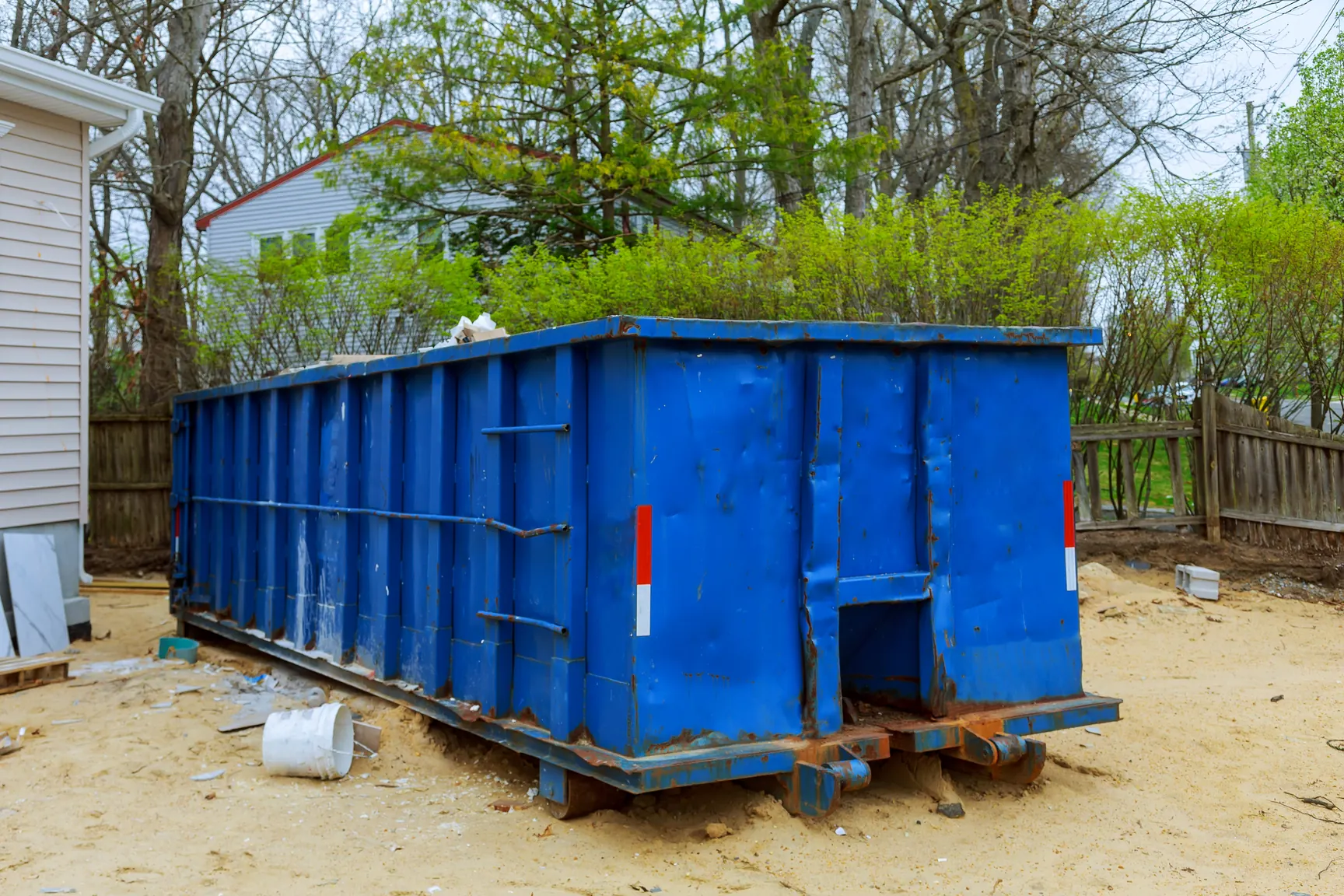
Almost everything written about Montana waste hauling gets this state backwards, and it gets it backwards in a way that is easy to trace. The statutory part that carries solid waste licensing has the word transportation in its own title. The prohibition inside that part does not reach transportation at all. An operator who stops reading at the heading concludes that Montana licenses waste haulers, and an operator who reads only the body concludes that Montana asks for nothing. Both are wrong, and the second is the more expensive mistake.
Montana runs two answers on two different axes: no environmental credential for the act of hauling, and a genuine economic certificate from the Public Service Commission for anybody moving garbage for hire. This page sets out both as our own state research file records them, together with the city layer, which in Montana can decide whether there is a private market inside a municipality at all.
The moment a Montana container leaves the truck, and which policy owns it
Every roll-off operation carries two liability policies that each have something to say about a container coming off the rails, and the losses that go unpaid in this trade sit in the handful of seconds where the two descriptions overlap and neither takes the lead.
One side of it is vocabulary. Liability forms define loading and unloading, then generally exclude injury and damage arising out of the use of an auto and treat loading and unloading as part of that use. The auto form does not build on the same phrase; it gets to the same second along a different path, and for a hook-lift the path that matters turns on whether the device shifting the property is attached to the truck. The two are drafted to meet, and the meeting point is not always where an operator expects it.
The other side is the ground itself — a gravel approach on a valley lot, a driveway frozen hard in February. Liability wordings tend to exclude property in the insured’s care and the particular part of real property being worked on, and whether a rutted or cracked surface falls inside those exclusions depends on the words and the facts.
What this page can do is put the seam in front of a Montana operator early enough to matter. Read the general liability and commercial auto sides against each other, and the dumpster rental insurance overview for the whole program. Your own policy language decides it, and carriers do not all write it alike.
Montana regulations and licensing
Three layers reach a Montana roll-off operation and they are issued by three different bodies. The environment department licenses facilities and two narrow transporter classes. The Public Service Commission licenses the carrier. The city sets what happens on its own streets, and in Montana it can go further than that.
What Montana licenses on the waste side, and why it is not the hauler
Montana does run waste transporter credentials, and they reach other streams: Mont. Code Ann. 75-10-1210 makes a department license the condition of cleaning out cesspools, septic tanks and privies commercially, and of septage disposal, and the department publishes an infectious waste transporter registration — roll-off hauling of construction and demolition loads is not among the classes Montana licenses.
The reason is a definition rather than an exemption. The prohibition at Mont. Code Ann. 75-10-221(1) bars a person from disposing of solid waste or operating a solid waste management system without a department license. Then the definitions section says what that system is:
“‘Solid waste management system’ means a system that controls the storage, treatment, recycling, recovery, or disposal of solid waste.”
Transportation is not on that list. It is not a drafting oversight either: the same definitions section defines transport separately at 75-10-203(14), as the movement of wastes from the point of generation through any intermediate points to final storage or disposal. The legislature had the word in hand and chose not to put it inside the licensed activity. What a section leaves out is doing the work here.
Meanwhile the material itself is squarely inside Montana solid waste — 75-10-203(11)(a) brings construction and demolition wastes into the definition. So a roll-off load is Montana solid waste, and hauling it is simply not a licensed activity. The exclusions section was read and does not change the answer: 75-10-214(1)(a) preserves a person’s right to dispose of waste generated in reasonable association with their own household or agricultural operations on land they own or lease, and (1)(b) carves out electric generation, oil and gas, and mining facilities. Neither reaches a commercial hauler, because the hauler was never inside the prohibition to begin with.
Two headings keep producing the wrong answer. The statutory part is headed for “Licensing of Refuse Disposal and Transportation”, so a reader who takes a title for a summary reports a license that is not there. And a rule headed in capitals for transportation turns out, at ARM 17.50.523, to be a covered-load requirement: waste has to be moved so it cannot spill or leak out of the vehicle. That is an operating duty, not a credential.
One more permissive layer is not a hauler license either. Mont. Code Ann. 50-2-116 lets a local board of health propose sanitation and filth-removal rules for the local governing body to adopt, and 50-2-130(1) caps local stringency only on the subsections it names — not the filth-removal one, so Montana should not be described as capping local waste rules generally.
The Public Service Commission certificate that garbage hauling does need
Here is the half that gets dropped. Montana kept garbage hauling under economic regulation as its own carrier class, and the operative sentence is one line long:
“Class D motor carriers include all motor carriers operating motor vehicles transporting garbage.”
There is no weight threshold anywhere in that requirement, and saying so plainly is the finding. It turns on the commodity and on being for hire. Mont. Code Ann. 69-12-101(12) defines a motor carrier as a person or corporation running motor vehicles on a Montana public highway to carry passengers, household goods or garbage for hire commercially, whether as a common carrier or under private contract; 69-12-101(9) defines for hire broadly enough to capture remuneration reached through leasing, brokering or buy-and-sell arrangements. The certificate itself is issued under 69-12-314(1), on an application filed with the commission under that chapter and the commission’s own rules.
An operator should know two conditions that surprise people. The first is that the certificate cannot sit idle:
“A motor carrier may not possess a Class D motor carrier certificate of public convenience or necessity or operate as a Class D motor carrier unless the motor carrier actually engages in the transportation of garbage on a regular basis as part of the motor carrier’s usual business operation.”
The second is that there is no side door. Mont. Code Ann. 69-12-406 bars Class A and Class E carriers from being authorized to carry garbage inside the state, apart from one cross-referenced exception, and exempts recyclables from that restriction. Fitness is continuing rather than a one-off application test: 69-12-415 keeps a certificate in force only while its holder stays fit, willing and able and keeps to the chapter, the rules and the commission’s orders.
Insurance is filed with the commission and is a condition of the authority. ARM 38.3.702(1) requires every Class A and Class D intrastate carrier to file evidence that it meets the commission’s minimum bodily injury and property damage liability requirements, and 38.3.702(2) says bodily injury includes death. The rule that would state the numbers does not state them: ARM 38.3.707(1) says the minimum limits are set out in two named commission endorsement forms, and naming a government form designation is outside what this brand publishes — the forms were also not retrieved in our research. So the duty is recorded here and the figure is declared as a hole rather than guessed at. The same rule refuses a bond in place of that insurance. A self-insurance route exists, with rules on self-insurance and on annual financial reporting for self-insurers, but their operative text was not read and nothing about their conditions is asserted here.
Two Montana weight figures sit close enough to this axis to be misread as thresholds, and neither is one. Mont. Code Ann. 61-10-154(2)(c) directs the Department of Transportation to adopt safety standards for intrastate vehicles and combinations rated at 26,001 pounds or more, measured on whichever is greater of gross vehicle weight rating, gross combination weight rating, actual gross vehicle weight or actual gross combination weight, and it carves out a farm vehicle operating solely in Montana. Mont. Code Ann. 69-12-408(1) requires a vehicle or combination with a gross weight of more than 10,000 pounds carrying garbage for hire to display a name or trade name and city and state, or a name and the commission or department number, on both sides of every self-powered vehicle, in lettering legible in daylight at fifty feet standing still. One is a safety standard and one is a marking duty. Writing either as the weight at which Montana starts requiring operating authority invents a threshold the state does not have.
Safety adoption sits with the Department of Transportation working with the Highway Patrol, and 61-10-154(3) requires the standards it adopts to comply substantially, within allowed tolerances, with the federal hazardous material regulations and with the federal motor carrier safety rules. The Federal Motor Carrier Safety Administration is a federal agency and those are federal rules. Designated departmental employees are given the same enforcement authority over the motor carriers law as the commission has — but enforcement authority is not issuing authority, and a submission should not run the two together.
Finally, the repeal that sits next door and must not be read as this axis. The whole of Title 69, chapter 11 is served under a heading marking the chapter repealed, and each of its four parts is separately marked the same way, including the part on carriers of property. Montana did deregulate carriers of property generally. That is exactly why the Class D requirement is counter-intuitive, and exactly why it must be stated carefully: general property carriage was deregulated, and garbage hauling was kept.
Where a Montana container may sit, and who may sell the service at all
Montana sets no statewide roll-off placement permit and no statewide right-of-way permit. What it has instead is a municipal layer with unusual reach, because a Montana city can take the collection business off the private market. A Class D certificate is authority to operate; it is not a license to sell inside any particular city.
The cited example is the state’s largest city, and it is cited as an example only. Billings, Montana City Code § 21-214 is headed for collection by the city being exclusive, and its first subsection reads as a prohibition with a list of exceptions attached — the second of which is this brand’s core job:
“It is unlawful for any person other than the city to engage in the business of collecting, removing and disposing of solid waste within the jurisdiction of the city, or for any person other than the city, its agents or employees to do or perform any of the things herein required to be done or performed by the city, except:” … “For drop-box service on construction sites”
A container set on a construction site answers the ordinary meaning of that phrase, so on the face of the ordinance the exclusive-collection rule does not reach this operator when the box is serving construction. The chapter defines no drop-box term anywhere — its definitions section covers ashes, containers, commercial and residential service, rubbish, solid waste and yard waste, and nothing else — so the carve-out is read on ordinary meaning and this page asserts no defined-term reading of it.
It is an exception and not a general license, and the other three do not help: cross-referenced sections of the same chapter, a written agreement the city council approves, and preservation of existing service on annexation. A box serving anything that is not a construction site — a household clean-out, an occupied commercial property — falls outside the carve-out and needs one of the others. The chapter does give the city a relaxation mechanism: the city administrator, with council consent, may put areas out to bid for private haulers.
The city runs the disposal end as well, and prices private haulers into it rather than out of it. Section 21-213(d) allows private solid waste haulers and contractors to pay landfill fees by monthly billing once acceptable credit is established, and refuses disposal rights to an account more than sixty days delinquent until it is paid in full. Keep that distinction: tipping in Billings and selling in Billings are governed by different sections and are different questions.
Two limits on everything above. First, what is quoted is the codified text and is not necessarily the operative text — a later ordinance revising this article is recorded as enacted and not yet codified, and every section history in the retrieved chapter still carries the earlier ordinance. Second, whether Billings issues a separate placement or obstruction permit for a container standing in the street was not established: the retrieved solid waste chapter contains no such permit, and the streets and public places chapter, where one would sit, was not read. A whole-code search returns no results for the word dumpster in Billings, against a working control — which means the city does not use that word, not that containers are unregulated there.
One state provision reaches the smallest communities and it removes a layer rather than adding one: Mont. Code Ann. 69-12-102(1)(c) takes the transportation of household goods and garbage in a city, town or village of fewer than 500 persons by the latest federal census, or in its commercial areas as the commission determines, outside the motor carrier chapter entirely. In those places the municipal layer is the only layer. That figure is the statute’s own threshold and nothing else on this page rests on any Montana population number.
Choosing one of three compensation plans in Montana
Montana is a competitive workers compensation state. Coverage is compulsory and the employer elects the route:
“Except as provided in subsection (2), the Workers’ Compensation Act applies to all employers and to all employees. An employer who has any employee in service under any appointment or contract of hire, expressed or implied, oral or written, shall elect to be bound by the provisions of compensation plan No. 1, 2, or 3 unless the provisions of 39-71-442 apply.”
Plan number one is self-insurance. Mont. Code Ann. 39-71-2101(1) lets an employer elect it on proof satisfactory to the department and to the state guaranty fund for self-insurers that it is solvent, that it can meet the benefits this chapter provides, and that it can discharge the liabilities likely to arise in the fiscal year its election covers.
Plan number two is the private market, and its wording is what makes Montana competitive: under 39-71-2201(1) an employer other than those specified in 39-71-403 may file an election and insure its liability with any insurance company authorized to transact the business in Montana. The same section treats a captive reciprocal insurer set up by or for an employer or a group of employers as a plan two insurer, and notes that such an insurer may not belong to an insurance guaranty association or fund.
Plan number three is the state fund, and it is one option among three rather than a monopoly. A word of caution about that part of the code: its first several sections are served as repealed or renumbered, so those section numbers should not be cited for anything, and the live machinery of the fund was not read section by section in our research — nothing about its governance, its rates or its eligibility is asserted here. And 39-71-403, whose heading uses the word exclusive, makes plan three exclusive for state agencies and deals with election by public corporations. Carrying that word across to a private hauler would describe Montana as monopolistic, which it is not. Our workers compensation page covers what the line does and where employers liability sits alongside it.
One honest limit on the exception question. The opening sentence above points at two exception hooks, and neither was read in our research: the subsection that qualifies the section, and the separate section named in the operative text. Montana therefore has statutory exceptions whose content is not in our file. No exempt class is described here, and this page does not claim the state has none.
A panel for Montana in rows. Each row sets one thing the state requires beside the exposure that requirement leaves open and the coverage line that answers it. Hauler registration: State transporter credentials exist, but none reaches roll-off hauling. It leaves open a container placed on a customer’s property, and the driveway or curb it damages, which General Liability and Dumpster and Equipment Coverage answer. Intrastate motor-carrier authority: A state operating credential reaches for-hire hauling. It leaves open the roll-off truck at fault, and the container in transit, which Commercial Auto and Pollution Liability answer. Roll-off placement permits: Municipal — varies by city and town. It leaves open placement on the public right-of-way, and a struck pedestrian or vehicle, which General Liability answers. Workers compensation: Compulsory; private insurers, or a competing state fund. It leaves open a driver or yard hand hurt on the job, which Workers Compensation answers. Notes: A registration, permit or bond is a condition of operating, not insurance: it answers none of the exposures on the right, so no line is drawn from it. The conclusion reads: The registration is not the coverage — the program is. No figures are shown.
How the six coverages read on a Montana hauling operation
The same six lines carry this class in every state, and the program overview lays them out. What shifts in Montana is where the weight of each one falls.
Losses that repeat on Montana roll-off routes
Patterns, not statistics. Our file records no Montana claim frequency or severity figures, and none is invented here.
The approach and the apron. A loaded container puts a great deal of weight on a small footprint, and gravel approaches, thawing ground and decorative surfaces all fail differently. The dispute that follows is a wording dispute about care and custody and about the part being worked on.
The hoist. Which policy answers while the box is moving on the rails is the seam question, and it is worth resolving on paper before it is tested by a claim.
Distance. Montana routes mean unattended containers and long empty legs. A box standing over a weekend is exposed to weather, to theft of the steel and to people climbing into it — none of which is a yard risk.
Municipal boundaries. A certificate that is valid statewide is not permission to sell inside a city that has claimed collection for itself. The commercial consequence of getting that wrong is a book of business that cannot lawfully be served, which is a contract problem long before it is an insurance one.
Montana roll-off markets
Five markets, anchored on the county each city sits in. No population, permit-volume or market-size figure is recorded for any of them, so none appears here. Only Billings is a cited municipal example and nothing said about it travels to the other four.
Billings
Yellowstone County. The one Montana city whose own code this page cites. Its ordinance claims the collection business for the city and then lists exceptions, one of which is drop-box service on construction sites.
Missoula
Missoula County. University-town renovation and tear-out volume. The state certificate travels with the company; what any particular city asks about containers on its streets is a question for that city and is not answered here.
Bozeman
Gallatin County. Steady new-build and remodel work at the north end of the valley. Construction and demolition waste is Montana solid waste by definition, which matters for where a load can be tipped rather than for whether it can be hauled.
Great Falls
Cascade County. Older housing stock and light industrial cleanouts. A Class D certificate authorizes the service statewide, and an operator should not read that as permission to sell inside any particular municipality.
Kalispell
Flathead County. Seasonal resort and second-home construction with long hauls between drops. Long routes put more of the exposure on the truck and on the container standing unattended than on the yard.
Nearby states we also write
Montana has four land neighbors inside our footprint and three are linked here. Each runs its own credential, its own carrier rules and its own compensation regime. Nothing verified on this page transfers across a state line.
Montana dumpster rental insurance FAQs
Does Montana license a company to haul roll-off containers?
Not on the environmental side, and yes on the carrier side. The environment department licenses disposal and the operation of a solid waste management system, and the statutory definition of that system leaves transportation out. What Montana does require of a garbage hauler is a certificate of public convenience and necessity from the Public Service Commission. Both halves have to be said together or the answer is wrong.
Why do Montana searches keep saying the state licenses waste transportation?
Because the part title says so and the body does not. The statutory part carrying solid waste licensing has the word transportation in its own heading, and one of the rules under it is headed the same way while its body is a covered-load requirement. The prohibition itself, at Mont. Code Ann. 75-10-221(1), reaches disposal and system operation only. The department’s own published list of licenses agrees with the statute.
What waste transporters does Montana actually license?
Two narrow classes, neither of which is a roll-off operator. Mont. Code Ann. 75-10-1210 makes a department license the condition of cleaning out cesspools, septic tanks and privies commercially, and of septage disposal, and the department publishes an infectious waste transporter registration. Every other application on that program page is a facility class — landfills, transfer stations, compost, landfarm and the like.
What weight triggers the Montana carrier certificate?
None. The Class D requirement turns on the commodity and on being for hire, not on a scale figure. Mont. Code Ann. 69-12-301(3) puts every carrier transporting garbage into Class D, and the definitions of motor carrier and for hire at 69-12-101 do the rest. Two Montana weight figures sit nearby — a safety standard figure and a vehicle-marking figure — and neither is the point at which authority begins.
Can I hold a Montana Class D certificate and not use it?
No. Mont. Code Ann. 69-12-314(2) bars a carrier from possessing a Class D certificate, or operating as a Class D carrier, unless it actually hauls garbage on a regular basis as part of its usual business. A dormant certificate is not lawful to hold, and 69-12-415 makes fitness a continuing condition rather than a one-off application test.
Can a Montana city stop me selling roll-off service inside its limits?
A Montana city can take the collection business for itself, and the state certificate does not override that. The cited example claims collection for the city and then excepts drop-box service on construction sites, so construction work is carved back out while a household clean-out inside those limits is not. Read the ordinance where you work, and read it to the end.
What insurance does the Montana commission require of a Class D carrier?
Evidence of the commission’s own minimum bodily injury and property damage liability limits, filed with the commission, and the rules treat bodily injury as including death. The rule that would state the limits points instead at two named commission endorsement forms, which this page does not name and did not retrieve, so the figure is not published here. The same rule refuses a bond in place of that insurance.
Is Montana workers compensation bought from a state fund?
It can be, and it does not have to be. Montana gives an employer three statutory plans and asks it to elect one: self-insurance on proof of solvency to the department and a statutory guaranty fund, insurance with any insurer authorized to transact the business in Montana, or the state fund. The state fund is one option among three here, and the word exclusive in the plan-three heading applies to state agencies rather than to a private hauler.
This page reports Montana law as our own state research file records it. It is general information rather than legal advice, and it is not an opinion on what any policy covers — the wording you hold controls that, and carriers do not all write it the same way.
Ask for a Montana dumpster rental insurance quote
Tell us how many trucks and containers you run, which Montana cities you serve, and whether you hold a Class D certificate yet. We will read the liability, auto, container, property and compensation side as one program.
Related coverage for dumpster rental operators
- General Liabilitygeneral liability
- Commercial Autocommercial auto
- Dumpster and Equipment Coverageinland marine
- Commercial Propertycommercial property
- Workers Compensationworkers compensation
- Pollution Liabilityenvironmental / pollution liability
What it costs in Montana · States we serve · Dumpster Rental Insurance · Get a quote · Contact us
Primary sources
- Mont. Code Ann. 75-10-221 — license required, and what it reaches — The prohibition whose scope is fixed by a definition three sections away.
- Mont. Code Ann. 69-12-314 — the Class D certificate — The certificate this operator does need, and the condition that it be used.
- Mont. Code Ann. 39-71-401 — employments covered, and the election — Three compensation plans, one of which the employer elects.
- Code of Ordinances, City of Billings, Montana — The one municipal example cited here. A later ordinance revising this article had not reached the codified text when it was read.
- Montana Commissioner of Securities and Insurance, Office of the State Auditor — The state insurance regulator.