
Dumpster Rental Insurance by State
Dumpster Rental Insurance in Utah
Utah hands a roll-off operator nothing at the state counter and a good deal at the county one. Here is how the law reads, and where it touches your policies.
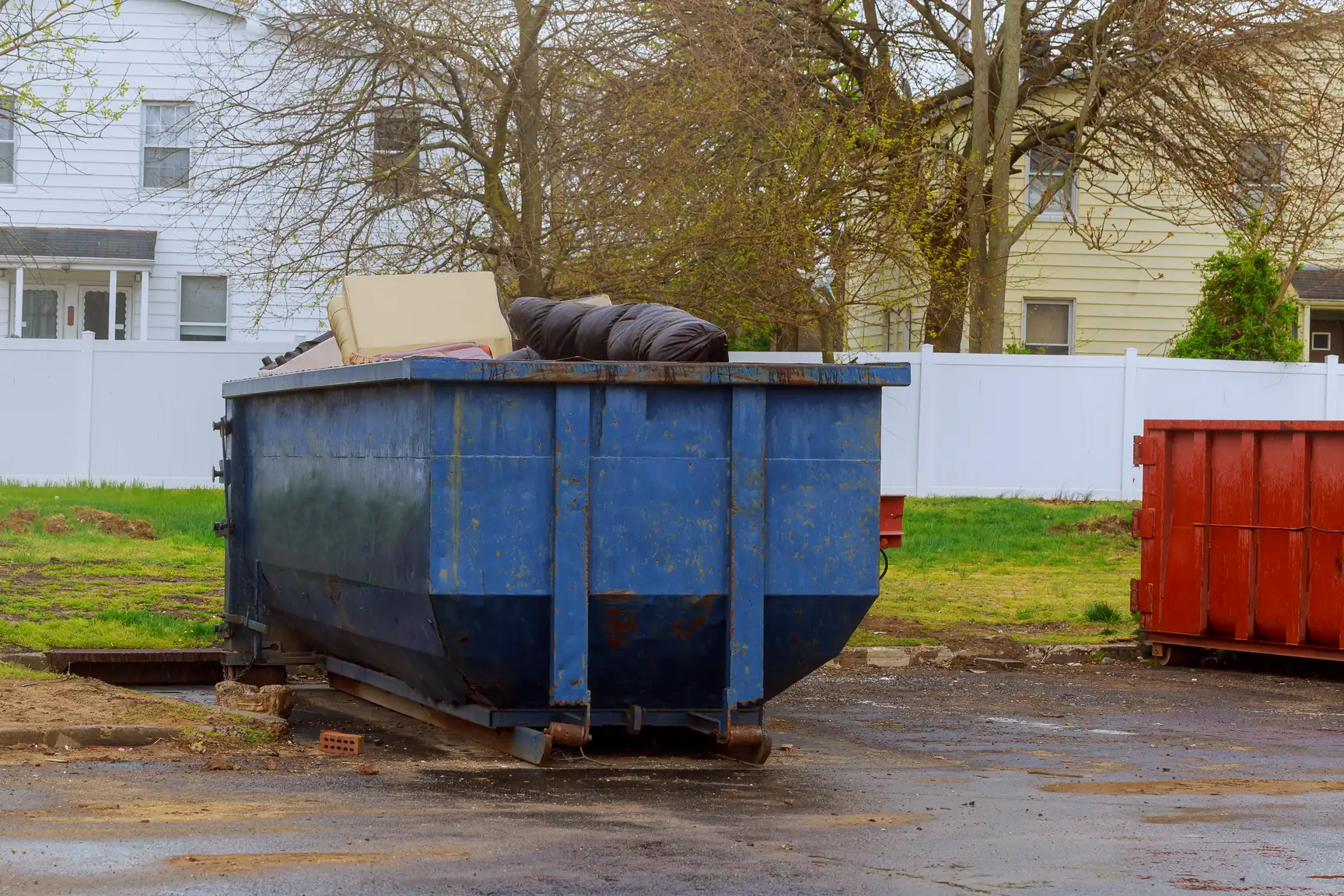
The two policies that argue over a Utah container drop
The moment that matters is the same half minute: the box is coming off the rails, or settling onto somebody else’s surface. Two policies each have something to say about that half minute, and the seam between them is where the uninsured losses in this class actually sit.
The general liability form treats loading and unloading as a defined term of its own, and it generally steps back from injury and damage that arise out of the use of an auto — then tells you that use takes in loading and unloading. The standard auto form never uses that pair of words at all. It reaches the same half minute by another road, and the one that matters to a hauler turns on whether the thing moving the property is attached to the truck. The forms are drafted to meet. They do not always meet where the operator who signed them assumed.
Then there is the other half: damage to the customer’s own property. A cracked driveway apron on a Salt Lake foothill lot. A scored curb on an Orem infill job. Asphalt gouged behind a Weber County shop because the ground was softer than it looked in February. Liability forms typically carry exclusions for property in the insured’s care, custody or control and for the particular part of real property being worked on, and whether a placement loss lands inside or outside those exclusions depends on the wording in force and on the facts of the drop. We do not settle that on a web page, and anyone who does is guessing with your money.
What we do is make sure the question gets asked while a submission is open rather than after a claim is filed. The general liability and commercial auto pages set the seam out at length. Your own policy wording controls, and the forms in use differ between carriers.
What Utah regulates, and what it leaves to the county
Statewide hauler registration in Utah
Utah issues a roll-off hauler no credential of any kind. No state registration, license or permit reaches a business that collects a customer’s construction and demolition debris, municipal solid waste or mixed commercial waste for hire and carries it to a permitted facility. What the state does credential is a different set of transporters: waste tire haulers and recyclers register with the environmental agency, used oil handlers register and are permitted, hazardous waste transporters and handlers are regulated under the standards the state adopts, and the rules reach the transport of infectious waste. A roll-off operator is on none of those lists, and calling Utah a state with no transporter program would be wrong about the state.
The permitting duty here sits on the site, not on the truck. Utah Admin. Code R315-301-5(1) keeps a solid waste management facility shut — unopened, unrun, unmaintained, unexpanded — until whoever owns or operates it holds two separate things from the director: the permit, and a letter of approval allowing the site to take waste in. Utah Code Section 19-6-108(3)(a)(i) carries the statutory half of the same idea, aimed at the person who owns, builds, alters or runs a facility or site for transferring, treating or disposing of waste. Neither provision asks anything of the vehicle that arrives at the gate.
Two rules look as though they contradict that, and both are definitions doing the work of exclusions. The first is the drop box facility. A rule headed Transfer Stations and Drop Box Facilities defines a drop box facility around a large detachable container for collecting waste — which is a description of your equipment. The very next sentence takes your equipment back out again:
“Drop box facilities do not include residential or commercial waste containers on the site of waste generation.”
R315-313-1 confirms it from the opposite side, by reaching a transfer station or drop box facility that receives waste from off site. A container standing on your customer’s job site receives that site’s own waste. The second is the landfill rule at Utah Admin. Code R315-305, whose subject matter is the design, permitting, operation and closure of landfills taking construction and demolition waste, with a class of landfill defined around that waste at R315-301-2(12). The words look like yours. The permit belongs to the landfill.
The clearest proof that Utah has simply chosen not to credential this operator is that its rules know exactly who you are:
“‘Transport vehicle’ means a vehicle capable of hauling solid waste such as a truck, packer, or trailer that may be used by refuse haulers to transport solid waste from the point of generation to a transfer station or a disposal facility.”
The definition names the refuse hauler and the truck, and then no registration, permit, decal, report or inspection is imposed on either. What a source leaves out is a finding in its own right, and that is the finding here.
Utah intrastate motor carrier rules
Two agencies share this axis and their jobs are not the same. The Utah Department of Transportation administers the motor carrier chapter and writes the rules, and Utah Code Section 72-9-103(1)(a) obliges it to adopt the Federal Motor Carrier Safety Regulations by reference, in whole or in part — the verb is shall, not may. Enforcement on the road runs to the Department of Public Safety, Utah Highway Patrol Division, together with other law enforcement agencies the transportation department certifies, under Section 72-9-301(2)(b). The federal rules are federal; Utah adopts them for intrastate work rather than writing its own.
The chapter uses a weight to decide what it covers:
“has a manufacturer’s gross vehicle weight rating or gross vehicle weight, or gross combination weight rating or gross combination weight of 26,001 or more pounds, whichever is greater, and is operated by an individual who is 18 years old or older”
Read that as a scope test and not as a license trigger. A vehicle at or above the figure, operated by an individual 18 or older, is an intrastate commercial vehicle, which brings the chapter and the adopted federal rules over it. It does not mean the state begins issuing anything, because Utah issues no operating authority to a property carrier at any weight. The interstate definition in the same section uses a different figure for different commerce, and the two should never be run together in one sentence.
Section 72-9-303(1) lets the department order a person to cease and desist from a motor carrier operation in violation of the chapter, and Section 72-9-303(2)(a) has the department notify the tax commission’s motor vehicle division, which then refuses, suspends or revokes a registration. What the sanction reaches is a registration, not an operating authority.
Placement permits: a Salt Lake City and county example
Utah sets no statewide placement permit. It hands the subject down: Section 19-6-503(1) lets a public entity require a license where appropriate, including licensing a private collector working in its jurisdiction, and lets it control the right to collect, transport and dispose of waste generated there. In the state’s largest market that power has been picked up, and the result is a flat prohibition rather than a form to file.
“It is unlawful for any person to convey, transport, or haul through or upon any of the public streets any solid waste or recyclable items except as permitted by the Salt Lake Valley health department. Haulers shall comply with all permitting, vehicle, and operational requirements established by the Salt Lake Valley health department.”
The section goes on to let private citizens carry their own waste to a licensed facility if they secure and cover the load. That carve-out reaches private citizens moving waste they generated themselves; a business hauling somebody else’s is on the far side of it and needs the county health department’s permit. Note the name: the ordinance calls the body the Salt Lake Valley health department, while the agency serves itself today as the Salt Lake County Health Department, and the statutory anchor for either masthead is the chapter on county health departments at Utah Code Section 26A-1-103. It is one body under two names, not two bodies.
That permit is where this state becomes an insurance question rather than a compliance footnote. The health department’s own waste hauler page describes a program covering infectious medical waste, liquid waste, and solid waste including waste tires, and it sets out the steps to obtain the permit: an application, a written safety plan submitted for approval, the annual fee, an inspection, a permit placard installed on the trucks — and this one.
“Obtain the correct insurance for the type of waste you are hauling.”
A county, not a state, is the body that ties your cover to your waste stream in Utah. That is worth knowing before a truck is bought.
The right-of-way layer is separate. Salt Lake City Code § 14.32.015 defines an obstruction as anything obstructing free use of the public way and names containers among the examples, and it defines a temporary structure in terms that reach trash containers on a construction project. Section 14.32.025(A) then requires a permit before any work of any kind begins in the public way. Subsection (B) limits who may even apply, to a short list built around state-licensed general contractors, utilities, the city itself, residents doing small works next to their own homes, and persons occupying the way for work such as scaffolding, cranes, signs and building-face jobs. A container rental company is none of the first four, and whether it sits inside the fifth is a question the ordinance does not answer. Ask the city.
The same chapter lets the city condition a public-way permit on cover: evidence of insurance with the application, a security device, policies written by companies authorized to do business in the state and meeting a financial-strength standard, workers compensation and employers liability at statutory benefits, general liability, business auto with owned, non-owned and hired exposures as applicable, the city and its officers and employees added as insureds other than on the compensation policy, primary and non-contributory, with severability and separation of insureds. That is the shape of what a Utah city can ask for.
Two figures that belong to this section are deliberately absent. The county’s annual permit fee appears on its own page as a heading with no amount rendered, so there is no number to report and none may be inferred. The dollar limits in the city’s insurance section are one city’s minimum for one permit, and the same subsection overrides them upward by reference to the governmental immunity limit in force. Where a number cannot be stood behind, we leave it out rather than round it.
Everything in this subsection is one city and one county. It is not Utah’s rule, and it may not be read onto Provo, Ogden, St. George or anywhere else. Check the jurisdiction the box is going to.
Utah workers compensation for a roll-off crew
Utah is a competitive state. Coverage is bought in the open market from an insurer authorized to write the line here, and the Labor Commission’s Division of Industrial Accidents administers the system — both names taken from the statutes that create them rather than from a masthead, at Utah Code Sections 34A-1-103(1) and 34A-1-202(1)(a).
The securing duty is one sentence with two routes in it:
“An employer shall secure the payment of workers’ compensation benefits for its employees by: (1) insuring, and keeping insured, the payment of this compensation with an insurer authorized under Title 31A, Insurance Code, to transact the business of workers’ compensation insurance in this state; or (2) obtaining approval from the division in accordance with Section 34A-2-201.5 to pay direct compensation as a self-insured employer in the amount, in the manner, and when due as provided for in this chapter or Chapter 3, Utah Occupational Disease Act.”
There is no state fund in that sentence, no employee-count floor inside that section, and no exempt employment named in it. Be careful about what that does and does not establish: it is a statement about the section, not about the whole chapter. Who counts as an employee and who counts as an employer live in definitional provisions our research run did not open, so we do not tell any Utah employer that they are exempt. The self-insurance route runs through division approval and the chapter contemplates security being posted against it.
For a roll-off crew the exposure is concentrated in a few motions — the hoist, the tarp, the walk-around, the lift — and the workers compensation page goes through how the line is rated and what drives it.
A panel for Utah in rows. Each row sets one thing the state requires beside the exposure that requirement leaves open and the coverage line that answers it. Hauler registration: State transporter credentials exist, but none reaches roll-off hauling. It leaves open a container placed on a customer’s property, and the driveway or curb it damages, which General Liability and Dumpster and Equipment Coverage answer. Intrastate motor-carrier authority: State motor-carrier rules attach at a vehicle threshold. It leaves open the roll-off truck at fault, and the container in transit, which Commercial Auto and Pollution Liability answer. Roll-off placement permits: Municipal — varies by city and town. It leaves open placement on the public right-of-way, and a struck pedestrian or vehicle, which General Liability answers. Workers compensation: Compulsory; bought from private insurers. It leaves open a driver or yard hand hurt on the job, which Workers Compensation answers. Notes: A registration, permit or bond is a condition of operating, not insurance: it answers none of the exposures on the right, so no line is drawn from it. The conclusion reads: The registration is not the coverage — the program is. No figures are shown.
Six coverages read against Utah facts
The dumpster rental insurance hub explains how the six sit together in one program.
Loss patterns we see on Utah roll-off accounts
We do not publish claim counts or severities, so what follows is pattern rather than statistics. The first pattern is the drop itself.
The second is the load that was not what the ticket said. A remodel that quietly included a water heater, a shop cleanout with paint and solvent in the bottom of the box, tires that appeared overnight because the container was unattended on an open lot. Utah credentials waste tire transporters separately, so a box of tires is not merely awkward at the scale house — it steps toward a program you are not registered for.
The third is the road. Adopted federal safety rules mean the same driver files, inspections and hours discipline that an interstate operation runs, applied to a truck that may never leave the county. The enforcement route through vehicle registration makes a weak file expensive in a way that is easy to underrate.
The fourth is theft and damage to containers at rest, which is an inland marine problem rather than a property one.
The fifth is the third-party contact: a car reversing into a box left overnight in a street, a pedestrian in a poorly lit alley, a cyclist and an unmarked container. The Salt Lake City covered-load rule at § 9.08.060 and its five-block trigger belongs in the same family of operational facts — a rule you can breach in a minute and discover in a citation.
Utah cities and the counties they sit in
We are licensed across Utah and write the whole state. These six are simply where the work concentrates, and each one is named with the county it sits in because in this state the county is the tier that matters.
Nearby states we also write
- Nevada — the Interstate 15 neighbor to the south-west, on its own statutes.
- Arizona — the other end of that corridor, and a state whose own record governs its own facts.
- Idaho — across the northern line, read from Idaho law rather than from anything here.
Nothing verified about Utah carries over a state line. Utah’s negative on the first axis is an out-of-scope negative, not an absence, and the county permit under it does not exist next door unless that state’s own record says so.
Utah questions owners actually ask
Does Utah make a roll-off hauler hold a state license?
No. Nothing the state issues reaches a business that collects a customer’s construction debris or mixed commercial waste for hire and takes it to a permitted facility. Utah does credential other transporters — waste tire haulers and recyclers, used oil handlers, hazardous waste transporters and the people who move infectious waste — and roll-off hauling is not on that list. The state’s permitting duty falls on the facility and its owner or operator instead, under Utah Code Section 19-6-108 and Utah Admin. Code R315-301-5.
My container is a large detachable box. Do I need a drop box facility permit in Utah?
This is the trap in the Utah rules and the answer is no. Utah Admin. Code R315-301-2(21) defines a drop box facility around exactly that kind of container, and then the next sentence of the same definition carves out containers standing where the waste is generated. R315-313-1 makes the same point from the other direction by reaching facilities that take waste in from off site. A box on your customer’s own job site is taking that site’s waste, so it is outside the rule.
What does Salt Lake County require of a waste hauler?
A waste hauler permit from the county health department, and its published steps include an application, insurance matched to the waste being hauled, a written safety plan for approval, an annual fee, an inspection and a permit placard fitted to the truck. Salt Lake City Code § 9.08.050 is the other half: the city makes hauling on its public streets unlawful without the county health department’s permission, and the self-haul carve-out in that section reaches private citizens moving their own waste, not a business moving somebody else’s.
Do I need a permit to leave a container in a Salt Lake City street?
The city requires a permit for work in the public way, and its own definitions put a container inside the rule — Salt Lake City Code § 14.32.015 treats anything obstructing free use of the public way as an obstruction and names containers, and § 14.32.025(A) bars starting work there before the engineer approves an application. Who may hold that permit is set by ordinance and the eligibility list does not read cleanly onto a container rental. Ask the city before the box goes down.
Is there a weight at which Utah starts issuing operating authority?
There is not, and that is the most misread point on this axis. Utah Code Section 72-9-102(3) uses a weight to decide when a vehicle is an intrastate commercial vehicle, which pulls the chapter and the adopted federal safety rules over it. Crossing the figure does not mean the state issues you anything. Utah enforces the chapter through your vehicle registration under Section 72-9-303(2)(a), and you hold that registration as the owner of a truck, not as a carrier.
Who regulates trucks and who inspects them in Utah?
They are two different bodies and the statute keeps them apart. The transportation department administers the motor carrier chapter and makes the rules, including adopting the federal safety regulations, under Utah Code Sections 72-9-301(1) and 72-9-103(1). Roadside inspection sits with the public safety department’s highway patrol division and the agencies it certifies, under Section 72-9-301(2)(b). A third body, the tax commission’s motor vehicle division, only acts on the transportation department’s report — it is a lever, not a regulator.
How is workers compensation bought in Utah?
Utah Code Section 34A-2-201 gives an employer two routes: insure the payment with an insurer authorized under the state insurance code to write workers compensation here, or get the division’s approval to pay direct as a self-insurer. That is an open private market, and it is stated in one sentence with no state fund in it. We place the cover with a market authorized to write the line in Utah.
Can a Utah city stop me taking a load where I want to take it?
Utah Code Section 19-6-507(1) generally bars a public entity from forcing waste discarded in its jurisdiction to a facility that the public entity owns or operates, subject to exceptions set out in the same section. Read it for what it is: a rule about where the waste may go, not about who may carry it. The same chapter, at Section 19-6-503(1), leaves a local body free to control the right to collect and transport waste generated in its jurisdiction and to license a private collector operating there.
This page reports Utah law as our own state research file records it. It is general information rather than legal advice, and it is not an opinion on what any policy covers — the wording you hold controls that, and carriers do not all write it the same way.
Get a Utah dumpster rental quote
Tell us how many boxes you run, what you haul, which counties you pull in, and whether you are inside a county health department permit program. We will tell you what the seam looks like on the wording available to you, and what it will cost to close it.
Related coverage for dumpster rental operators
- General Liabilitygeneral liability
- Commercial Autocommercial auto
- Dumpster and Equipment Coverageinland marine
- Commercial Propertycommercial property
- Workers Compensationworkers compensation
- Pollution Liabilityenvironmental / pollution liability
What it costs in Utah · States we serve · Dumpster Rental Insurance · Get a quote · Contact us
Primary sources
- Utah Insurance Department — the state regulator for every line named on this page
- Salt Lake City Code, chapter 9.08 — solid waste and recyclable items — the city sections quoted here, including the street prohibition at § 9.08.050 and the covered-load rule at § 9.08.060