
Dumpster Rental Insurance by State
Dumpster Rental Insurance in Rhode Island
Rhode Island puts both of a roll-off operator’s credentials in the same place — the city or town — and exempts the same operator from the state motor carrier chapter by name. Here is how that shapes a program, and where two liability forms meet.
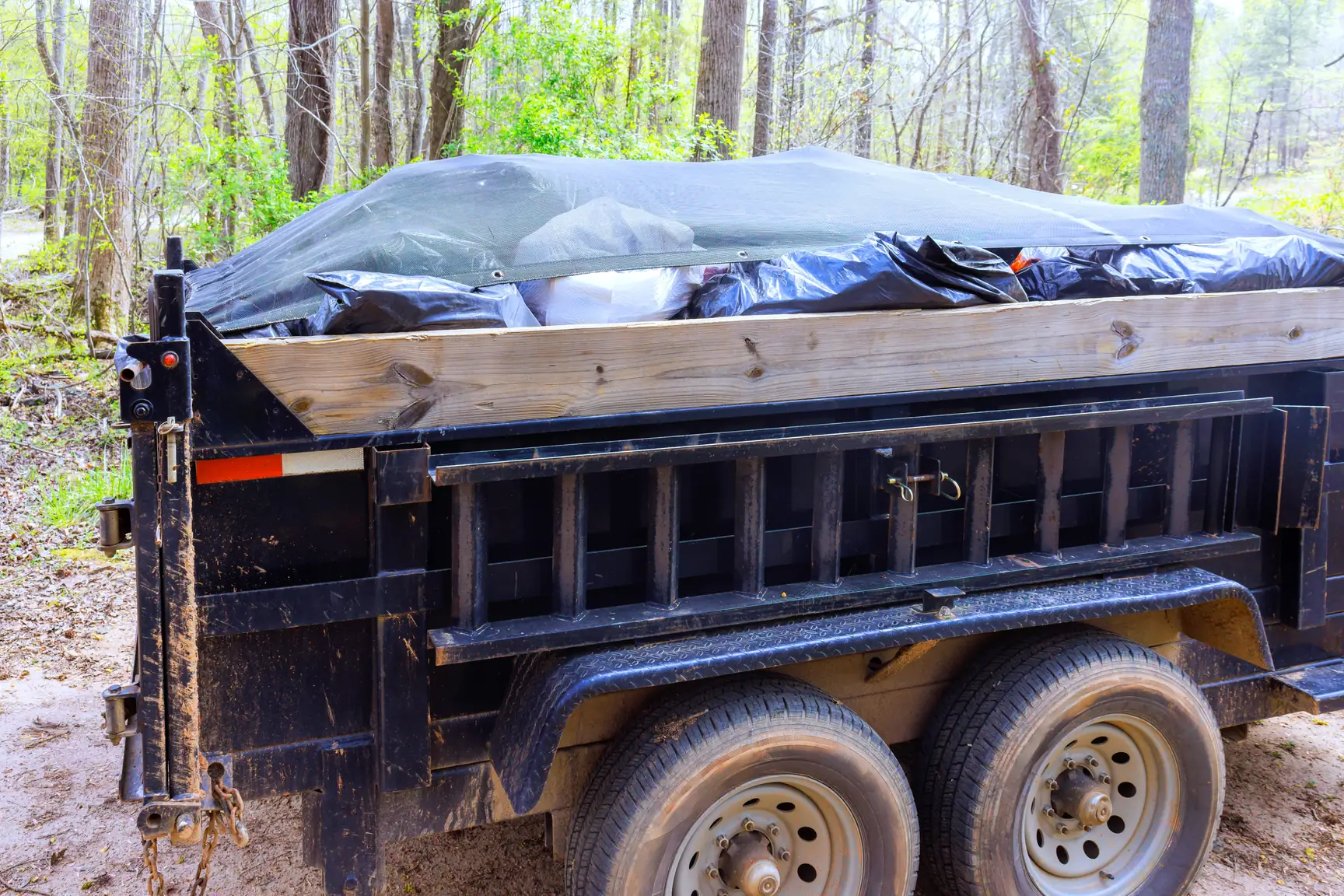
The Rhode Island placement moment two policies both claim
Rhode Island work is close work. Short hauls, tight streets, containers set a few feet from a neighbor’s fence. That geometry concentrates a dumpster operator’s liability into a very small number of seconds, and those seconds are the ones two different policies both describe.
The general liability form defines loading and unloading as a term of art. It generally excludes injury and damage arising out of the use of an auto, then tells you that using an auto includes loading and unloading it. The standard auto form does not use the phrase anywhere. It reaches the same instant by its own route, and the one that matters here turns on whether the mechanism that moved the property was attached to the truck. Two wordings built to meet, meeting somewhere other than where an owner expects.
The other half of the seam is the customer’s own property. In an older housing stock the surfaces are unforgiving: a historic curb, a brick apron, a driveway laid before anyone imagined a three-axle truck on it. A general liability wording typically holds back property the insured has in care, custody or control, plus the specific piece of real property under work. Whether a placement loss lands inside or outside turns on the precise wording and the precise facts, which this page cannot settle.
What makes Rhode Island distinctive is that the compliance layer sits in the same place as the damage: one municipal officer issues the license for your truck and the permit for your container, and the same ordinance says how the container must be marked, lit, screened and serviced. Your own policy wording controls, and the forms in use differ between carriers.
Rhode Island’s rules for a roll-off operator, from the statute down to the street
Rhode Island is a one-and-a-half-layer state for this trade, and both halves sit in the same place: the hauler credential and the container permit are municipal. The state contributes a directive telling municipalities to license, and an exemption taking this operator out of the motor carrier chapter.
Your Rhode Island hauler license comes from the city or town
The statewide rule is real and it is addressed to the municipality rather than to you. R.I. Gen. Laws § 23-18.9-1(a)(1) makes each city and town responsible for the safe and sanitary disposal of all refuse generated within its boundaries, expressly including refuse from commercial and industrial sources, which is what carries the rule to a commercial roll-off account rather than leaving it at household curbside. Subsection (b)(1) then says how to discharge that responsibility: by adopting rules governing the licensing of everyone in the business of collecting and hauling refuse there. The same subsection constrains the municipality in your favor:
“All persons engaged in the business of collection or hauling of refuse and operation of transfer stations within the boundaries of a municipality, shall be issued a license upon application.” … “No municipality shall unreasonably deny a license to any reasonably qualified person.”
Note what that is and is not. It is a mandate on the city or town, and it does not itself make hauling without a license unlawful. That sentence lives in each municipality’s own ordinance; in Providence it is Code of Ordinances § 12-65, barring carriage of the listed wastes over the city’s streets without a license issued, vehicle by vehicle, by the director of public works. The license is annual, it expires at the end of June, and issuance turns on the director being satisfied that the applicant has suitable equipment and will comply with the city’s rules (§§ 12-66 to 12-68). Keeping segregated recyclables separate is itself a license condition (§ 12-70.1).
The statute assumes the license exists in two other places, which is good evidence the directive is obeyed: one subsection speaks of haulers already licensed by the cities and towns, and another carves solid waste held briefly at a licensed hauler’s licensed premises out of the illegal-dumping definition.
Three state bodies sit near this axis and none issues your credential. The environmental agency licenses facilities, and transporters of other waste streams. The resource recovery corporation runs the central landfill and publishes a voluntary directory of haulers, which is not a register. The public utilities division is dealt with below.
Two traps are worth naming because both produce a confident false sentence. The first is the state facility license, which sits two sections away from the licensing directive. Operating a solid waste management facility or a construction and demolition debris processing facility does require a state license — and the definition of such a facility carries an exception that decides this whole question:
“any plant, structure, equipment, real and personal property, except mobile equipment or incinerators with a capacity of less than one thousand pounds (1,000 lbs.) per hour, operated for the purpose of processing, treating, or disposing of solid waste”
Mobile equipment is excepted, which is why a roll-off truck is not inside the state license. Anyone telling a Rhode Island operator it needs one has quoted a facility rule at a vehicle.
The second trap is subtler and this page leaves it open deliberately. The operative noun in the directive is refuse, and neither chapter defines it; both instead define solid waste so as to contain refuse, so the cross-reference runs one way only and the species is never defined. This page therefore does not claim that the statute names construction and demolition debris inside the licensing directive, because it does not. It records that the same chapter defines that debris as solid waste, and that the ordinance in the named example settles the question locally by naming a roll-off container.
Rhode Island licenses motor carriers, and exempts this one by name
Rhode Island genuinely does license intrastate for-hire motor carriers, through the Division of Public Utilities and Carriers acting by the public utilities administrator. A common carrier of property holds a certificate of public convenience and necessity under R.I. Gen. Laws § 39-12-6; a contract carrier holds a permit under § 39-12-9; an interstate carrier holds a permit of registration under § 39-12-22; and separate chapters reach towing, passenger carriers, taxicabs, transportation network companies and non-emergency medical transportation. The chapter is live.
There is also no weight threshold in it. The chapter is switched on by the activity and switched off by the cargo, and it has seven exemptions. The sixth is this operator:
“(6) Motor vehicles engaged in the transportation of garbage, ashes, and debris removed from private dwellings, commercial, and industrial establishments;”
Read the limb rather than the label. A residential remodel is a private dwelling; a commercial or industrial cleanout is a commercial or industrial establishment; those are the ordinary roll-off jobs and they sit plainly inside the words the legislature used. A load taken from a site that is not yet a dwelling and is not an establishment, such as raw ground being cleared, is not obviously inside them, and the research behind this page located no order and no decision construing the subsection. So this page states the exemption and the classes it names, and stops there. It does not say Rhode Island exempts all construction hauling, and it does not say authority is required for greenfield work.
Two corroborating points, each with a warning. The Division’s jurisdiction page lists the carriers it regulates and a waste hauler is not among them, but that list is inclusive, so it corroborates the finding rather than grounding it. And the printed chapter still carries a tariff-filing condition the Division says preemption has left it no longer applying to most carriers.
Now the half that is easiest to drop. Being outside the motor carrier chapter does not put a Rhode Island roll-off truck outside the road rules. The state’s adoption of the federal motor carrier safety regulations is not in a chapter about motor carriers at all; it is a subsection of R.I. Gen. Laws § 31-23-1, inside a chapter about equipment, and it is scoped by vehicle weight rather than by cargo, so it reaches a roll-off operation whether or not the motor carrier chapter does. The Division’s own safety rule is scoped to common or contract carriers and does not close the gap.
One road rule names this cargo outright, and it is the freshest provision the research behind this page read in any Rhode Island source:
“No person shall operate a motor truck or other vehicle carrying or transporting any rubbish, refuse, or other debris or loose material on any highway without first securely fastening a covering on it to prevent the contents from falling to the highway.”
The rest of the subsection requires a load and its covering to be fastened so neither works loose, and the covering to stay on until the body is cleaned out. A companion section forbids driving a vehicle not built or loaded so as to stop its load dropping, sifting or leaking. None of it turns on the exemption.
One last thing not to carry into a Rhode Island file: the financial-responsibility minimums in that chapter attach to a certificate or permit issued to a motor carrier. An exempt hauler holds neither, so those figures are not the insurance required here, and they are not reproduced on this page. The per-vehicle identification device in the same chapter is switched off by the same exemption, in the section’s own closing words.
In Rhode Island the container itself needs a permit
There is no statewide placement or right-of-way permit. The state’s contribution here is the directive that carries the hauler license, plus a provision making clear that a state facility license does not affect a duty to comply with zoning and other local ordinances or to obtain local permits. Where a container may sit is decided municipally.
Providence is named here as one municipality’s own code and never as Rhode Island’s rule. The duty is on the rental business, and it is not limited to the public street:
“Any person engaged in the business of providing dumpsters to others shall, prior to placing a dumpster on public or private property for any period of time, shall first obtain a permit from the director of public works. Said permit shall specify the size and location of the dumpster and the length of time that said dumpster may be used on the said public property.”
Three things about that passage, quoted as served rather than tidied. The first sentence carries two instances of shall and one subject, reproduced as the code prints it. The duty reaches public or private property, in terms, so this is not a right-of-way permit a customer’s driveway escapes. And the second sentence, describing what the permit specifies, refers only to public property: a disagreement this page reproduces and does not resolve. The safe reading is the duty sentence, because that is the one creating the obligation.
The ordinance reaches this equipment by its own construction rather than by inference. It defines a dumpster as a bulk container above one cubic yard used as a depository for refuse, and separately defines a roll-off container as an open-top dumpster with a rectangular footprint, wheeled into place and built to be carried by special roll-off trucks. A roll-off is a species of dumpster in this code, and the same definitions reach the cargo: heavy debris and large items expressly include construction debris such as wood, plaster and masonry.
The operating conditions are the kind of detail that decides a claim. The owner’s name and telephone number are painted on at least two sides, and the container is painted to resist rust. One below twenty cubic yards must close on every side, opening only for a deposit or a service visit; one above twenty cubic yards must be securable against spillage; and a container of exactly twenty cubic yards, a common roll-off size, is described by neither limb as drafted. No dumpster within two hundred feet of residential property in a zone permitting dwellings may be serviced between eleven at night and seven in the morning. Servicing must be frequent enough to prevent overflow, odor and public hazard, and maintenance sits squarely on the container’s owner, litter on the surrounding premises included.
A container on any part of the public right-of-way has to be made conspicuous around the clock, with flashing warning lights or, failing those, high-intensity reflectorized orange and silver work-zone sheeting to the traffic engineer’s specification. On private property it may not sit within twenty feet of the right-of-way or street line, and must be screened from public view on three sides or more, by a solid wall, an opaque fence, or dense planting at least five feet high, subject to a waiver. Note who carries that one: the ordinance makes screening the property owner’s duty, the only one in the section that is not the container owner’s.
The two credentials are separate: the container permit is per placement, the hauler license per vehicle and annual, and both come from the same director. An operator working in Providence needs both. Every other city and town writes its own version, so read the ordinance where you are dropping.
Rhode Island workers compensation, and the test with no number in it
Rhode Island is a competitive state: this line is bought in the market like the rest of the program. The securing duty runs to the director of labor and training, and the statute sets out four ways of meeting it in one sentence — insuring with a stock or mutual company, or an association, that is authorized and qualified to do business here and to take these risks; proving financial ability to pay claims directly, backed by security, indemnity or a bond; a combination of those two; or joining an authorized group self-insurance fund (R.I. Gen. Laws § 28-36-1(a)). The first route names no state fund and no particular insurer.
Who is caught? The test is not a headcount:
“Every person, firm, and private corporation, including any public service corporation, including the state, that regularly employs employees in the same business or in or about the same establishment under any contract of hire, express or implied”
Regularly employs employees, and there is no number in it. The exemptions are occupational rather than numerical: domestic service and, subject to its own section, agriculture, excepting occupations the director declares hazardous. Neither reaches a container business, so an operator with staff is inside the act from the first regular hire.
The line a small operator needs is in the definition of employee rather than in any threshold. R.I. Gen. Laws § 28-29-2(4)(iii) excludes a shareholder or director of a corporation, general and limited partners, and a member of a limited liability company, and its second sentence takes that exclusion back for any such person who has entered the employment of the company or works under a contract of service within it. An owner who drives a truck is not automatically outside the act because of how the business is structured, and assuming otherwise is how an uninsured exposure gets built.
On the other side of the bargain, R.I. Gen. Laws § 28-29-20 makes the compensation remedy the substitute for common-law and other rights against the employer and its directors, officers, agents and employees. Adjudication sits with the Workers’ Compensation Court, which is a court rather than the regulator.
Practically, this makes Rhode Island the simpler half of the picture. The complexity here is municipal rather than insurance-market: the program is assembled in one place, and the work is lining it up with the license conditions a city has already imposed on the same trucks and containers.
A panel for Rhode Island in rows. Each row sets one thing the state requires beside the exposure that requirement leaves open and the coverage line that answers it. Hauler registration: A hauler credential, issued by your city or town. It leaves open a container placed on a customer’s property, and the driveway or curb it damages, which General Liability and Dumpster and Equipment Coverage answer. Intrastate motor-carrier authority: No state intrastate operating authority. It leaves open the roll-off truck at fault, and the container in transit, which Commercial Auto and Pollution Liability answer. Roll-off placement permits: Municipal — varies by city and town. It leaves open placement on the public right-of-way, and a struck pedestrian or vehicle, which General Liability answers. Workers compensation: Compulsory; bought from private insurers. It leaves open a driver or yard hand hurt on the job, which Workers Compensation answers. Notes: A registration, permit or bond is a condition of operating, not insurance: it answers none of the exposures on the right, so no line is drawn from it. The conclusion reads: The registration is not the coverage — the program is. No figures are shown.
Six coverage pages against a Rhode Island roll-off operation
Each page is written for the trade; here is the Rhode Island angle on each.
The dumpster rental insurance overview sets out how the six work together before any state layer is added.
Rhode Island claim patterns
Patterns rather than figures, none being recorded for this state, and the first policy to speak differs with each.
The surface that was already old. A historic curb clipped by the rails, a brick apron that lifts, a driveway laid long before three-axle trucks. The loss is to the customer’s own property, which puts it into care, custody or control and particular-part territory rather than ordinary third-party damage.
The neighbor, not the customer. Picture a short frontage and a container within feet of somebody who did not order it. Scraped paintwork on a parked car, blocked access, debris over a boundary: third-party claims arising from where the box was put, against permit conditions describing where the ordinance expected it.
The box in the right-of-way at night. Where a container legitimately stands on a sidewalk or roadway its lighting is prescribed, and a collision file there turns quickly into a question about whether the marking was in place. Near dwellings the ordinance also closes the night hours for servicing, so a late swap-out can read afterwards as a breach of a license condition.
What was in the load. Paint, solvent, an undeclared demolition fraction. The exposure starts at the disposal gate and works back to whoever filled the container, and where a license can be revoked over how waste is separated it reaches the license as well as the policy.
The person. A driver hurt at the tarp, on the walk-around, or on a wet sidewalk between truck and box. That exposure is placed in the market with everything else, on a test asking whether you regularly employ rather than how many.
Providence, Warwick and the rest of Rhode Island’s roll-off markets
A small state with a lot of municipalities, and that is the operative fact: the count that matters here is the number of cities and towns you work in, because each writes its own license and its own container rules. The counties below only place a city. Rhode Island counties carry no county government and issue nothing.
Providence
Providence County. The capital, the largest city, and the municipal example cited throughout this page. Its code requires both a per-vehicle hauler license and a permit for the container itself, so a roll-off cannot simply be dropped here.
Warwick
Kent County. Central Rhode Island, the airport city, with a large commercial and light-industrial base. Reasoning from county seat to largest city gets this one backwards: the county town of Kent is East Greenwich.
Cranston
Providence County. South and west of the capital, with a deep residential remodeling market — and its own municipal government and its own ordinances. Nothing in the Providence example below transfers to it.
Pawtucket
Providence County. North of Providence on the Massachusetts line, with a dense older mill-and-triple-decker housing stock.
City of East Providence
Providence County. East of the Seekonk, and the one market here where the statute and the municipality disagree about what the municipality is: the county-composition statute still lists it among the towns while the municipality styles itself a city.
Newport
Newport County. The southeastern coastal market, with a historic building stock and a heavy seasonal renovation cycle. It is the county town of Newport County — and that coincidence still confers no county government.
Nearby states we also write
Two land borders is the whole land set here; New York is a regional neighbor across the water rather than a bordering state. The riskiest sentence to carry across any of these lines is the motor carrier one, because Rhode Island is where the chapter is live and this cargo is exempted by name. Each state’s own record governs its own facts, and the hauler credential comes from a different place depending on which side of the line you stand.
Rhode Island dumpster permit and insurance FAQs
Who licenses a refuse hauler in Rhode Island?
Your city or town does. State law at R.I. Gen. Laws § 23-18.9-1(b)(1) directs the governing body of every city and town to adopt rules licensing the people who collect and haul refuse within its boundaries, and the same subsection says a qualified applicant shall be issued a license and may not be unreasonably refused one. The duty to license sits on the municipality; the paper comes from the municipality; and no Rhode Island county issues anything, because Rhode Island counties have no county government.
Is there a state solid waste license I should be holding instead?
No, and the reason is a four-word exception. The state license at R.I. Gen. Laws § 23-18.9-8 is for operating a solid waste management facility or a construction and demolition debris processing facility, and the definition of such a facility expressly excludes mobile equipment. That is what keeps a roll-off truck outside the state license. Rhode Island does license transporters of some other waste streams — septage, industrial wastes and oil waste — and the record behind this page does not claim that regime reaches a dry construction load in either direction.
Do I need Rhode Island motor carrier operating authority?
Not for this cargo. The intrastate chapter is live — common carriers of property hold a certificate, contract carriers hold a permit, interstate carriers hold a permit of registration — but R.I. Gen. Laws § 39-12-3 exempts seven classes from the whole chapter and the sixth is vehicles carrying garbage, ashes and debris removed from private dwellings and from commercial and industrial establishments. A residential remodel and a commercial cleanout are plainly inside those words. A load taken from raw ground that is not yet a dwelling and is not an establishment is not obviously inside them, and no order or decision construing the exemption was located, so this page does not resolve it.
If I am exempt, does any road rule still apply to my trucks?
Several, and they are not in the motor carrier chapter. Rhode Island adopts the federal motor carrier safety regulations through R.I. Gen. Laws § 31-23-1(b)(1), and that adoption is scoped by weight rather than by cargo, so it reaches a roll-off operation whether or not the motor carrier chapter does. There is also a covered-load statute that names rubbish, refuse and debris by name, a separate leakage rule, and the ordinary commercial driver license trigger.
Does Providence make me get a permit for the container as well as the truck?
Yes, and they are two separate credentials from the same officer. The per-vehicle hauler license under Providence Code of Ordinances § 12-65 is annual and expires at the end of June. The container permit under § 12-61.1 is obtained before a dumpster is placed, and the duty is addressed to the person in the business of providing dumpsters to others — that is you, not your customer. An operator who holds one and not the other is short a credential.
Does the Providence container permit apply on private property?
The duty sentence says public or private property, in those words. The next sentence, describing what the permit specifies, refers only to public property. The ordinance has read that way since it was last amended and this page reproduces both sentences rather than choosing between them. The practical answer is to apply before placing, because the sentence that creates the obligation is the broader of the two.
How many employees before Rhode Island workers compensation bites?
There is no number. R.I. Gen. Laws § 28-29-6 makes an employer subject to the act if it regularly employs employees, and the statute contains no employee-count floor at all. The occupational exemptions are domestic service and, subject to its own section, agriculture — neither of which describes a container business. Owner-operators should read § 28-29-2(4)(iii) carefully: it excludes shareholders, directors, partners and limited liability company members, and its second sentence pulls back that exclusion for anyone who has actually entered the employment of the company.
Can I buy Rhode Island workers compensation from an insurance company?
Yes. Rhode Island is a competitive state and the statute sets out four ways to secure the obligation: insuring with a stock or mutual company, or an association, that is authorized and qualified to do business here and to take these risks; furnishing the director of labor and training with proof of financial ability plus security or a bond; a combination of the two; or membership in an authorized group self-insurance fund. The first of those is the ordinary route for a roll-off business, and we can quote it alongside the rest of the program.
This page reports Rhode Island law as our own state research file records it. It is general information rather than legal advice, and it is not an opinion on what any policy covers — the wording you hold controls that, and carriers do not all write it the same way.
Line a Rhode Island program up with the license you already hold
Tell us the trucks, the container sizes and the towns you work in, and we will walk the seam and the municipal layer with you.
Related coverage for dumpster rental operators
- General Liabilitygeneral liability
- Commercial Autocommercial auto
- Dumpster and Equipment Coverageinland marine
- Commercial Propertycommercial property
- Workers Compensationworkers compensation
- Pollution Liabilityenvironmental / pollution liability
What it costs in Rhode Island · States we serve · Dumpster Rental Insurance · Get a quote · Contact us
Primary sources
- R.I. Gen. Laws § 23-18.9-1 — Municipal responsibility and licensing of haulers — the statewide directive that makes every city and town license the people who collect and haul refuse within its boundaries
- R.I. Gen. Laws § 39-12-3 — Exemptions — the seven exemptions from the intrastate motor carrier chapter, the sixth of which names this cargo
- Division of Public Utilities and Carriers — Motor Carriers Division — the regulator’s own account of what it does and does not still control after federal preemption of price, route and service
- Providence Code of Ordinances — Chapter 12, Article III — the one municipal code this page cites — the per-vehicle hauler license and the container permit, quoted as one city’s rules and never as the state’s