
Dumpster Rental Insurance by State
Dumpster Rental Insurance in New Hampshire
New Hampshire registers haulers at the state level and calls the registration notification only, repealed its property-carrier chapters outright, and hands the street to the town. Here is the whole layer.
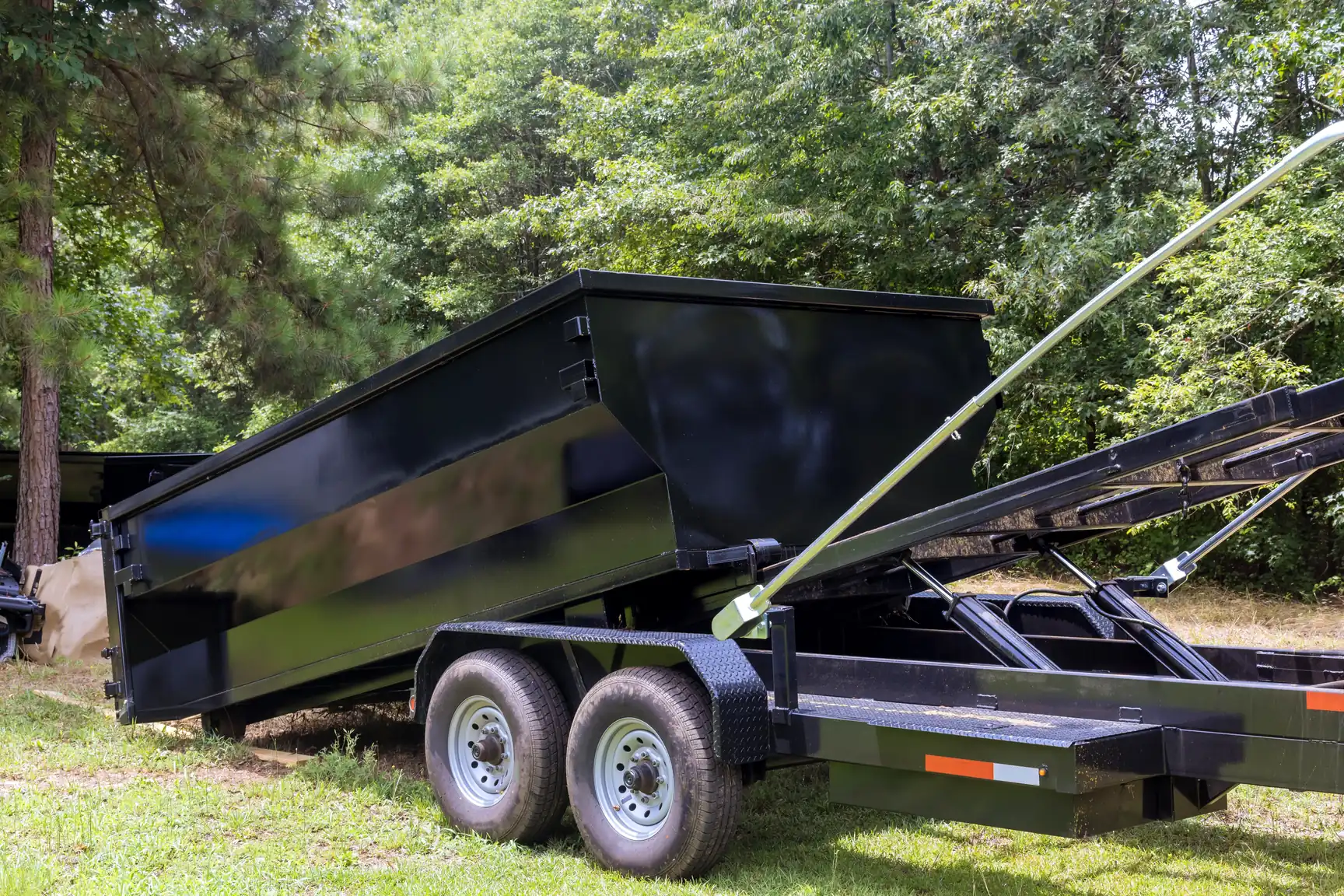
New Hampshire is a state of soft positives and hard negatives, and both halves catch people out. There is a statewide hauler credential, and the agency that runs it says plainly that it approves nothing. There used to be intrastate operating authority for a property carrier, and there is not now — the chapters are still printed in the title index with their own repeal notes inside them. And the layer that can actually stop a container being set down is the town, which the legislature invited into the field and did not order in.
What follows is the whole New Hampshire layer as our own state research file records it: the registration and the annual report it carries, the repeal and the safety rules that survived it, the town power and the one city we read in full, and the route an employer takes to secure compensation. Where our file has a hole, this page names the hole instead of filling it.
Hooking and setting a container in New Hampshire, and where the policies divide
A roll-off business runs two liability policies, and both of them describe the same few seconds — the container coming down the rails onto ground that belongs to the customer. Claims in this trade have a habit of landing precisely in the overlap, where each policy can be read to point at the other.
The general liability side owns a defined phrase for loading and unloading, then generally excludes injury and damage arising out of the use of an auto and treats loading and unloading as part of that use. The auto side does not build on that phrase at all; it reaches the same seconds by another route, and for a hook-lift the route that matters depends on whether the gear doing the lifting belongs to the truck. Forms are written to meet. Where they actually meet is a question of wording, not of intuition.
Then there is the ground. In New Hampshire a container goes in the street when a seacoast lot or a mill-town frontage has nowhere else to put it, and when it does not, it goes on a driveway that cracks or a lawn that ruts. Liability wordings typically carry exclusions for property in the insured’s care, custody or control and for that particular part of real property being worked on, and whether a placement loss sits inside those exclusions turns on the words and the facts together.
This page will not resolve that for anybody. What it will do is put the seam where a New Hampshire operator can see it before a claim does. The general liability and commercial auto pages take a side each, and the dumpster rental insurance overview shows how the program fits together. Your own wording controls, and carriers do not all write it the same way.
New Hampshire regulations and licensing
Three layers reach a New Hampshire roll-off operation: a state registration that is genuinely statewide and genuinely light, a repealed authority regime with a live safety remainder, and a town layer that the state made optional and then protected.
The state registration every New Hampshire hauler owes, and what it is not
The credential is issued by the state. The issuer is the Department of Environmental Services, and that name is taken from the defining statute rather than from a masthead: RSA 21-O:1, I establishes the department under the commissioner of environmental services, RSA 149-M:4, V ties the word department to it inside the solid waste chapter, and RSA 149-M:5 gives it administration and enforcement of the chapter while naming it the state agency that plans and regulates solid waste management. Within it the work sits in the solid waste management bureau and the compliance section. Nothing in our research puts the safety department, the transportation department or any county or town in the registration path.
Who owes it is settled by one definition, and the definition is the whole scope test:
“For purposes of this section, ‘hauler’ shall mean a person engaged for profit in the collection, transportation, or delivery of solid waste, including recyclable materials, collected from New Hampshire residential, municipal, industrial, or commercial sources for disposal or recycling.”
A roll-off operator that drops a container at a New Hampshire remodel, clean-out or demolition site and runs the load to a transfer station or landfill answers every element of it. There is no exemption subsection to check, because the section has three paragraphs and none of them is one. The scope is controlled entirely by the words for profit and by the requirement that the material be collected from a New Hampshire source — a person moving their own waste is not collecting it from a source for profit, and a load with no New Hampshire pick-up point is outside the section. Those are readings of the definition, and this page states them as readings rather than dressing them up as a quoted carve-out that does not exist.
Construction and demolition debris gets in through the definition of refuse at RSA 149-M:4, XXI, which names it, and refuse is a component of solid waste at RSA 149-M:4, XXII. Asbestos waste is expressly pushed out of the construction and demolition definition at RSA 149-M:4, IV-a and handled on a separate transport, packaging and labeling track in the rules. A demolition container is exactly where that seam gets crossed. This page says the carve-out exists; it does not describe what the separate requirements are, because our research did not retrieve their operative text.
Now the part that changes how an operator should think about the credential:
“Registration is a form of notification only and does not involve issuance of an approval.”
That is the agency’s own answer, and this page carries its force rather than softening it. Nothing is granted, so nothing can be denied, and the department says there is no appeal process because no decision is made. It costs the hauler nothing and it does not expire. It is still a duty, and it still carries a real annual obligation: under RSA 149-M:29-a, I every hauler reports by March 31 for the previous calendar year on department forms, giving the quantities of solid waste and recyclables collected in the state, the municipalities they came from, and the disposal or recycling facility they went to. Paragraph II fixes how quantities are stated — in tons by material type, from actual scale weights or from cubic-yard estimates converted with factors the department supplies. An operator that cannot pull those numbers out of its own dispatch and scale records at year end has a records problem, not a regulatory one.
Two traps are worth naming. The first is the facility permit: RSA 149-M:9 is headed for a permit, and the defined terms behind it describe an authorization to construct and operate a location, system or physical structure. A truck is none of those; that permit belongs to the site at the far end of the haul. The second is the rulebook. The administrative rules for solid waste run to twenty-two chapters, and a sweep of the agency’s own table of contents returns nothing at all for hauler, haul or transporter, against a control that is plainly non-empty for permit and for solid waste. The rule-side transport provisions that do exist reach five named streams — asbestos, ash, contaminated soils, infectious waste and tires — and there is no construction-and-demolition transport part. The duty here is statutory and free-standing.
The motor carrier authority New Hampshire repealed
New Hampshire once ran intrastate operating authority for property carriage and it does not now. The chapter covering motor carriers of property was repealed in the nineteen-sixties. The chapter on carriage of household goods for hire was repealed by chapter 14:2 of the 2022 session laws, effective January 1, 2023. And the chapter on motor vehicles carrying property for hire was repealed by chapter 100:6, I of the 2013 session laws, effective August 23, 2013 — that is the one a property carrier would have held.
This is a repeal and not an absence, and the distinction is not academic. The chapters are still printed in the title index, and each of them carries its own repeal note inside itself, so a search will return them looking very much alive. Reading the repeal as though northern New England asks nothing of a truck is wrong in the specific way the repeal vocabulary exists to prevent: something was taken away on a date, by an act, and other things were left behind.
What was left behind is safety, and it sits with a different official in a different title. RSA 266:72-a, I lets the commissioner of safety adopt the current version of the federal motor carrier safety regulations as state rules, covering the federal parts the statute names, with future federal amendments flowing through without further action by the commissioner — and with power to exempt vehicles and drivers working exclusively in intrastate commerce from rules the commissioner judges to impose regulatory burden without matching safety benefit. Paragraph III-a subjects intrastate drivers who are under the motor carrier rules to the medical examination and the written and road tests the federal driver-qualification sections require. Roadside enforcement sits with department of safety enforcement officers and other law enforcement agents certified to inspect trucks, under paragraph V(a). The Federal Motor Carrier Safety Administration is a federal agency; New Hampshire adopts to its rules, and this page does not present federal duties as the state’s own.
One figure is deliberately absent. The only weight number in that live section sits inside an exemption for vehicles carrying New Hampshire farm or agricultural plates, and our record places it under a do-not-publish quarantine. A roll-off truck is not farm-plated, so the exemption is unavailable to it and the figure describes a class this operator is not in. The figure exists, it is cited in our file to RSA 266:72-a, VI, and it is not published here. New Hampshire sets no statutory weight at which a property carrier needs state authority, because there is no state authority to need.
One last point of contrast. New Hampshire does still issue carrier credentials — RSA 266-A:4 requires a common carrier certificate and RSA 266-A:7 a contract carrier permit — and those sections are cited here only to show what the state does still issue. They are not this operator’s credential.
New Hampshire hands the street to the town
The state sets no statewide roll-off placement permit and no statewide right-of-way permit. It hands the whole layer down, and it does so permissively:
“A town may make bylaws governing its facility and fixing reasonable rates for its use, and governing the separation and collection of refuse within the municipality and the registration of haulers collecting or disposing of refuse within the municipality, all in a manner not inconsistent with this chapter.”
The modal verb decides the axis. A town may register haulers; nothing directs it to. So the statewide duty above is a state credential with a state issuer, and it is not a state mandate discharged locally — New Hampshire runs both layers, one compulsory and one optional, with separate issuers. The legislature also expected the town layer to be able to go a great deal further: RSA 149-M:26 declares it state policy that towns and counties exercising these powers may displace or limit competition and enterprise, and shelters them from the state antitrust chapter and from federal antitrust liability. A town that decided to take collection entirely in-house would be protected in doing it.
One city was read in full, and it is presented as an example only. The finding there is a negative: no private hauler license appears in the Manchester code chapters enumerated. The health and sanitation chapter where such a license would live was enumerated section by section — purpose, enforcement authority, regulations authorized, definitions, eligibility for municipal curbside collection, placement of trash and recyclables for collection, prohibited deposits, containers, volume, then the littering sections and a penalty. There is no hauler license, no collector permit and no registration among them. The business regulations title was enumerated too, and its vehicles-for-hire chapter is about passenger vehicles. So the operator’s municipal exposure in that city is not permission to haul. It is permission to occupy the street:
“The Department of Highways may grant a permit in writing to any person, for the purpose of building, or other lawful purposes to dig up, obstruct, or encumber so much and such parts of any street or sidewalk, or other public place in the city, and on such terms and conditions as it shall deem to be safe and proper.”
Section 97.30(A) is the prohibition that permit answers: nobody may break or dig up a street or sidewalk, erect staging for building, or place building materials there without first getting a written permit from the Department of Highways or somebody it authorizes. Section 97.34(A) separately forbids encumbering a street or sidewalk with boxes, stands, merchandise or other things, and section 97.30(B) requires a permittee to comply in all respects with the permit’s conditions. A roll-off container standing in a Manchester street is a box, or at minimum one of those other things, and § 97.31 is the section that makes it lawful. This page does not claim the city runs a credential called a dumpster permit. It says what the ordinance says.
Section 97.33 conditions that permit, and its terms are the most directly relevant municipal provision in this whole record for an insurance reader. It requires a bond in a sum and with sureties the Highway Department approves, conditioned to indemnify the city and to guarantee the excavated surface is restored within a short fixed period after the work finishes. It requires an agreement to indemnify the city and the department against liability, claims and demands for injury or damage, expressly including claims for loss or interruption of business where the obstruction or construction impedes traffic. And it requires the permittee to carry general liability, automobile liability and workers compensation cover for the full period of the permit, with the city and the Highway Department as insureds, covering all the permittee’s activities including the use of all vehicles, with contractual liability, the collapse, blasting and underground hazards, completed operations for at least two years, and personal injury in addition to bodily injury. Certificates go to the department before the permit issues and must carry thirty days of notice before cancellation or major change. The ordinance states dollar limits for those coverages. This page does not publish them. They are one city’s figures, fixed to that section by amendments recorded in the nineteen-seventies and not indexed to anything since; they are not a New Hampshire requirement, not a market norm and not a recommendation, and repeating them would read as advice about what an operator should carry. The shape of the requirement is what an operator needs in order to ask its broker the right question, and the shape is above.
Buying workers compensation in the New Hampshire private market
New Hampshire is a competitive state and the primary route is an ordinary private placement:
“An employer, or group or association of homogeneous employers, subject to this chapter shall secure compensation to employees in one of the following ways: I. By insuring and keeping insured the payment of such compensation with a company licensed to write workers’ compensation insurance in this state and filing with the commissioner, in a form prescribed by the commissioner, evidence of such coverage as the commissioner deems appropriate.”
The commissioner there is the labor commissioner, named inside the statute at RSA 281-A:2, II rather than taken off a masthead, and every filing and approval duty in the section runs to that office. Paragraph III is self-insurance, on satisfactory proof of financial ability to pay compensation directly when it falls due; RSA 281-A:5-a adds conditions for a private employer or a homogeneous group taking that route, including loss reserves set on sound actuarial principles, specific excess insurance, and contracts with administrators or service companies open to the commissioner’s inspection on reasonable notice.
Two paragraphs in the same section look like exemptions and are not. Paragraph II sends domestic employees to another section and paragraph IV sends state employees to two sections in a different title. Neither class is a roll-off operator’s workforce, and neither paragraph removes a duty — it relocates one. Our workers compensation page covers what the line does and how employers liability sits beside it.
An honest limit, because the alternative is a confident sentence our file does not support. Our research retrieved several sections of the chapter and the served table of contents, but not the section that paragraph II points at. So this page affirms that no exemption reaching a roll-off operator was found, and does not affirm that the chapter contains none.
A panel for New Hampshire in rows. Each row sets one thing the state requires beside the exposure that requirement leaves open and the coverage line that answers it. Hauler registration: A hauler credential, issued by the state. It leaves open a container placed on a customer’s property, and the driveway or curb it damages, which General Liability and Dumpster and Equipment Coverage answer. Intrastate motor-carrier authority: No state intrastate operating authority. It leaves open the roll-off truck at fault, and the container in transit, which Commercial Auto and Pollution Liability answer. Roll-off placement permits: Municipal — varies by city and town. It leaves open placement on the public right-of-way, and a struck pedestrian or vehicle, which General Liability answers. Workers compensation: Compulsory; bought from private insurers. It leaves open a driver or yard hand hurt on the job, which Workers Compensation answers. Notes: A registration, permit or bond is a condition of operating, not insurance: it answers none of the exposures on the right, so no line is drawn from it. The conclusion reads: The registration is not the coverage — the program is. No figures are shown.
Reading the six coverages against a New Hampshire container run
The six lines are the same everywhere and the program overview sets them out. New Hampshire shifts where the weight of each one sits.
The claims a New Hampshire operator actually sees
Patterns rather than statistics. Our file records no New Hampshire claim frequency or severity figures, and none is invented here.
The box in the road. A container in the public way is an obstruction until a permit makes it lawful. The permit brings indemnity and additional-insured obligations with it, which are contractual exposures as much as regulatory ones.
The surface underneath. A full container concentrates a great deal of weight on a small footprint, and driveways, aprons and lawns fail in ways that produce a wording argument about care, custody and control.
The hoist. The seam question lives in the seconds the box is moving on the rails, and it is cheaper to answer at quoting time.
Old buildings. Mill rehabilitation and older housing stock raise the chance that something turns up in a load that was meant to be handled separately. The state carved asbestos out of the construction and demolition definition for a reason.
New Hampshire roll-off markets
Six markets, anchored on the county each sits in — and the county is a locator here, not a regulator. No population, permit-volume or market-size figure is recorded for any of them, so none appears. Only Manchester is a cited municipal example.
Manchester
Hillsborough County. The one New Hampshire city whose own code this page cites — and the finding there is that no private hauler license appears in the code chapters enumerated. What it does regulate is the street, through a written permit to obstruct or encumber it.
Nashua
Hillsborough County. Steady renovation and tear-out demand along the southern border. Every town sets its own rules about containers in the public way, and nothing said about the cited example applies here.
Concord
Merrimack County. State-capital commercial and institutional work. The statewide registration travels with the hauler; the street question stays with whichever town the container is standing in.
Derry
Rockingham County. Residential clean-out and re-roof volume. Construction and demolition debris reaches the statewide registration through the definition of refuse rather than through any separate permit.
Dover
Strafford County. Seacoast renovation work on tight lots with limited frontage. A container that cannot go on the property goes in the way, which turns it into a municipal question.
Keene
Cheshire County. Western New Hampshire demolition and mill-building rehabilitation. Asbestos is carved out of the construction and demolition definition and handled on a separate track, which matters on older structures.
Nearby states we also write
Three states border New Hampshire on land and the fourth boundary is the Atlantic. Each runs its own credential vocabulary and its own carrier history, and nothing verified on this page transfers across a line. The New Hampshire word is register, and the state’s own agency calls it notification.
New Hampshire dumpster rental insurance FAQ
Do I have to register with the state to haul roll-off containers in New Hampshire?
Yes. RSA 149-M:29-a requires haulers to register with the environmental services department to do business in New Hampshire, and it costs nothing to do. A roll-off operator answers every element of the statutory definition — a person, for profit, collecting and transporting solid waste picked up from a New Hampshire source. The department says the registration does not expire.
Is the New Hampshire hauler registration a license?
No, and the department is explicit about it rather than leaving it to inference: what it issues is notification, not an approval. Nothing is granted, so nothing can be denied, and the department says there is no appeal process because no decision is ever made. It still has to be done, and it still carries an annual reporting duty.
What does New Hampshire want reported each year?
Under RSA 149-M:29-a, I, every hauler reports by March 31 for the prior calendar year on department forms: the quantities of solid waste and recyclables collected in the state, the municipalities they were collected from, and the disposal or recycling facility they were delivered to. Paragraph II says quantities go in tons by material type, from actual scale weights or from cubic-yard estimates using the department’s own conversion factors.
Do I need a New Hampshire solid waste permit to haul?
No, and this is the trap worth naming. RSA 149-M:9 is headed for a permit, but the defined terms behind it point at a facility — an authorization to construct and operate a location, system or physical structure. A roll-off truck is none of those. That permit belongs to the transfer station or landfill at the other end of the run; the hauler duty is the registration at RSA 149-M:29-a.
Does New Hampshire issue intrastate operating authority to a property carrier?
It did, and it does not now. The chapters that carried motor carrier of property, household goods carriage and property-carrying vehicle authority were each repealed — the last of the three in 2013 — and they are still printed in the title index carrying their own repeal notes inside themselves. What survives and does reach this operator is a safety adoption under the commissioner of safety, which is a different thing from authority to operate.
Does a New Hampshire town license haulers the way the state registers them?
It may, and it does not have to. RSA 149-M:17, II(a) lets a town make bylaws covering the separation and collection of refuse and the registration of haulers inside the municipality. The verb is permissive. New Hampshire therefore runs two layers — a mandatory state registration and an optional town one — and they are separate credentials with separate issuers.
What does it take to put a container in a Manchester street?
A written permit from the city Department of Highways, which may grant one to dig up, obstruct or encumber part of a street, sidewalk or other public place on terms it considers safe and proper. No private hauler license appears in the city code chapters enumerated; its hold on this operator is the street, not the hauling. Check the town you are actually working in rather than carrying this answer across.
Does that Manchester permit come with insurance conditions?
It does. The ordinance conditions the permit on a bond the Highway Department approves, an agreement to indemnify the city including for loss-of-business claims where the obstruction impedes traffic, and evidence of general liability, automobile liability and workers compensation cover naming the city and the department as insureds, with contractual liability, collapse and underground hazards, completed operations and personal injury all specified. Bring the certificate before you ask for the permit.
This page reports New Hampshire law as our own state research file records it. It is general information rather than legal advice, and it is not an opinion on what any policy covers — the wording you hold controls that, and carriers do not all write it the same way.
Start a New Hampshire dumpster rental insurance quote
Tell us how many trucks and containers you run, which New Hampshire towns you work in, and whether any of them asks for a street permit. We will read the liability, auto, container, property and compensation side as one program.
Related coverage for dumpster rental operators
- General Liabilitygeneral liability
- Commercial Autocommercial auto
- Dumpster and Equipment Coverageinland marine
- Commercial Propertycommercial property
- Workers Compensationworkers compensation
- Pollution Liabilityenvironmental / pollution liability
What it costs in New Hampshire · States we serve · Dumpster Rental Insurance · Get a quote · Contact us
Primary sources
- RSA 149-M:29-a — hauler registration — The duty itself, and the definition that fixes who owes it.
- RSA 149-M:17 — town responsibility and authority — The permissive town layer, and the modal verb that decides the axis.
- RSA 281-A:5 — securing payment of compensation — The routes an employer may take, in the statute’s own order.
- Manchester Code of Ordinances — The one municipal example cited here, read in full on its publisher’s site.
- New Hampshire Insurance Department — The state insurance regulator.